
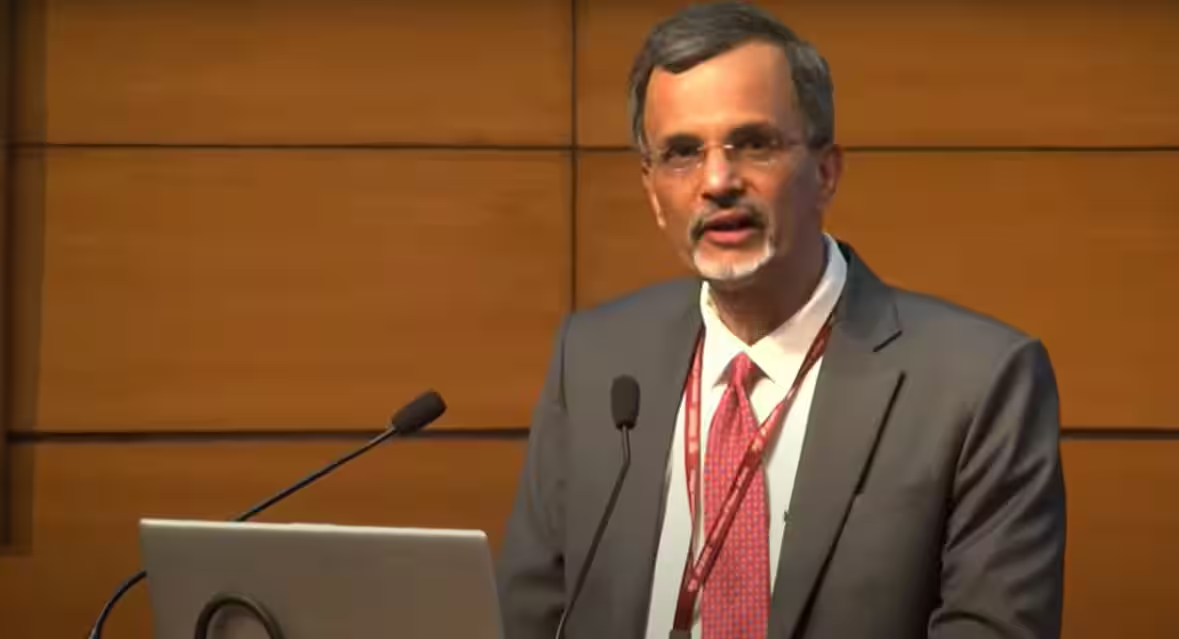
For decades, engineering degrees, software jobs and MBA programmes have been considered the surest path to success in India. However, Chief Economic Advisor (CEA) V. Anantha Nageswaran believes the country needs to rethink that mindset in an era increasingly shaped by artificial intelligence and automation.

Speaking at a recent event, Nageswaran said India must start valuing skilled trades such as welding, plumbing, electrical work and carpentry as much as white-collar professions. He argued that the advantage once enjoyed by software and management graduates is gradually diminishing as AI takes over many routine tasks.

“The globalising world gave us an advantage for our software, computer science or MBA education. But that era is over. It’s about trade skills and soft skills, where human presence is required,” he said.
According to Nageswaran, professions such as welding, plumbing and electrical work remain difficult to automate because they require hands-on expertise, problem-solving and physical presence. Yet, despite growing demand, these occupations continue to receive far less social recognition than office-based jobs.
He pointed out that countries such as Germany, Switzerland, Japan and South Korea have built strong economies by giving dignity and respect to skilled trades. India, he said, must bridge the gap between degrees and practical skills if it wants to create sustainable employment opportunities.
The remarks come at a time when India is rapidly expanding its infrastructure, manufacturing and renewable energy sectors, all of which require a large pool of trained technicians and skilled workers. Industry experts have frequently highlighted shortages of qualified electricians, welders, fitters and machine operators even as many graduates struggle to find suitable jobs.
Nageswaran clarified that engineering and management education remain important, but a degree alone can no longer guarantee employment. Instead, future job security will increasingly depend on practical skills, adaptability and capabilities that machines cannot easily replace.
His comments have reignited a larger debate about how India defines success. As AI reshapes traditional careers, experts say the country may need to place greater value on vocational education and skilled trades that are essential to economic growth but often overlooked in society.
The message is clear: India’s future workforce may not be defined only by coders and MBAs, but also by the welders, plumbers and electricians who keep the economy running.
👉 Click here to read the latest Gujarat news on TheLiveAhmedabad.com