
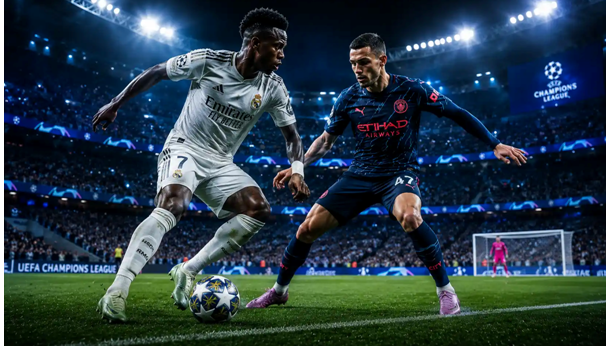
Champions League match days are among the most anticipated events in the football calendar, and the analysis available for every fixture is extraordinarily comprehensive. The challenge is not finding information about today’s games but interpreting it accurately through the lens of European competition dynamics that differ significantly from domestic league football. A bettor who applies their weekend league analysis framework to a Champions League evening without adjustment will miss the specific factors that make European nights their own distinct prediction challenge.

The most immediately important distinction is competition stage. Group stage matches and knockout ties require completely different analytical approaches because the competitive incentives are different in each. In a group stage fixture where one team has already qualified and the other is eliminated, the nominal quality comparison between the clubs is largely irrelevant to predicting the actual quality of the match because the motivated side may be far inferior in squad terms but far superior in competitive intensity on the night.

For today’s Champions League analysis, platforms like website provide Football Predictions that account for the specific competition stage and the strategic context of each tie. Free Football Predictions for European nights that address tournament dynamics alongside individual club form give the most useful framework for betting decisions.
Tonight’s Lineups: What to Expect and Why It Matters
Champions League lineup decisions are among the most significant in football because managers make deliberate calculations about which players to protect for domestic competition and which to use in Europe. For clubs that have settled their group position, this can mean a lineup change of eight, nine, or even ten players from their typical domestic eleven. Checking the pre-match press conference and all available team news sources before forming any selection view is mandatory for European nights.
When Full Strength Is Guaranteed
Knockout rounds produce near-universal full-strength lineup deployment. The elimination stakes remove the rotation temptation entirely for clubs that take the competition seriously, and the quality comparison between the competing teams becomes more directly relevant once both sides commit to their best available personnel. Knockout prediction benefits from higher lineup certainty than group stage analysis.
The Goalkeeper Factor in European Nights
Goalkeeping quality is particularly influential in high-pressure European matches because the frequency of intense but infrequent scoring chances means that single saves or errors can determine results. A goalkeeper significantly below the quality of the club’s first choice, deployed because of rotation, creates a vulnerability that may not be reflected in a market price based on the club’s overall squad quality. Checking specifically which goalkeeper is starting can reveal information gaps in the initial market pricing.
Goals Markets in Tonight’s Champions League
Champions League knockout matches tend toward lower-scoring outcomes than domestic leagues because the stakes of conceding are higher, defensive preparation is more thorough, and both managers typically prioritise not losing over trying to win by multiple goals. The over 2.5 goals market historically underperforms in knockout rounds compared to its league football equivalent for these structural reasons.
Group Stage Goals: Different Dynamics
Group stage matches can be significantly higher-scoring when one team needs goals to improve their goal difference for tiebreaker purposes, or when both teams are in a situation where only winning by multiple goals advances their position. Identifying these mathematical situations within the group context adds a dimension to goal expectation that the standard match preview often does not fully address.
Second Leg Dynamics and How to Read Them
For tonight’s second-leg fixtures, the aggregate score entering the match is the most important contextual factor in predicting the match winner and goal markets. A team defending a comfortable lead will prioritise compactness and defensive security over attacking expression, which suppresses both their own goal output and the quantity of open chances they allow. The probability distribution of both teams’ scoring in this context differs dramatically from what current-season averages would suggest.
Conclusion
Today’s Champions League predictions require a European-specific analytical framework that accounts for competition stage, rotation likelihood, tie management dynamics, and the specific motivational contexts that make European football different from domestic competition. Applying those adjustments to the available form and quality data produces predictions that are both more accurate and more interesting than those based on surface-level team comparisons alone.
👉 Click here to read the latest Gujarat news on TheLiveAhmedabad.com