
By the time Mumbai’s kitchens close each night, the city produces thousands of litres of used cooking oil—an invisible stream of waste that mostly ends up clogging drains, entering informal resale markets, or contaminating waterways. Only a fraction is ever collected, and even less is reused responsibly.

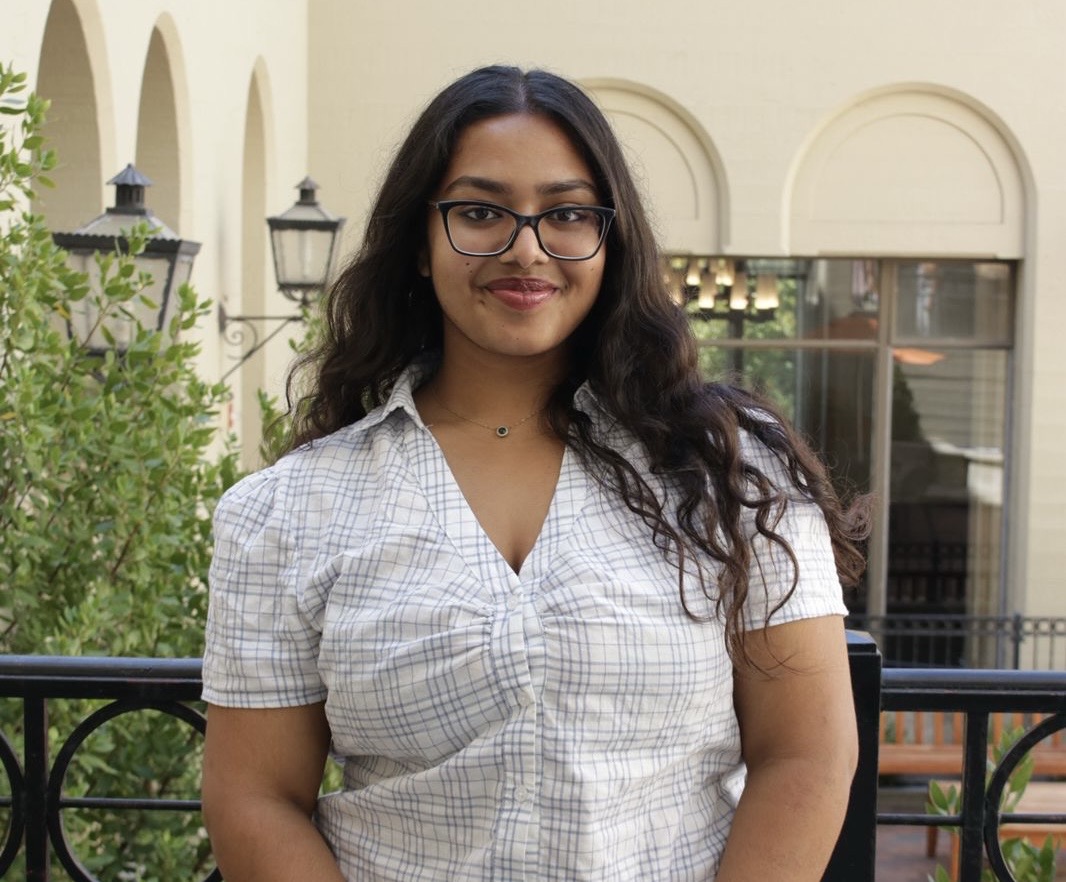
Dhanaj Biofuels, founded by Aarya Borele, a chemical engineer from UC Berkeley, is quietly changing that equation. What began as a student-led experiment in converting dining-hall waste oil into biodiesel has evolved into one of India’s most compelling grassroots models for circular energy.

“As a resident, it’s easy to ignore what happens to our cooking waste. But when you see how Dhanaj turns something as simple as leftover oil into clean energy, it changes your perspective. It’s proof that sustainability can start right at home,” says a Mumbai housing-society member who now contributes to Dhanaj’s collection program.
A Data-Driven Circular Economy
Unlike conventional biofuel producers who depend on large-scale feedstock or imported raw material, Dhanaj focuses on localized waste streams. The system integrates residential communities, street vendors, and hotels into a transparent, trackable supply chain.
The collected oil is filtered and then processed through transesterification, a chemical reaction that converts triglycerides into methyl esters—the scientific name for biodiesel—while producing glycerol as a by-product. The resulting fuel meets ASTM D6751 quality standards, suitable for diesel engines and backup power systems.
Each litre of biodiesel generated prevents roughly 2.5 kilograms of CO₂ emissions, a figure validated through Berkeley’s Biofuels Technology Club, where Aarya initially developed the process. The team’s digital dashboard provides live metrics on oil volumes collected, CO₂ offsets, and landfill diversion, bringing a rare level of accountability to India’s informal waste sector.
Aarya explains the rationale behind this design: “Our goal was to make sustainability measurable. Once people can see how much carbon or waste they’re offsetting, participation stops being moral—it becomes practical.”
The Informal Sector’s Hidden Potential
India’s informal recyclers handle over 70 percent of urban waste, yet remain largely unrecognized in formal policy frameworks. Dhanaj’s decentralized model brings them into structured micro-contracts, ensuring stable incomes while ensuring traceability for regulators.
“When they told us the oil from our stall becomes clean fuel, I felt proud,” says a street-food vendor from Mumbai’s Ghatkopar area. “I may be a small vendor, but I’m doing my bit for the environment. It’s like our food is giving back to the city.”
This bottom-up inclusion contrasts sharply with India’s current biofuel blending program, which still relies heavily on crop-based ethanol—a policy criticized for diverting land from food production. Dhanaj offers a non-competitive feedstock model, aligning with India’s 2023 Biodiesel Blending Target that calls for 5 percent renewable content in diesel by 2030.
From Dining Halls to City Streets
The prototype that inspired Dhanaj started at International House, UC Berkeley, where the dining hall’s used oil was repurposed into biodiesel for campus transport.
“It has been an amazing pleasure to work with Aarya’s team, who have put in a huge effort to use the used frying oil from our kitchen,” says Chef Jeremy, head of the I-House Dining Hall. “As a chef, I hate to see waste, so seeing our used product being put to good use that helps the environment makes me very proud.”
Back in Mumbai, the initiative replicated this model at community scale. Housing societies receive collection drums, while vendors and hotels are compensated per litre of oil. The oil is processed at micro-refineries built with stainless-steel reactors—smaller, safer, and far more affordable than industrial biodiesel plants.
“In our hotel, we use hundreds of litres of oil each month. Earlier, disposal was a headache—now, Dhanaj’s collection system allows us to turn it into something useful and even gives us data on how much waste we’re saving from landfills. It’s efficient and ethical,” notes a hotel manager.
Policy and Market Implications
The implications reach beyond environmental benefit. India generates roughly 3 million tonnes of used cooking oil annually, according to FSSAI estimates, yet only about 10% is processed into biodiesel. Dhanaj’s scalable framework could fill this policy gap by linking municipal waste management with renewable-energy targets.
The initiative also complements the government’s GOBARdhan scheme, which promotes waste-to-wealth projects but has so far focused mostly on biogas. Dhanaj’s focus on liquid-fuel recovery adds a missing layer to India’s decentralized-energy strategy.
Aarya emphasizes the policy potential: “If local governments can incentivize small-scale collection networks instead of relying on centralized facilities, India could replace millions of litres of fossil diesel annually without touching a single acre of farmland.”
Building Public Trust in Clean Energy
Beyond chemistry and policy, Dhanaj’s success hinges on public participation. Many residents initially resisted the idea of storing waste oil, associating it with mess or odor. Through workshops and data visualization, the team reframed it as a measurable contribution to carbon reduction.
The results have been promising: housing societies report higher community engagement, vendors gain income, and local governments benefit from cleaner waste streams.
Still, challenges remain. Collecting consistent feedstock volumes, managing logistics in Mumbai’s narrow streets, and navigating licensing for biofuel transport all test the startup’s resilience. Yet these challenges also serve as blueprints for urban-scale replication.
A Measured Vision for the Future
Over the next year, Dhanaj plans to expand operations to Pune and Nagpur, integrating blockchain-based traceability for waste-oil transactions and exploring glycerol reuse in the chemical industry.
The company’s broader ambition, however, is philosophical as much as industrial. “Dhanaj is about redefining what we call waste,” says Aarya. “It’s not just a recycling project—it’s a social experiment in accountability.”
By turning one of India’s most overlooked waste streams into a measurable climate solution, Dhanaj Biofuels illustrates how innovation, when grounded in community participation, can outpace policy itself.
And in a city where energy scarcity and waste excess coexist daily, perhaps the most radical act is simply seeing value in what we throw away.
👉 Click here to read the latest Gujarat news on TheLiveAhmedabad.com