
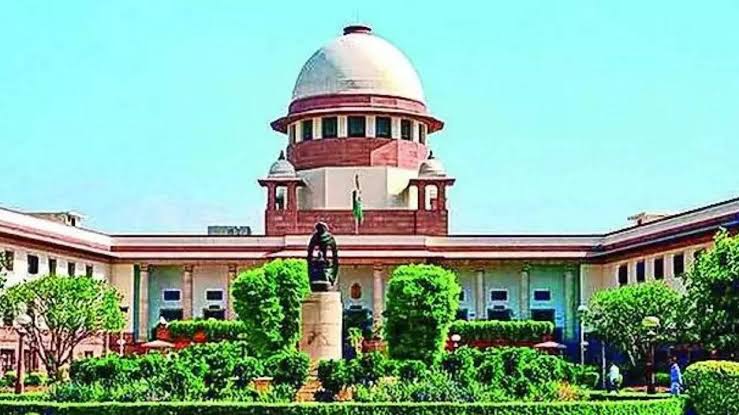
The Central Government on Monday informed the Supreme Court that it has accepted recommendations to introduce comprehensive sex education in schools and colleges across the country and plans to implement them after receiving the court’s approval.

Representing the Centre before a bench comprising Justices B V Nagarathna and R Mahadevan, Additional Solicitor General Aishwarya Bhati said the government had accepted the recommendations of an expert committee constituted to examine issues related to adolescent relationships and the implementation of the Protection of Children from Sexual Offences (POCSO) Act.

The committee was formed following directions from the Supreme Court, which had asked the Centre to explore ways to prevent consensual relationships among adolescents and cases involving minor pregnancies from being automatically criminalised under the POCSO law.
A 26-member national panel headed by an Additional Secretary in the Ministry of Women and Child Development was tasked with studying issues concerning adolescents’ right to privacy in consensual relationships and the legal implications under the POCSO Act.
The committee recommended the inclusion of comprehensive sex education and awareness about child sexual abuse in the mainstream curriculum of schools. It suggested that age-appropriate lessons on hygiene, personal safety, body awareness and the concept of safe and unsafe touch should be introduced from the foundational stage of education.
According to the recommendations, the National Council of Educational Research and Training (NCERT) should prepare the curriculum in line with these objectives and ensure that adolescent education programmes are aligned with the goals of the National Education Policy (NEP) 2020. The report also proposed reviewing existing adolescent education initiatives and strengthening them to promote holistic development, life skills, critical thinking and awareness among students.
The committee further suggested that schools appoint trained educators to conduct dedicated sessions on these topics from the primary level onwards. It recommended that such classes be held for 15 to 20 minutes at least twice a week. In addition, the panel emphasised the importance of involving parents, guardians and teachers through regular awareness meetings to help them understand children’s developmental stages and the role of sex education in ensuring their well-being and safety.
Senior advocates assisting the court welcomed the recommendations and highlighted the need for clearly defining the scope of comprehensive sex education. The Supreme Court said it would examine the report and issue appropriate directions in due course.
👉 Click here to read the latest Gujarat news on TheLiveAhmedabad.com