
The Income Tax Department on Saturday clarified changes to the taxation of share buybacks announced in the Union Budget 2026, stating that the revised framework will largely benefit small and retail investors.

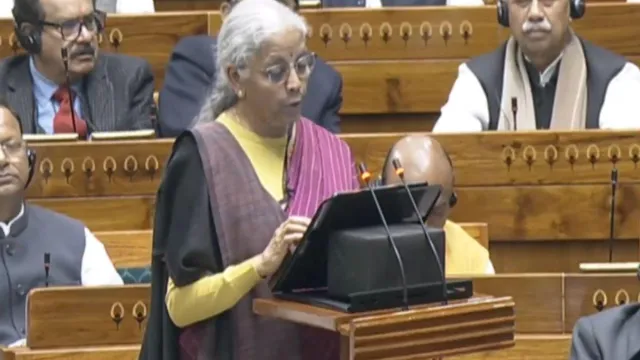
The clarification follows Finance Minister Nirmala Sitharaman’s proposal to shift buyback taxation back to the capital gains regime, undoing the dividend-based taxation system introduced in October 2024.

What is a buyback?
According to the Central Board of Direct Taxes (CBDT), a buyback refers to a company purchasing its own shares in accordance with company law.
In simple terms, a buyback occurs when a company offers to repurchase shares from its shareholders and subsequently cancels them. This reduces the number of outstanding shares, potentially boosting earnings per share and increasing promoters’ ownership.
What changed in Budget 2026?
Until now, buyback proceeds were taxed as dividend income, meaning shareholders were taxed according to their income tax slabs, which could be as high as 30%.
In Budget 2026, Sitharaman announced that buyback taxation would revert to the capital gains framework.
“Buybacks were earlier taxed as dividend, while the extinguishment of shares was treated as a capital loss. This created problems for small shareholders who had no capital gains to offset the loss,” the Income Tax Department said, adding that buybacks are conceptually capital in nature.
Why was the earlier system problematic?
Under the dividend taxation system effective from October 1, 2024, shareholders were taxed on the entire buyback amount, without factoring in the original purchase price of the shares.
Although shareholders were allowed to record the purchase price as a capital loss after the shares were extinguished, many retail investors had no capital gains against which to set off this loss. As a result, they could end up paying tax even when there was no real economic gain.
How will buyback tax be calculated now?
Under the new regime, buyback proceeds will be taxed like regular capital gains.
The Income Tax Department said that shareholders other than promoters will pay tax at applicable capital gains rates—12.5% on long-term capital gains for both listed and unlisted shares, 20% on short-term gains for listed shares, and applicable slab rates for short-term gains on unlisted shares.
Capital gains will be calculated as:
Buyback price – Cost of acquisition
For instance, if a share purchased at ₹100 is sold back to the company for ₹150, the taxable capital gain will be ₹50.
If the share was held for more than 12 months, the gain will be taxed at 12.5%.
If held for less than 12 months, it will be taxed at 20%.
These rates are significantly lower than dividend taxation, which could reach up to 30% depending on the taxpayer’s income slab.
What about promoters?
To prevent misuse of buybacks, the government has retained higher tax rates for promoters.
Indian promoters will face an effective tax rate of 22% on buyback gains, while overseas promoters will be taxed at an effective rate of 30%.
“Overall, buyback taxation has been simplified with benefits to small shareholders,” the Income Tax Department said in a post on X, noting that promoters’ tax liability will remain largely unchanged.
👉 Click here to read the latest Gujarat news on TheLiveAhmedabad.com