
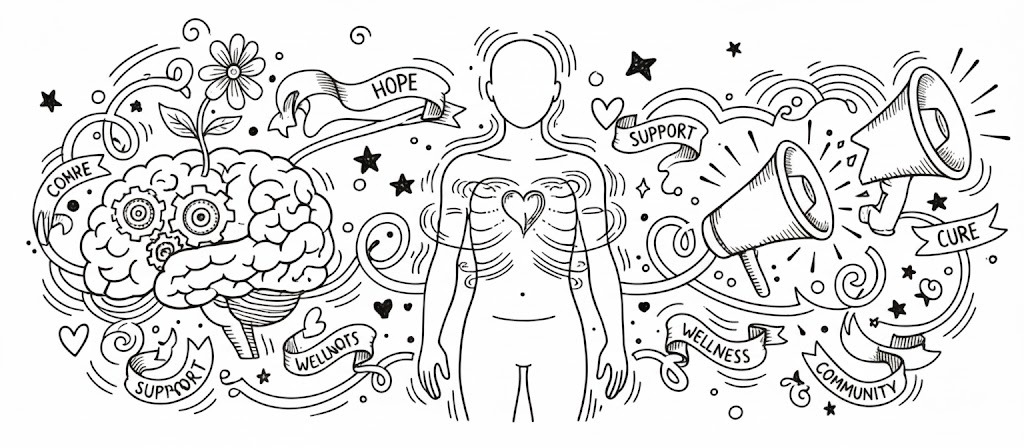
Cancer is one of the most serious and challenging diseases of our time. Although advancements in medical science have made treatment more effective, the social perception of cancer continues to be shaped by misconceptions, fear, and prejudice. Cancer is not merely a physical illness; it is a life- altering experience that deeply affects the mental, emotional, and social lives of patients and their families.

While working closely with cancer patients, it is often observed that many individuals experience discrimination and social distancing—not only from society at large, but also from relatives, neighbours, and sometimes even their own family members. There is still a widespread misconception that cancer is a contagious disease or that interacting with a person diagnosed with cancer may pose a risk. Such false beliefs push patients into social isolation.

Physical changes caused by cancer—such as hair loss, weight loss, fatigue, and the side effects of treatment—have a profound impact on patients’ self-esteem and body image. When these challenges are compounded by social neglect, avoidance, or indifference, the psychological distress becomes even more severe. Many patients share that during their illness, what they need most is emotional support—someone who listens, talks with them, and shows genuine care and concern.
During a group therapy session, one patient shared a particularly moving experience. They spoke about calling relatives during their illness, only to have their calls repeatedly unanswered. Some people assume that when a cancer patient reaches out, they are seeking financial assistance. In reality, patients are often simply looking to share their feelings or hear a few words of reassurance. Such neglect deepens their sense of loneliness and emotional exhaustion.
While medical treatment is crucial in the fight against cancer, mental health care, social support, and acceptance are equally important. Research clearly shows that patients who receive emotional support from family, friends, and society tend to cope better with treatment, experience lower stress levels, and enjoy a better quality of life.
As a society, we have a responsibility to view cancer not through fear and misinformation, but through sensitivity and humanity. Rather than isolating cancer patients, it is essential to promote social inclusion. Offering communication, respect, and emotional support is a true measure of social responsibility.
To eliminate stigma and discrimination, there is a strong need for public awareness, open dialogue, mental health education, and the sharing of lived experiences. Cancer can affect anyone; it is not a result of personal fault or wrongdoing. Patients need not only medical treatment, but also a society that understands and stands by them.
Today, the need is to see individuals not merely as “cancer patients,” but first and foremost as human beings. If society offers compassion, acceptance, and companionship, the fight against cancer can become more humane, hopeful, and empowering.
The mission of Siddharth Gupta Memorial Cancer Hospital is to stand as a trusted institution that transforms cancer care by improving survival rates, enhancing the quality of life, and supporting patients and families throughout their cancer journey.
At Siddharth Gupta Memorial Cancer Hospital, we have been working for the past four years to ensure that every patient, regardless of the type or stage of cancer, receives timely, personalized, and multidisciplinary treatment with dignity and hope. This includes comprehensive care, encompassing chemotherapy, surgery, and radiation therapy, along with physiotherapy, nutritional
support, and psychological counselling – all crucial components for the holistic development and positive outcomes of the patient.
For information about Cancer, Physiotherapy, Psychology, and Diet; please contact us at
+919209054470.
👉 Click here to read the latest Gujarat news on TheLiveAhmedabad.com