
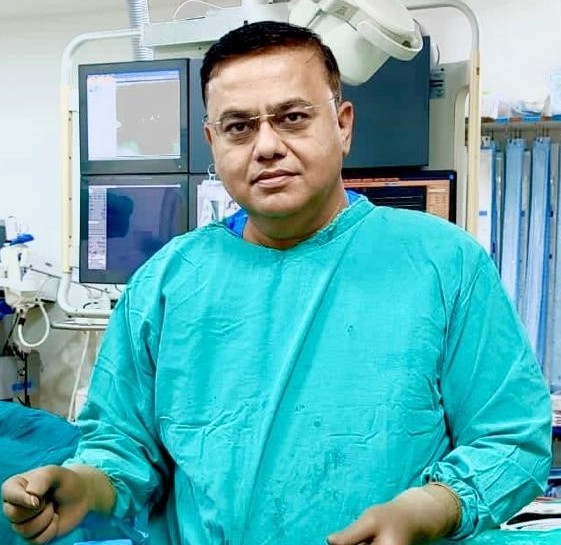
When Repeat Open-Heart Surgery Was Too Risky, an Advanced Minimally Invasive Procedure Brought Hope Back

A 68-year-old woman had already overcome one major health battle when she underwent mitral valve replacement surgery in 2015 for severe rheumatic mitral stenosis. The artificial valve served her well for nearly a decade, allowing her to lead a better quality of life.

However, over time, the bioprosthetic valve gradually degenerated. She began experiencing severe breathlessness, which slowly progressed to advanced heart failure. Fluid accumulated throughout her body, her urine output reduced significantly, and she developed CO₂ narcosis, making BiPAP support necessary even at home. Her condition became more critical with atrial fibrillation, bilateral pleural effusion, pneumonitis, and a urinary tract infection.
With multiple life-threatening complications and an extremely high surgical risk, repeat open-heart surgery was no longer considered the safest option.
When she arrived at Wockhardt Hospital, Nagpur, the Structural Heart Team led by Dr. Nitin Tiwari, Senior Interventional Cardiologist, carefully evaluated her condition and decided to offer her another chance through one of the most advanced heart procedures available today.
Dr. Tiwari successfully performed a Transcatheter Mitral Valve Replacement (TMVR) using the Valve-in-Valve technique with a 23 mm Myval Transcatheter Heart Valve (THV).
TMVR is an advanced minimally invasive procedure in which a new heart valve is delivered through a blood vessel or a small incision without opening the chest. In this case, the new valve was implanted inside the patient’s failing artificial valve, restoring normal blood flow while avoiding the risks of repeat open-heart surgery. The procedure offers faster recovery and significantly less surgical trauma.
The procedure was technically successful, but recovery required equally intensive care. Following the intervention, the patient required ventilator support, intermittent non-invasive ventilation, aggressive heart failure management, intravenous antibiotics, drainage of pleural fluid, nutritional support, and continuous monitoring by the multidisciplinary team.
There were difficult days when progress was slow, but gradually she improved. She was weaned off the ventilator, her breathing became easier, oxygen levels stabilized, and the newly implanted valve functioned well. Day by day, she regained her strength. Eventually, she was discharged from the hospital with a stable heart, improved quality of life, and renewed hope. Speaking about the case, Dr. Nitin Tiwari, Senior Interventional Cardiologist, Wockhardt Hospital, Nagpur, said:
“Patients who are considered too high-risk for repeat open-heart surgery should not lose hope. Advanced structural heart interventions like Valve-in-Valve TMVR allow us to treat complex valve failures through minimally invasive techniques, offering patients a safer alternative with excellent outcomes. Careful patient selection, timely intervention, and comprehensive post-procedure care are the keys to success.”
This landmark case highlights Wockhardt Hospital, Nagpur’s expertise in advanced structural heart interventions and demonstrates how timely decision-making, cutting-edge technology, and coordinated multidisciplinary care can transform even the most complex cardiac cases.
For one family, this was not just a successful procedure—it was the beginning of a second chapter of life.
👉 Click here to read the latest Gujarat news on TheLiveAhmedabad.com