
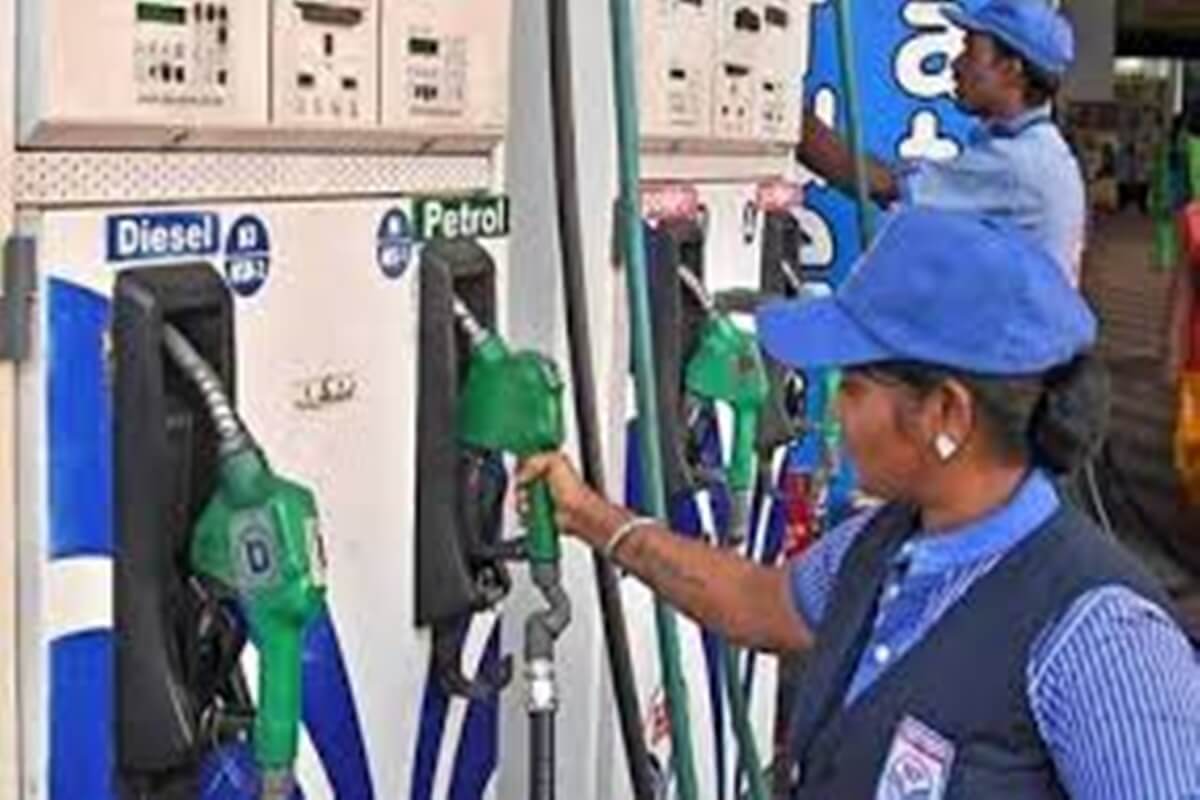
Petrol and diesel rates will be reviewed every 15 days, the Centre said on Friday after cutting special additional excise duties on both fuels by Rs 10 per litre each.

The reduction brings the total central excise duty down to Rs 11.9 per litre on petrol and Rs 7.8 per litre on diesel with immediate effect, the Petroleum Ministry said.

However, the move will not impact retail fuel prices, Vivek Chaturvedi, Chairman of the Central Board of Indirect Taxes and Customs, confirmed at a press briefing later in the day.
Chaturvedi said the cut was aimed at offsetting under-recoveries of oil marketing companies caused by price shocks and supply disruptions linked to the US-Israel conflict with Iran.
“There is a significant surge in crude prices. There has been a surge for petrol, diesel, and ATF (i.e., aviation turbine fuel, a factor in commercial air fares),” he explained, “The government has a calibrated approach… special additional excise duty (i.e., windfall tax) and cess have been brought (to curb) export of diesel and ATF. Rates will be reviewed every 15 days.”
The conflict — which began on February 28 with strikes on Tehran and has since expanded to target energy infrastructure across West Asia — also led Iran to block the Strait of Hormuz, through which 20–25% of the world’s seaborne crude oil and gas passes.
This escalation pushed global benchmark Brent crude prices sharply higher — from $68 per barrel on February 28 to beyond $100 by March 7. As of Friday afternoon (3.40 pm IST), Brent was trading at around $110 per barrel.
The Strait of Hormuz remains a critical supply route for India, with nearly 40–50% of its crude oil imports — around 2.2 to 2.8 million barrels per day — passing through it. India also sources significant volumes of gas from West Asia, including 16–17% of LNG exports from Qatar and the United Arab Emirates via the same route.
Additionally, large quantities of LPG — used by over 33 crore households — are imported from Qatar and Iran through the Hormuz, raising concerns about possible shortages.
The government, however, has maintained that there is no immediate risk. It said the country currently has about 60 days of crude oil stock and around 30 days of LPG supply, dismissing reports of shortages as a “deliberate misinformation campaign” aimed at triggering panic buying. Officials also indicated that efforts are underway to diversify crude and LPG import sources.
Sujata Sharma, Joint Secretary (Marketing & Oil Refinery) at the Ministry of Petroleum and Natural Gas, reiterated that India has “sufficient crude inventories”.
“We are still in a war situation. Our crude, LPG and LNG supplies have been affected (but) we have sufficient inventories and have lined up supplies for the next two months,” she said.
“The LPG and LNG situation is comfortable… refineries are working at more than 100% capacity and commercial supplies have been restored from over the past few weeks to 70 per cent.”
👉 Click here to read the latest Gujarat news on TheLiveAhmedabad.com