
In a remarkable case at Wockhardt Hospitals, a 64-year-old woman was successfully treated for a rare and severe gallbladder condition using advanced minimally invasive surgery. The case not only highlights the expertise of the surgical team but also shows how timely treatment and modern techniques can save patients even in complex situations.

The patient came to the OPD with severe abdominal pain, fever, nausea, and repeated vomiting. These symptoms had been troubling her for some time and had worsened significantly. She was also suffering from multiple health conditions (comorbidities), which made her case more complicated and increased the risk associated with surgery.

After a detailed clinical examination and investigations, including a CT scan, doctors diagnosed her with acute calculus cholecystitis — a condition where the gallbladder becomes inflamed due to stones. In simple terms, gallstones had blocked the normal flow, leading to infection and swelling of the gallbladder.
Considering the severity of her symptoms and her overall health condition, the medical team at Wockhardt Hospitals advised immediate surgery. She was planned for a laparoscopic cholecystectomy, which is a minimally invasive procedure to remove the gallbladder using small incisions.
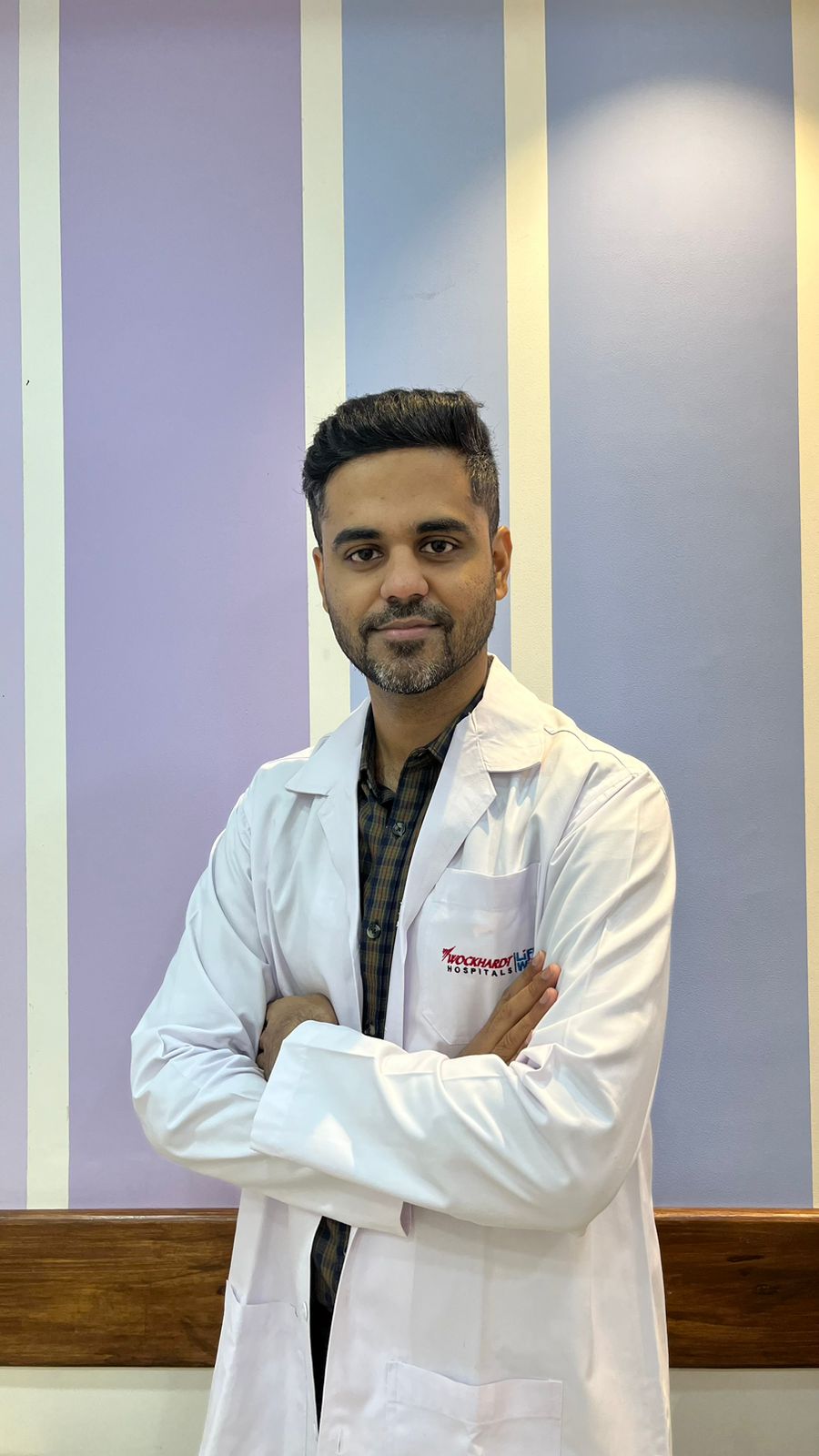
The surgery was led by Dr. Ankur Mishra, General & Laparoscopic Surgeon, who specializes in advanced minimally invasive procedures. What seemed like a routine gallbladder surgery turned into a rare and challenging case once the procedure began.
During the surgery, the team discovered something highly unusual — the gallbladder was filled with pus, a condition known as empyema of the gallbladder, indicating a severe infection. Even more surprising was the number of stones present. The gallbladder contained approximately 1000 to 1500 gallstones, which is extremely rare in medical practice.
Such cases are not only uncommon but also technically challenging. The inflamed and infected gallbladder increases the risk of complications during surgery. However, with the expertise of Dr. Ankur Mishra and the support of a well-trained anesthesia team, the surgery was completed successfully using laparoscopic (keyhole) technique.
The advantage of laparoscopic surgery is that it involves smaller cuts, less pain, minimal blood loss, and faster recovery compared to traditional open surgery. Even in this complex case, the minimally invasive approach helped ensure a safer and smoother outcome.
After the surgery, the patient was shifted to the ICU for close monitoring for 24 hours due to her high-risk condition. The team at Wockhardt Hospitals ensured continuous observation and care to manage any potential complications.
Her recovery was impressive. Within 6–8 hours after surgery, she was able to start moving, which is a very positive sign. Early mobilization helps prevent complications like infections and blood clots. She was also started on oral liquids soon after, followed by a gradual shift to a soft diet.
Under the continued care of Dr. Ankur Mishra and the hospital team, the patient showed steady improvement. She did not develop any postoperative complications and responded well to treatment.
By the fourth day after surgery, she had recovered sufficiently and was discharged in stable condition. Her case stands as a strong example of how even rare and severe conditions can be treated effectively with the right medical expertise and timely intervention.
👉 Click here to read the latest Gujarat news on TheLiveAhmedabad.com