
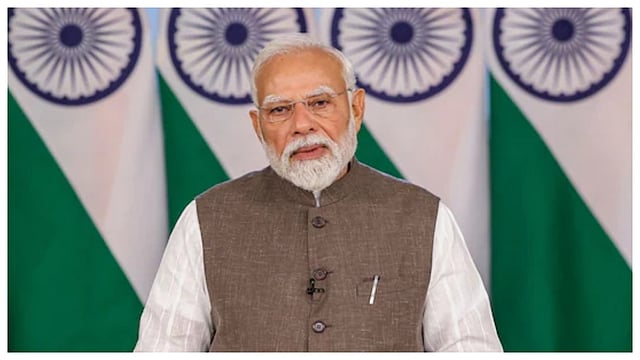
Prime Minister Narendra Modi is set to achieve a historic milestone on June 10, becoming the longest continuously serving democratically elected Prime Minister in India’s history.

On that day, PM Modi will complete 4,399 consecutive days in office, surpassing the record of 4,398 uninterrupted days held by India’s first Prime Minister, Jawaharlal Nehru. Modi first took oath as Prime Minister on May 26, 2014, and has remained in office since then.The record marks a significant chapter in India’s political history and reflects the changing nature of governance and electoral politics since Independence. Nehru’s tenure stretched from May 13, 1952, following India’s first general election, until his death on May 27, 1964.

Surpassed Indira Gandhi’s Record Last Year
This is not the first tenure milestone achieved by PM Modi. On July 25, 2025, he surpassed the record of former Prime Minister Indira Gandhi for the longest uninterrupted term in office. Gandhi served continuously for 4,077 days between January 24, 1966, and March 24, 1977.
Governing a Larger and More Complex India
The comparison between the Nehru and Modi eras highlights the dramatic transformation of India over the decades. India’s population was around 34 crore during Nehru’s tenure, whereas it had crossed 131 crore when Modi assumed office in 2014. Today, the population exceeds 146 crore, making governance far more complex.India’s political landscape has also expanded significantly. While 53 political parties contested the first general election in 1951-52, the number rose to 464 in the 2014 Lok Sabha elections and further increased to 744 parties in the 2024 polls.Similarly, the voter base has grown from around 17 crore voters in the country’s first election to more than 83 crore by 2014. Unlike Nehru, who governed with a dominant parliamentary majority, Modi has led in an era marked by strong regional parties, coalition dynamics and intense electoral competition.
Major Political and Institutional Milestones
PM Modi is also the first non-Congress Prime Minister to complete two consecutive full-majority terms and the first leader after Nehru to win three consecutive Lok Sabha elections.
During the past 12 years, the country has witnessed a significant expansion in higher education and healthcare infrastructure. The number of IITs increased from 16 to 23, IIMs from 13 to 21, and AIIMS institutions from 7 to 23.Another defining feature of Modi’s tenure has been governance in the age of round-the-clock news coverage, digital media and social media scrutiny, a stark contrast to the information environment of Nehru’s era.
Earlier this year, PM Modi also became India’s longest-serving elected head of government when his combined tenure as Chief Minister of Gujarat and Prime Minister crossed 8,930 days. With the 4,399-day mark on June 10, he will officially surpass a record that has remained unbeaten since the early decades of independent India.
👉 Click here to read the latest Gujarat news on TheLiveAhmedabad.com