
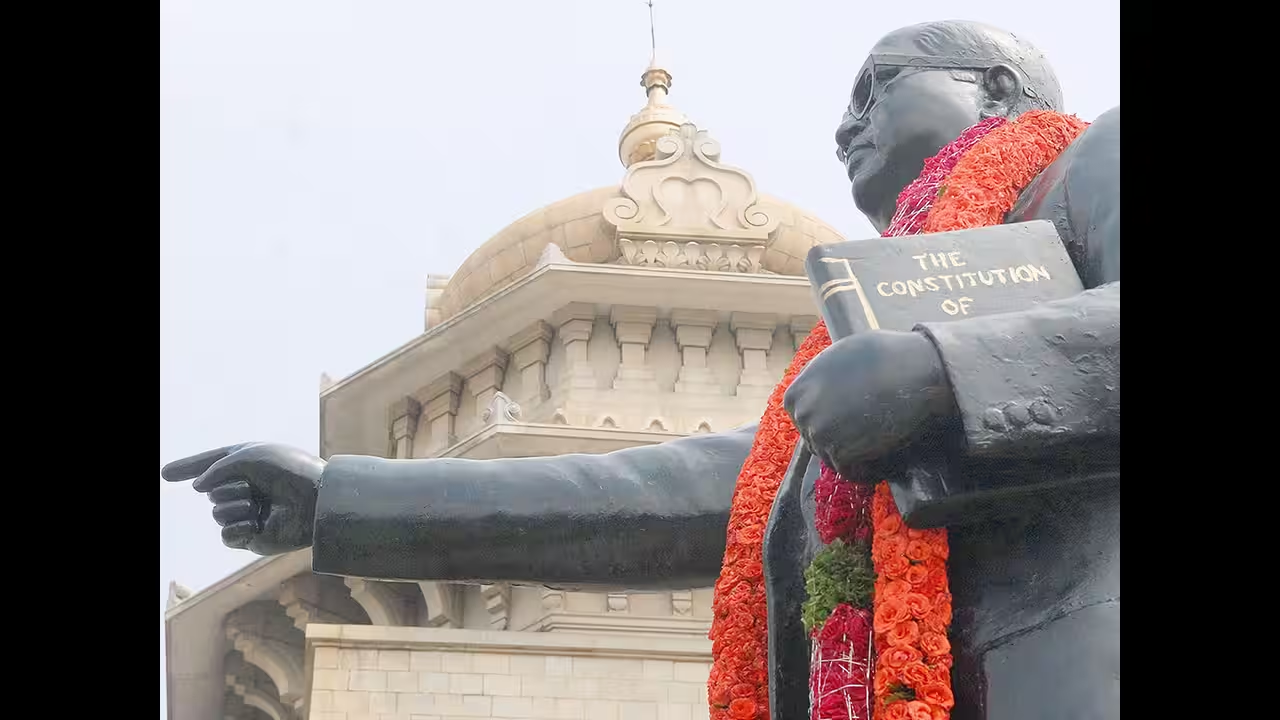
Erecting murals or statues of Dr. Babasaheb Ambedkar is not merely about beautifying surroundings but a powerful medium for propagating constitutional values, preserving history and inspiring future generations, the Nagpur bench of the Bombay High Court has observed. Land acquired for such purposes therefore serves public interest and is legally valid, the court held.

The bench of Justice Anil Kilor and Justice Raj Wakode passed the order while dismissing a petition challenging land acquisition for a Dr. Babasaheb Ambedkar mural in Amravati. Around 6,600 square feet of private land at Irwin Square had been acquired to build the mural and develop the surrounding area based on Ambedkar’s life and work; the landowners concerned had challenged the acquisition.

The court clarified that Ambedkar’s ideals of equality, justice and fraternity form the foundation of the Indian Constitution, and murals serve as an effective medium of public education on constitutional values, particularly among the youth, strengthening democracy. Citing Ambedkar’s own words — that just as individuals are mortal, so are ideas, and ideas must be continuously propagated to keep them alive — the court said murals and memorials are an effective way of preserving the legacy of great personalities and reaching society at large, squarely fitting the “public purpose” criterion under land acquisition law.
The court further observed that every generation builds on society’s progress, and if the ideas of great thinkers, reformers, scientists and philosophers are not preserved and propagated, each generation would have to start from scratch. Public murals are therefore not mere artworks but effective tools of public education that preserve history, culture and social values. The court dismissed all objections raised by the petitioners and held the land acquisition process to be lawful and valid.
👉 Click here to read the latest Gujarat news on TheLiveAhmedabad.com