
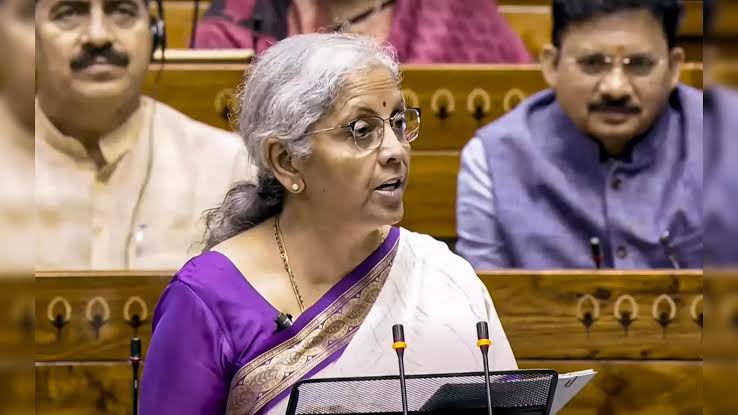
Finance Minister Nirmala Sitharaman on Saturday unveiled significant tax relief for millions of middle-class taxpayers, announcing that individuals earning up to ?12 lakh annually will not have to pay income tax.

“To taxpayers with up to ?12 lakh of normal income (excluding special rate income such as capital gains), a tax rebate is being provided in addition to the benefit from slab rate reductions, ensuring that no tax is payable by them,” Sitharaman stated in her Budget speech.

Additionally, under the new income tax regime, a standard deduction of ?75,000 has been introduced. This effectively means that salaried individuals with an annual income of up to ?12.75 lakh will have zero tax liability.
Is ITR Filing Still Required?
Despite the tax relief, experts clarify that individuals must still file their Income Tax Returns (ITR) if their income exceeds the basic exemption limit. Under the old tax regime, this limit stands at ?2.5 lakh, while in the new tax regime, it has been raised to ?4 lakh.
Tax professionals emphasize that ITR filing obligations are determined by income levels rather than actual tax liability. Even if a taxpayer’s liability is reduced to zero due to rebates or deductions, they must still file an ITR reflecting their nil tax liability.
Experts also advise taxpayers to file their returns even when no tax is due, as maintaining a clean financial record can be advantageous for securing loans, visas, or other financial services.
👉 Click here to read the latest Gujarat news on TheLiveAhmedabad.com