
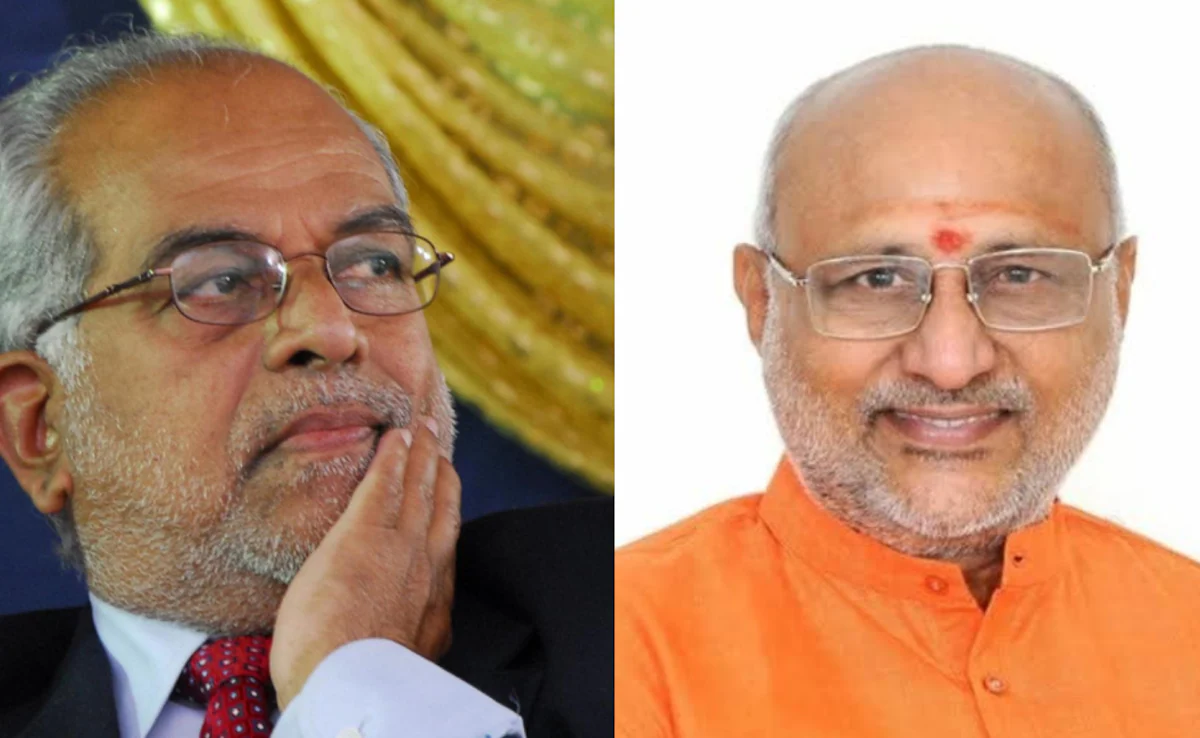
The office of the Vice President of India holds a pivotal place in the country’s constitutional framework, ranking second only to the President. Apart from presiding over the Rajya Sabha, the Vice President is also entrusted with stepping in as Acting President whenever the need arises. As the nation prepares to choose its next Vice President on Tuesday, September 9, the spotlight is once again on how this high office is filled.

This year’s contest features Maharashtra Governor C P Radhakrishnan, fielded by the ruling NDA, against the Opposition’s candidate, former Supreme Court judge B Sudershan Reddy. The election was necessitated after the abrupt resignation of Jagdeep Dhankhar in July, two years ahead of completing his tenure.

Role of the Vice President
The Vice President is the second-highest constitutional authority in India after the President. Article 63 of the Constitution establishes the post, while Article 64 designates the Vice President as the ex officio Chairman of the Rajya Sabha. In case of a vacancy in the presidency or if the President is unable to discharge duties due to illness, absence, or any other reason, the Vice President steps in as Acting President with full powers and privileges.
Election Process
The election is conducted under Article 66 of the Constitution. The Vice President is chosen by an electoral college comprising members of both Houses of Parliament, including nominated members. Voting is carried out through proportional representation by means of the single transferable vote, and ballots are cast in secret.
Currently, the electoral college consists of 782 members—543 from the Lok Sabha and 239 from the Rajya Sabha (including nominated members). Each voter marks preferences for candidates, with the first preference being mandatory for the vote to be valid.
Eligibility and Tenure
To be eligible, a candidate must be an Indian citizen, at least 35 years old, and qualified for election to the Rajya Sabha. A sitting member of Parliament or State Legislature, if elected, automatically vacates their seat upon assuming office. The Vice President serves a five-year term but continues until a successor takes charge. Resignation is submitted to the President, while removal requires a resolution passed by the Rajya Sabha and agreed to by the Lok Sabha.
Disputes and Legal Oversight
Article 71 assigns the Supreme Court the authority to decide disputes relating to the election of the President or Vice President, and its decision is final. Parliament also has the power to legislate on matters connected with these elections.
The Vice President’s office thus combines ceremonial significance with constitutional responsibilities, making the election a key event in India’s parliamentary democracy.
👉 Click here to read the latest Gujarat news on TheLiveAhmedabad.com