In 2025, the internet didn’t just shape culture—it reshaped language itself. From TikTok trends and AI breakthroughs to food culture and online debates, new words didn’t merely emerge; they dominated feeds, captions, comment sections, and group chats.

Here’s a roundup of the terms that defined the year, and how people actually used them online.

Rage Bait
Oxford University Press named rage bait its Word of the Year—and social media users weren’t surprised.
Meaning: Content designed to provoke anger and drive engagement through arguments and outrage.
In use: “That post claiming Kolkata has no good food is obvious rage bait.”
Vibe Coding
Collins Dictionary captured a major shift in tech culture with this one.
Meaning: Writing code with AI assistance, guided more by intuition than rigid technical structure.
In use: “Deadlines are brutal, so I’m vibe coding and hoping for the best.”
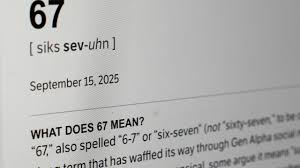
6–7
Dictionary.com’s Word of the Year confused many—until TikTok decoded it.
Meaning: A vague expression suggesting something is average, uncertain, or just okay.
In use: “The new song? It’s fine… kind of 6–7.”
Broligarchy
Cambridge Dictionary added this term as conversations around power and privilege intensified.
Meaning: A system dominated by elite men, particularly in tech, business, or politics.
In use: “Another leadership panel with no women—pure broligarchy.”
Dumbphone
A reaction to rising screen-time anxiety.
Meaning: A basic mobile phone limited to calls and texts, with no apps or internet.
In use: “Honestly considering a dumbphone—my screen time is out of control.”
Ghost Kitchen
Food delivery apps pushed this term into the mainstream.
Meaning: A commercial kitchen that operates only for delivery, with no physical dine-in space.
In use: “You won’t find this place on the street—it’s a ghost kitchen.”
Tradwife
Another Cambridge Dictionary entry that sparked heated debate online.
Meaning: Women who promote traditional homemaking roles, often through stylised social media content.
In use: “That reel romanticising housework felt very tradwife-coded.”
Slop
Merriam-Webster captured internet fatigue with this blunt term.
Meaning: Low-effort, often AI-generated content flooding digital platforms.
In use: “This article is pure slop—no originality at all.”
Mewing
A viral self-improvement trend focused on facial aesthetics.
Meaning: A jawline exercise involving tongue posture.
In use: “He’s been mewing for six months and won’t stop talking about it.”
Gyatt
TikTok reaction culture made this word impossible to miss.
Meaning: An exclamation expressing shock or admiration, often at someone’s appearance.
In use: “He saw the outfit and just said ‘gyatt.’”
Bussin’
Food creators kept this slang going strong.
Meaning: Exceptionally good, especially when referring to food.
In use: “Didn’t expect airport food to be this bussin’.”
Clanker
Born from heated AI debates online.
Meaning: A clumsy AI bot or an awkward, robotic online interaction.
In use: “The comments are full of clankers arguing with each other.”
From algorithms to aesthetics, 2025 proved that the internet doesn’t just influence how we communicate—it actively creates the language we use to describe our world.
👉 Click here to read the latest Gujarat news on TheLiveAhmedabad.com