
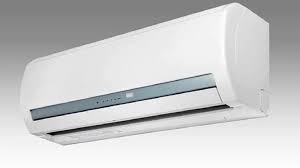
As temperatures begin to rise across India, leading room air conditioner manufacturers are increasing prices by 5–15 per cent to offset sustained rises in raw material and supply chain costs.

The price hikes, being implemented between February and April, come just ahead of the peak summer season when demand for air conditioners usually surges.

Major brands, including Daikin, Voltas, Blue Star, LG Electronics, Haier and Mitsubishi Heavy Industries, have announced price increases across models, citing higher input costs for key materials such as copper, a weakening rupee, new energy-efficiency norms and rising freight costs.
Industry executives said that while the price adjustments are unavoidable, they expect strong sales this year, supported by forecasts of a hotter summer and improved energy efficiency from new star-rated models.
Kanwaljeet Jawa, Chairman and Managing Director of Daikin India, told PTI that the company will increase prices by up to 12 per cent from April, depending on the model.
“The new energy norms have come, which have made products more efficient. Also, prices of materials such as copper have gone up; the US dollar is at an all-time high (in comparison to the Indian rupee). Besides, there are a lot of uncertainties due to global turmoil, and freight costs have also gone up, making imports (of components) costlier. So there is no alternative,” he said.
He added that all companies in the industry have been forced to raise prices as there is no escape from the rising costs.
When asked whether the price hike would affect sales this year, Jawa said, “We are expecting a hot summer in 2026. At least it should touch the levels of 2024, when the industry had record sales. I think this year it should see at least a 15 per cent growth.”
B Thiagarajan, Managing Director of Blue Star, said the company had already raised prices by 8–10 per cent in mid-February. However, the impact is not yet visible in the market as older inventory is still being sold.
“Dealers lifted stocks earlier as a price increase was going to happen. They bought in early, so they will be selling the old stock,” he said, adding that newly priced inventory will take time to reach the market.
The room air conditioner industry did not perform well in 2025 due to unseasonal rainfall and other factors, which affected sales. However, the industry witnessed strong growth in 2024 when several parts of the country experienced intense heatwaves.
Experts believe that competition will remain intense in the Indian room air conditioner market this year, with companies striving to gain market share after the sector recorded negative growth in 2025.
Market leader Voltas, a Tata Group firm, is also implementing a 5–15 per cent increase in AC prices to pass on higher input costs to consumers.
Mukundan Menon, Managing Director of Voltas, said rising copper prices, a weakening rupee and the implementation of new energy-efficiency standards have steadily pushed up input costs.
“Over the past few months, input costs have been steadily increasing, driven by rising copper prices, a weakening rupee, and the implementation of new energy-efficiency standards. To ensure we continue delivering high-quality, energy-efficient air conditioners to our customers, we will be undertaking a modest and carefully calibrated price adjustment in the range of 5-15 per cent during the year,” Menon said.
Similarly, LG Electronics India has also raised prices following the new energy norms. Its Director and Co-Chief Sales and Marketing Officer Sanjay Chitkara said prices have increased by around 7 per cent for 3-star models and about 9–10 per cent for 5-star models.
“These energy-efficient ACs deliver roughly 11 per cent better efficiency, which helps consumers save on electricity bills over time, even as input costs like copper and aluminium remain much higher than last year. At the same time, the GST reduction from 28 per cent to 18 per cent has largely offset this additional cost, making the transition to more energy-efficient ACs easier for consumers,” he said.
The revised star-rating norms introduced by the Bureau of Energy Efficiency came into effect from January 1 this year. Under the new standards, a 5-star room air conditioner is about 10 per cent more energy-efficient.
Haier India has also raised prices between 5 and 8 per cent, according to its President N S Satish.
“We are increasing 5 per cent for 3-star models and around 8 per cent for 5-star products,” he said, adding that the hike will take effect from March.
Satish added that AC sales have already started picking up as temperatures have begun rising and expects the market to perform better than in 2024.
Mitsubishi Heavy Industries has also increased AC prices by about 5 per cent, said its Director Pradeep Bakshi, attributing the increase to the weakening of the rupee against the US dollar.
The Indian room air conditioner market is estimated at around 13.5 million units, with companies such as Voltas, LG, Daikin, Blue Star, Hitachi, Panasonic and Lloyd competing for market share.
👉 Click here to read the latest Gujarat news on TheLiveAhmedabad.com