
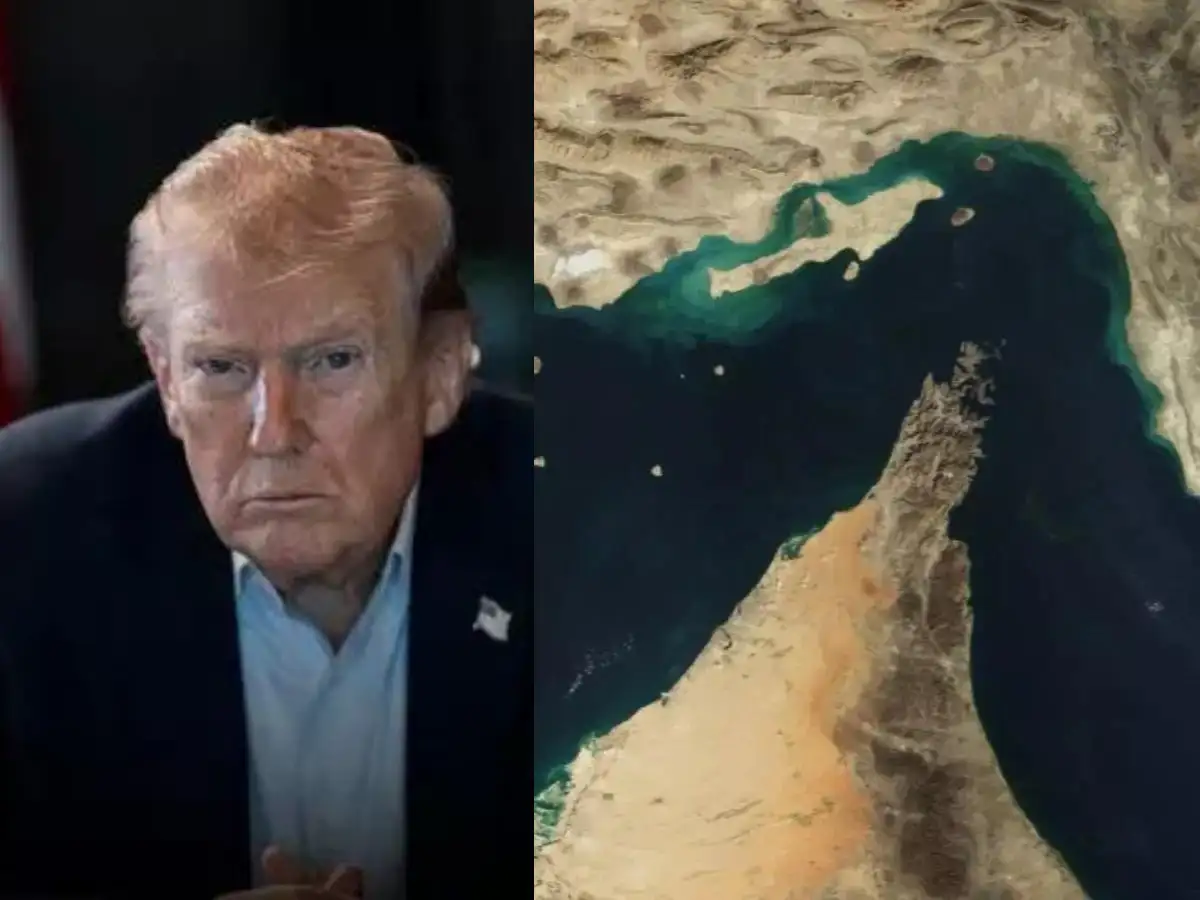
In a sharp escalation of tensions, Donald Trump on Sunday issued a 48-hour ultimatum to Iran, warning that the United States could launch strikes on Iranian power plants if Tehran does not fully reopen the Strait of Hormuz without restrictions.

Taking to Truth Social, Trump signaled readiness for military action, stating that any strikes would begin with Iran’s largest power facility if the key global oil route remains disrupted.

The warning follows growing concerns over Iran’s alleged moves to block or threaten passage through the Strait of Hormuz—a critical corridor between Iran and Oman that carries nearly 20% of the world’s oil supply. The situation has already unsettled global markets, with energy prices reacting sharply and multiple countries urging the immediate restoration of safe navigation.
Trump’s remarks mark one of the strongest public warnings in the ongoing standoff, indicating a possible shift toward targeting civilian infrastructure rather than strictly military assets. Analysts caution that such a move could significantly escalate the conflict, affecting civilian life in Iran and increasing the risk of a wider regional crisis.
The development comes after a reported escalation by Tehran, which allegedly launched two ballistic missiles toward the US-UK military base at Diego Garcia, according to Sky News. Although the missiles did not hit their target, officials estimate they travelled nearly 4,000 kilometres—far beyond earlier assessments of Iran’s strike range—raising fresh concerns about the scope of its missile programme.
Responding to the incident, Eyal Zamir warned that such long-range missiles are not solely a threat to Israel, but could also put major European cities like Berlin, Paris, and Rome within reach—highlighting the broader global security implications.
The United States has already stepped up its military presence in the region, reportedly continuing operations aimed at weakening Iran’s naval and missile capabilities. Meanwhile, Iran has shown no clear signs of backing down, fuelling concerns that tensions could escalate further if the deadline passes without resolution.
The Strait of Hormuz remains vital to global energy security, and any prolonged disruption could have far-reaching consequences, particularly for oil-importing nations like India. Rising crude prices could drive up fuel costs and inflation, making the situation critical for economies worldwide.
As the 48-hour deadline unfolds, attention is firmly on Iran’s response. Whether it leads to de-escalation or further military action may determine the next phase of an already volatile geopolitical crisis.
👉 Click here to read the latest Gujarat news on TheLiveAhmedabad.com