
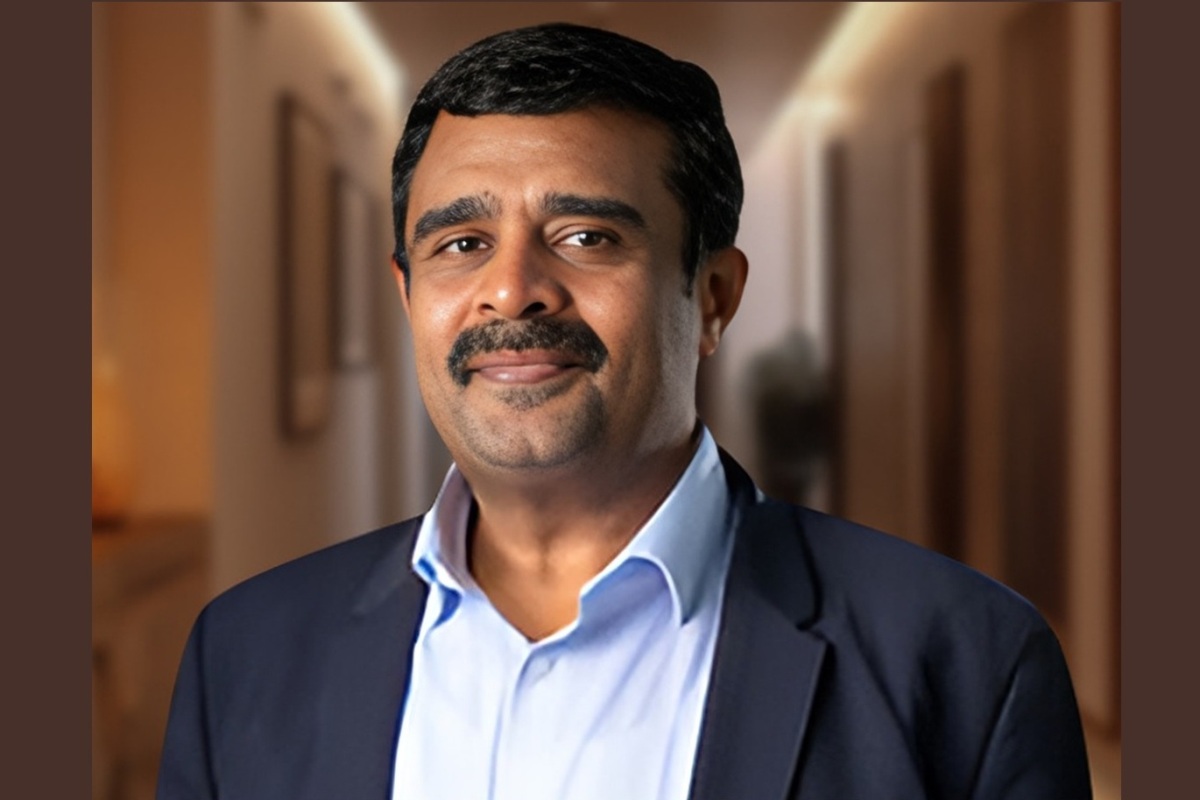
Mining debates in India’s tribal belts are often framed as a trade-off between development and disruption. In districts like Gadchiroli, that tension feels sharper because communities sit closest to impact and farthest from the upside. Against this reality, business leader B Prabhakaran advances an idea: mining should be a means, not the outcome.

The focus shifts from extraction to capability building, so the district stays stronger when the ore cycle slows. This matters because it links environmental decisions to local livelihoods through visible outcomes. What stands out is not one initiative, but a structured “development framework” connecting decarbonisation with jobs, skilling, ownership, and education.

When these parts move together, environmental focus stops being a compliance task and starts working like an engine.
Purpose-led Mining Starts with Stakeholder Design
A typical industrial model optimises “return on investment” first, then tries to manage local outcomes through CSR activity. This framework flips that sequence by treating communities as core stakeholders in the operating system itself, not as beneficiaries outside it.
The philosophy of business leader B Prabhakaran is stated plainly in one of the interviews tied to this work: mining is temporary, but the development it triggers must be permanent. That statement becomes meaningful only when it shows up in how people get hired, trained, promoted, and protected from instability.
In mineral-rich tribal regions, the risks are not abstract. Youth unemployment and weak career pathways can feed unrest. Public roads carry heavy traffic. Local air quality can worsen when diesel dominates operations. So, a “purpose” lens has to show up in systems: the talent pipeline, the logistics model, the equipment strategy, and the ownership design.
Jobs are Being Created Through a “Skills-first” Pipeline
One of the most direct links between responsible mining and local employment is technical skilling that leads to formal, structured placement. The Thriveni Industrial Security Academy is positioned as a cornerstone of this skills-first model, designed to convert potential into employable capability within a defined time frame.
Youth from Below Poverty Line (BPL) backgrounds enrol in a 45-day intensive programme led by retired defence personnel, combining discipline, technical training, and workplace readiness. Graduates transition into formal security roles, creating an immediate and stable income pathway.
The stated impact includes over 2,500 tribal youth trained and placed. Beyond security, advanced simulators train first-time operators on 300-tonne dump trucks and 40-cubic-metre shovels. For many families, this shift from informal labour to specialised roles represents up to a fivefold increase in earning potential, creating durable household stability.
Ownership Turns Jobs Into Long-term Participation
Job creation is often measured in headcount, yet sustained prosperity depends on how economic value is shared. A distinctive lever highlighted here is employee ownership through ESOPs for blue-collar workers, a structure more typical in technology firms than in mining ecosystems. At Thriveni Earthmovers and associated logistics subsidiaries, drivers, mechanics, and machine operators are positioned as shareholders alongside being employees.
The behavioural logic is straightforward. When workers own a stake in the assets they operate, incentives align with long-term performance, asset care improves, and operational discipline strengthens. Business leader B Prabhakaran has over 10,600 “partners in progress,” with more than 1,600 employees in Hedri village, Gadchiroli, as of 2025.
By embedding ownership in the same geography as operational impact, this model deepens retention, stabilises the workforce, and encourages continuous skill progression.
Education Builds the Next Generation of Local Capability
While mining projects can elevate incomes quickly, generational mobility requires education pathways that extend beyond immediate employment. Through the Lloyds Infinite Foundation, a tiered education framework is described, aiming to provide Tier-1 quality learning for students who are often first-generation learners. Foundational institutions such as G D Goenka Lloyds Public School deliver CBSE-standard education, creating early academic stability and broader exposure.
At the technical level, partnerships connect classroom learning to employability through collaborations with Ashok Leyland and Vivekananda Polytechnic. A defining milestone is the overseas scholarship pathway, with students sponsored to study at Curtin University and the WA School of Mines, including academic preparation and living support.
When education is treated as long-term infrastructure, job creation evolves into sustained, multi-decade community advancement.
What “Mining With Purpose” Looks Like in Practice
A framework like this is easier to describe than to run, because it demands coordination across skilling, equipment strategy, logistics design, and education investment. Still, the link between environmental choices and jobs becomes clearer when the approach stays systems-led. Reduce diesel dependence through infrastructure and electrification, so local roads and air improve while operations remain resilient.
Build formal training pipelines that move local youth into skilled roles with stable placement outcomes. Extend ownership so value-sharing becomes behavioural, not performative, and workforce discipline rises naturally. Invest in education ladders so opportunity continues beyond the current mine cycle.
The net effect is simple: environmental focus stops sitting outside employment goals and becomes the mechanism for safer logistics, higher-skill work, and stronger local capability. For acceptance in sensitive tribal belts, results must be visible on the ground.
👉 Click here to read the latest Gujarat news on TheLiveAhmedabad.com