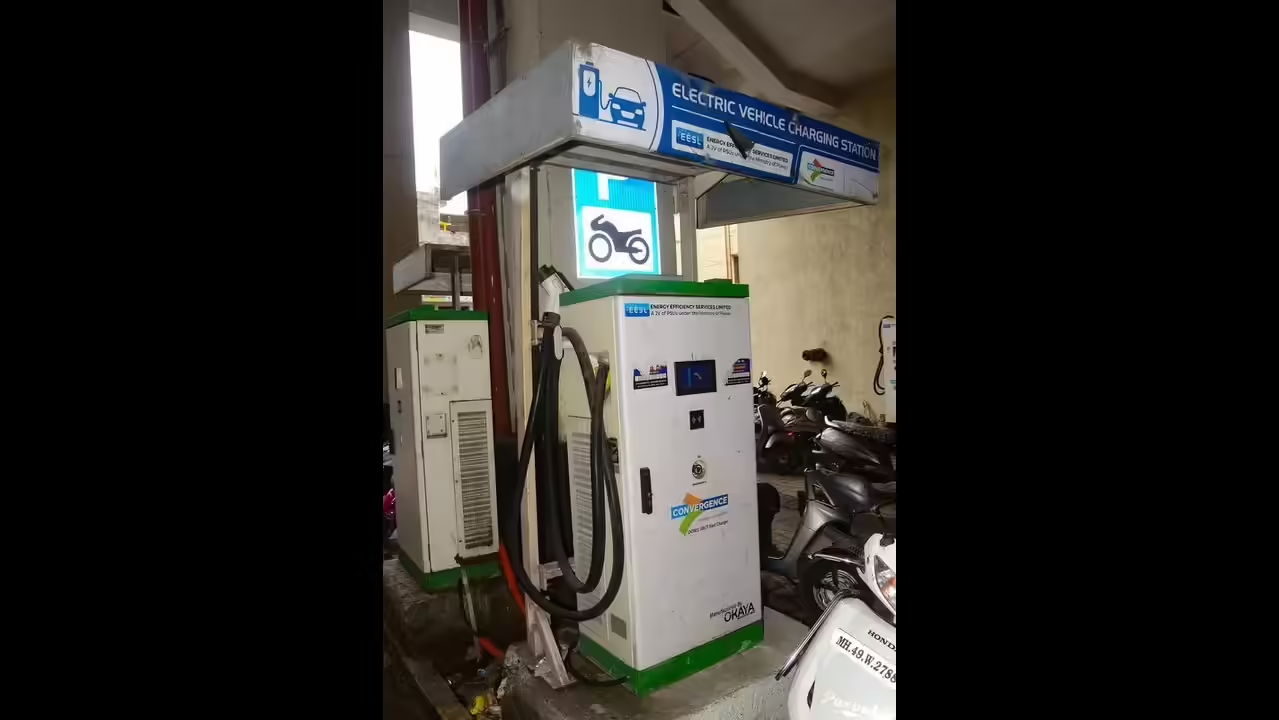
After years of rodent damage, vandalism, faulty SIM connectivity, and repeatedly tripped emergency switches, all electric vehicle chargers installed by Energy Efficiency Services Limited (EESL) at Nagpur Metro stations have finally been restored to full functionality. Officials confirmed on Wednesday that all 24 fast chargers are now commissioned and operational. What remains uncertain, however, is the level of actual usage.

EESL operates and maintains the charging infrastructure under a 10-year agreement with the Nagpur Metro Rail Corporation Limited, signed in 2020 and valid till 2030. The organisation bears all procurement, operation and maintenance costs. While the framework appears streamlined on paper, sustaining 24 chargers across open public spaces has proven far more complex in practice.

The disruptions have come from multiple fronts. Rodents damaged cables at stations located near open drainage areas, display units were vandalised, and emergency stop buttons were accidentally triggered across the network—each incident requiring manual intervention to restore service.
Adding to the technical issues, the chargers were originally configured with 2G SIM-based connectivity, even as 4G has become the standard for modern connected infrastructure. This mismatch led to recurring communication errors and inconsistent reporting on EESL’s portal, making live availability data unreliable. A software fix is currently under testing and is expected to stabilise the portal by June 1.
Officials acknowledged that rodent protection measures were implemented at the time of commissioning in 2020, but proved insufficient over time. “Continuous monitoring of open public spaces remains a practical challenge,” sources said, indicating that long-term operability in such environments remains an unresolved issue.
Despite the infrastructure being fully functional again, charging demand at Metro stations has remained significantly lower than initial projections. Officials noted that most private EV owners prefer home charging, while actual public charging demand largely comes from commercial fleet operators—especially app-based cab services covering high daily mileage.
To address this gap, EESL is exploring business-to-business partnerships with fleet operators such as Ola, Uber, and other EV taxi services, following similar models tested in Delhi. A market survey is also underway to better understand local charging requirements and improve utilisation across Nagpur stations, though the agency conducting the study has not been disclosed.
Under Maharashtra’s EV policy, Nagpur has been identified as one of six priority cities in the push to electrify 40% of the state’s public transport fleet. Whether the Metro charging network evolves into a widely used utility or remains underutilised infrastructure may ultimately depend less on operational uptime and more on how effectively fleet demand aligns with its availability.
👉 Click here to read the latest Gujarat news on TheLiveAhmedabad.com