
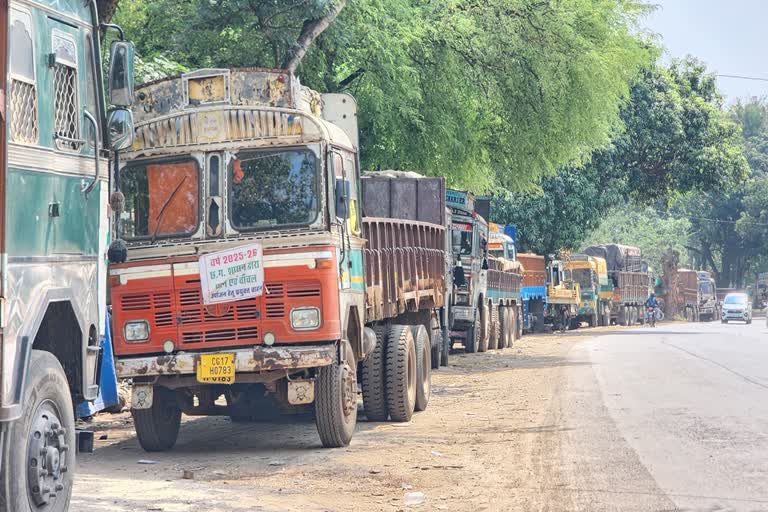
Long queues of trucks continued to be seen across Kutch for the third consecutive day as diesel shortages disrupted cargo movement between key logistics hubs such as Gandhidham, Mundra, Bhachau and Samakhiyali. The situation has particularly affected transportation linked to India’s major commercial ports at Kandla Port and Mundra Port.

Transporters say the immediate issue is limited diesel availability, but the larger crisis has emerged due to disruptions in the fuel distribution system and the widening gap between bulk and retail diesel prices following tensions in the Middle East.

The current situation traces back to an order issued by the district supply officer on May 16, based on a state government notification released earlier in March. Under the directive, industries and transporters operating “consumer pumps” were barred from purchasing diesel from regular retail petrol stations. Retail fuel stations were also instructed not to store more than 1,000 litres of diesel.
Kutch has around 234 such fuel facilities, including nearly 134 consumer pumps run by industries and transport operators, while another 100 are managed by cooperatives and mandalis. Earlier, these facilities used to receive diesel directly from oil marketing companies at discounted bulk rates.
However, following the recent Iran–Israel conflict and the resulting pressure on fuel supply chains, oil marketing companies reportedly withdrew bulk purchase discounts. As a result, bulk diesel prices rose sharply to nearly Rs 128 to Rs 145 per litre depending on suppliers, while diesel at retail pumps continued to sell at around Rs 95 per litre.
The steep price difference forced many transporters and industries to stop bulk purchases, making consumer pump operations financially impractical. Truck operators instead turned to retail petrol pumps for cheaper fuel.
The situation became more complicated after retail fuel stations were also directed not to supply diesel to vehicles linked to consumer pump operators. Fuel station owners say implementing such restrictions is nearly impossible on the ground.
“How is a pump attendant supposed to know which truck belongs to which consumer pump operator?” asked a fuel dealer in Gandhidham.
Industry representatives say the supply issue worsened because oil marketing companies allocate diesel to retail pumps based on their average sales from the previous six months. The sudden spike in demand was therefore not matched with additional allocations.
Around 10,000 container trucks reportedly move between Kutch ports and destinations across the country every day, making uninterrupted fuel supply critical for trade movement.
Gandhidham Chamber of Commerce & Industry president Teja Kanga said, “Kutch is a manufacturing and logistics hub and gateway to northern hinterland with a large spectrum of exim goods. The diesel allocation for the district cannot be treated so casually.”
Transporters claim diesel rationing has now become routine, with many trucks receiving only around 50 litres against the nearly 200 litres required for long-distance operations.
Mini trucks, cranes, loaders and cargo-handling vehicles operating inside port premises are also reportedly facing shortages as mobile diesel bowser services have slowed significantly. In several cases, operators are travelling nearly 20 kilometres outside port areas to refuel vehicles, causing delays in cargo handling and customs clearance.
“If I have a consumer pump in Samakhiyali and my truck is travelling from Bhuj to Khavda, how can I send it back only for refuelling?” asked transporter Jayesh Rajde.
👉 Click here to read the latest Gujarat news on TheLiveAhmedabad.com