
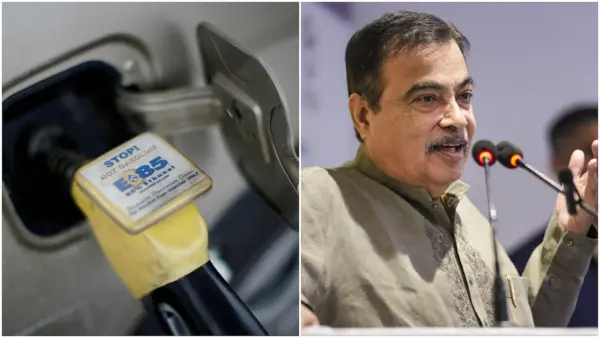
In a major push towards reducing India’s dependence on imported fossil fuels and promoting cleaner energy alternatives, Union Minister for Road Transport and Highways Nitin Gadkari on Saturday announced that 100% ethanol fuel has now received legal approval in the country, paving the way for vehicles to run entirely on ethanol.

Speaking at an event in Nagpur marking 12 years of the Narendra Modi government, Gadkari said, “The approval would enable ethanol to emerge as a ‘viable alternative to petrol’, helping India lower its burden of Rs 22-lakh crore in annual fossil fuel imports”.

The minister said the regulatory process was completed after he signed the relevant file on Friday evening.
“Last night at around 8 pm, I signed the file making rules for 100% ethanol and giving it legal process,” he said.
The move marks a significant step in India’s efforts to increase the use of alternative fuels and strengthen energy security. However, most vehicles currently on Indian roads are not compatible with E85 or E100 fuel, as they were designed for petrol or lower ethanol blends and lack the necessary engine modifications and fuel system components required to operate on high-ethanol fuels.
Automakers have only recently begun introducing flex-fuel vehicles capable of running on higher ethanol blends. Companies such as Maruti Suzuki, Hero MotoCorp, Toyota, Suzuki and Hyundai have already initiated development and launch plans for such vehicles.
Ethanol is a renewable biofuel produced from agricultural feedstocks such as sugarcane, corn and other crops. In India, the majority of ethanol production comes from sugarcane-based products, particularly molasses. The fuel can either be blended with petrol in varying proportions or used independently in specially designed flex-fuel vehicles.
India has steadily increased ethanol blending levels in recent years, moving from low-level blends of 5-10% towards the government’s target of wider E20 adoption. Higher ethanol fuels such as E85 and E100 are already in use in countries with mature flex-fuel vehicle ecosystems, particularly Brazil and parts of the United States.
Gadkari said the government’s long-term objective is to reduce fuel imports by expanding domestic fuel production and promoting alternatives to conventional fuels.
“The country has an import of 22-lakh crores. Now, the resolution we made to reduce this import… gradually gas will also be produced in the country. An alternative to petrol and diesel will also be ready,” Gadkari said.
He added that several automobile manufacturers are preparing to introduce vehicles capable of operating entirely on ethanol. Referring to earlier initiatives, Gadkari said he had launched a flex-fuel version of the Maruti Suzuki WagonR that can run on 100% ethanol. He also noted that Hero MotoCorp has already introduced flex-fuel motorcycles compatible with E100 fuel.
“In the next two months, companies such as Toyota, Suzuki, and Hyundai will also launch vehicles that run entirely on 100% ethanol,” Gadkari said.
According to the government, wider adoption of ethanol fuel could significantly reduce India’s crude oil import bill, improve fuel security and support the domestic biofuel industry. The initiative is also expected to create additional income opportunities for farmers by increasing demand for ethanol feedstock such as sugarcane and other agricultural products.
The policy is being viewed as a key component of India’s broader strategy to promote cleaner fuels, enhance energy self-reliance and reduce dependence on imported petroleum products.
👉 Click here to read the latest Gujarat news on TheLiveAhmedabad.com