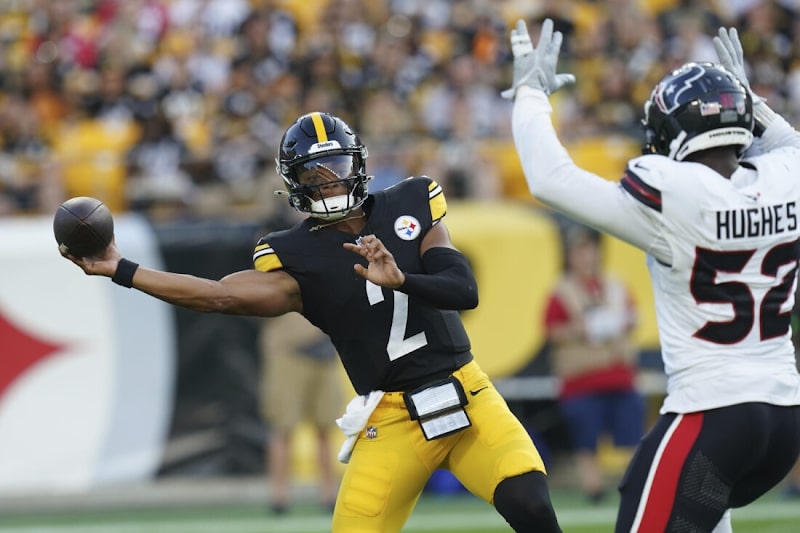
No other event draws in as many eyeballs in the United States as the “presentations of the National Football League”, and consequently, no other league absorbs nearly as many bats waagering near the same level of money. People love this contact sport. The most popular way that bets are placed nowadays is through oint spreads, where the bettor is still given credit for the win, as long as that team only loses by a certain number of points to “level the playing field”.

With the repealment of PASPA, almost every state has now legalized sports betting. So more people than ever should be interested in this style of betting to get started. That’s what we’ll be taking football lovers through today.

What is a Point Spread?
Around the world there are a lot of ways that bets are taken and a lot of numerical expressions in which betting odds are expressed. When it comes to betting in America, there are also moneylines, which represents how much money an individual can make in winnings per the amount of money they wager. For instance, a moneyline of +130 means that you would win 130 dollars for every 100 dollars you bet. A -160 odds would mean you’d have to bet 160 dollars to make a hundred. In the United Kingdom, fractional expressions are used for those types of bets.
In point spreads, people get the same amount of money whether they win a bet on the favorite or the underdog, but the difference is that if they bet on the favorite, they still have to win by X number of points. Suppose the Denver Broncos are playing the Buffalo Bills and this year Josh Allen the Bills’ quarterback has been destroying defenses, and they’ve been winning a lot and maintaining a big point differential.
The point spread could be -6 for the Bills. So for you to win your bet on the Bills, they’d have to not only win but win by at least 6. If the Broncos lose that game by 5 or they win by any amount and you bet on the Broncos, you win your bet. In both cases, even if you win your bet, you still don’t get to withdraw all of it, since the sportsbook or the betting exchange takes what’s called a vig, or about a 5-10% commission.
One of the reasons that point spreads are so popular is these are actually higher profit margin for sportsbook
How Point Spreads Are Set

These spreads aren’t pulled out of thin air—they’re carefully calculated by oddsmakers using a mix of statistics, advanced models, and real-time information. A sportsbook’s or “Vegas’” main goal is to always set the points spread right in the middle to encourage as many bets are placed as possible.
At the core of every point spread is a combination of human expertise and machine precision. Oddsmakers like Dafa Sports start by building a “power rating” for each team, which estimates how many points better or worse one team is compared to another on a neutral field. These ratings are influenced by:
- Win/loss records
- Offensive and defensive performance
- Player efficiency ratings
- Turnover margins
Each sportsbook gets all their information from professional specialized data providers whom they commission to give them the vast amount of information they benefit from. Here are some of the most significant sources.
Team Point Differential
Teams play very different year in and year out, and a team playing out of their minds last year is no reliable indicator of the here and now. You often see teams that go late into the season with an 11-1 record, which simply had the ball bounce their way a few teams. Point differential really says a lot more than win-loss record.
Injuries
The quarterback getting injured usually really derails an offense’s scoring ability. Although teams invest in great backup quarterbacks nowadays, since the position is so i mportant, and they very often outperform the point spread. Having an injured kicker or edge defender will definitely affect the point spread too. With the recent difficulty added to extra points, it’s no longer a gimme kicked from the two-yard line. It’s for this reason that NFL head coaches are required by rule to report their injuries before games.
Home Field Advantage
In the NFL, this is normally worth about 3 points. The Seattle Seahawks have one of the most famous home field advantages with one of the loudest stadiums in football. In any case, the home crowd drowning out the opposing offense’s play calling certainly helps. On top of that, some referees are known to favor certain teams over the others. Many of them statistically call more penalties on away teams too.
Weather Conditions
Rain adds a lot of randomness to games since that means a lot more fumbles and interceptions too. If a team manages to scoop up the ball more often it could decide the game. But just the ball being wet in the first place makes it hard to pass, and for that reason there are fewer points scored which means narrower point spreads. Snowy games are the opposite. In this case, offensive players are able to dart off past defensive backs before they have the time to change direction.
Defensive Slugfests or High-Octane Offenses
Similar to rainy games, having a defensive battle will also narrow the point spread – that is, if both teams happen to have stout defenses and lackluster offenses. On the contrast, having two pass-happy teams known to air it out but which have both neglected investing in their defenses will mean larger point spreads.
The Moving Spread

Another relevant thing to be aware of is the movement of the spread and what that means. One the odds are first posted for a game, the amount of money that keeps coming in is going to shift the point spread in the opposite direction of the side of the bet people are taking.
Let’s say 70% of the bets are on the Chiefs at -6.5, but the line drops to -5.5. That’s reverse line movement. Despite the public hammering Kansas City, the sportsbook is adjusting the line toward the underdog—suggesting significant money is coming in on the other side from respected, high-stakes bettors (aka sharps).
Reverse line movement tells you that the smart money disagrees with the public. And historically, following sharp line movement like this has been a profitable strategy – especially in NFL markets where betting volume is high and line movement is more meaningful.
Betting Strategies
One thing you have to know if you’re new to American football is the most common scores encountered. A full “goal” is a touchdown, which is worth 6 points and then the PAT or point after touchdown, which is worth one or two points depending on the attempt chosen. Then there are the smaller “field goals,” worth three points. Then there are safeties when the defense tackles the opposing offense in their own end zone, but these are a bit rare.
Are are some good strategies to keep in mind, the more you get acclimated to NFL spread betting:
- Spread shopping to get the best number: different outfits offer different odds
- Timing your bets earlier or later: sometimes it takes time for sportsbooks to catch up to injury news. You may sit in on a 49ers practice, and if you see Brock Purdy hobbling and there’s massively favored, that’s something to consider taking advantage of.
- Fading the public: a lot of people bet too heavy on the star players. As a savvier bettor,, you can take advantage of this, especially when that player has been down on his luck or doesn’t perform well against a specific defense or coach.
- Home underdogs being undervalued: teams play better at home, some of them much better. People tend to forget that.
👉 Click here to read the latest Gujarat news on TheLiveAhmedabad.com