

Let’s settle this first: That ₹2 crore term insurance plan isn’t just about life coverage — it’s one of the smartest tax-planning tools in your arsenal. But most taxpayers only scratch the surface.

Why ₹2 Crore Term Insurance Coverage is the New Baseline?
Before we dive into tax benefits, understand why ₹2 crore term insurance matters:
● Education Inflation: A child’s MBA costing ₹20 lakh today could cost over ₹43 lakh in 10 years (assuming 8% annual inflation)*
● Home Loans: Average metro city home loans now approach or exceed ₹1 crore
● Income Replacement: Maintains lifestyle for dependents (30X annual income rule)

*Indicative figure; actual inflation may vary. Source: Private financial planning reports.
The Tax Advantage:
Unlike investments, term insurance combines protection with tax savings under:
● Section 80C (Premiums paid)
● Section 10(10D) (Death benefit received)
● Section 80D (Eligible riders like critical illness)
How to Extract Every Rupee of Benefit Legally?
- Section 80C: Cut Your Tax Like a Pro
(Strategic premium planning for salaried & self-employed individuals)
How Much Can You Save?
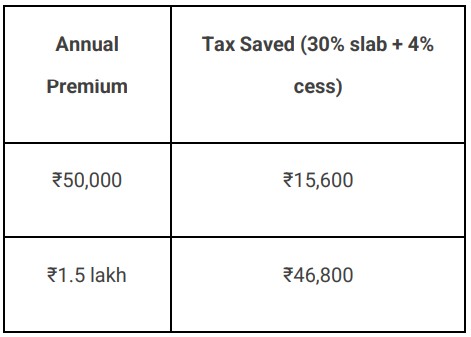
Assumes full deduction available under Section 80C. Individual savings may vary.
The 10% Rule Demystified
For your ₹2 crore term insurance policy:
● To qualify for tax-free proceeds under Section 10(10D), the annual premium must not exceed 10% of the sum assured
● Example: ₹20 lakh/year is 10% of ₹2 crore
Reality Check:
Most term plans cost just 0.1%–0.3% of the sum assured (₹20,000–₹60,000/year)
Pro Tip:
Combine with other 80C instruments for the full ₹1.5 lakh deduction:
● ₹50K term insurance premium
● ₹70K ELSS
● ₹30K PPF
2. Section 10(10D): Ensuring Tax-Free Claims
(Where some nominees may miss benefits unintentionally)
Claim Settlement Checklist
● Nominee Awareness:
Educate nominees that term insurance payouts are tax-free under Section
10(10D) (subject to conditions)
● Document Safeguarding:
○ Policy bond (physical + digital copy)
○ Last 3 years’ premium receipts
○ Death certificate (with English translation if required)
● Timely Intimation:
Most insurers require notification within 90 days of death
Critical Exception (for ROP Plans)
● Death or maturity benefits may become taxable if:
○ Premiums exceed 10% of the sum assured
○ Policy is surrendered before maturity
3. Hidden Tax Benefits Most Miss
a) Health Riders (Section 80D)
● Critical illness rider: Additional ₹25,000 deduction
● Senior citizen parent coverage: ₹50,000 deduction
b) Premium Frequency & GST Implication
● GST is charged at 18%, but annual premium payments may cost less due to insurer-offered discounts
● Example: Annual premium may result in slightly lower GST compared to monthly payments
GST amount does not change with frequency; savings result from discounts.
c) NRI-Specific Advantages
● Premiums paid remain eligible under Section 80C, if income is taxable in India
● Claims are repatriable under the Liberalised Remittance Scheme (LRS) — Subject to a $250,000/year limit
4. Costly Mistakes to Avoid
● Mistake 1: Not updating nominees after life events
Case Study: A Mumbai executive’s ₹2 crore term insurance went to his ex-wife as
he didn’t update the nominee post-divorce
● Mistake 2: Choosing the cheapest premium blindly
○ Slower claim settlements
○ Stricter underwriting
○ Rider-related exclusions
● Mistake 3: Assuming portability applies
○ Unlike health insurance, term plans are not portable — a new plan involves
new underwriting
○ Previous 80C benefits do not carry forward with a switch
5. Your Action Plan
For Salaried Individuals
● Adjust Form 16 declarations to reflect premiums paid
● Claim HRA separately — term insurance premiums do not affect HRA calculations
For Business Owners
● Only keyman insurance premiums are eligible as business expenses
● These payouts may be taxable
● Maintain separate records for insurance-related GST credits, if applicable
Final Calculation: ₹2 Crore Term Insurance Value
For a 35-year-old in the 30% tax bracket:
● Annual Tax Saved: Up to ₹46,800
● Lifetime Protection: ₹2 crore, tax-free
● Net Cost After Tax Savings: As low as ₹1,100/month (based on illustrative premiums)
The Bottom Line:
This isn’t just term insurance — it’s tax-efficient wealth protection that keeps your hardearned money where it belongs: with your family.
👉 Click here to read the latest Gujarat news on TheLiveAhmedabad.com