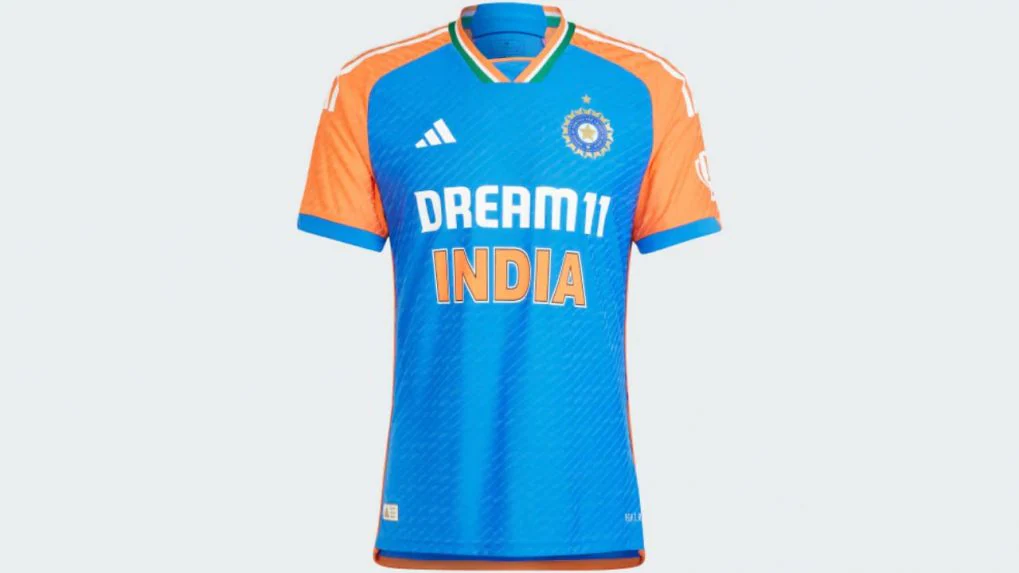
For two decades, India’s cricket jersey has been a marketing holy grail. It offers unrivalled visibility—700 million-plus viewers across more than 100 days of cricket each year—and a level of cultural salience money usually can’t buy.

Yet, for many brands that claimed that prime spot on Team India’s chest, the dream has turned into a nightmare.

A string of high-profile stumbles
Sahara’s 12-year run (2001–2013) ended amid regulatory scrutiny and decline. Oppo’s big-money deal (2017–2019) was cut short due to cost pressures, passing the baton to BYJU’S. The edtech unicorn’s sponsorship (2019–2023) coincided with post-pandemic challenges—funding crises, governance lapses, and regulatory heat.
Now Dream11, the fantasy sports giant that took over in 2023, faces uncertainty after the Online Gaming Bill 2025 banned money-based online games and their advertising.
This pattern raises an uncomfortable question: is the jersey cursed?
Brand guru Harish Bijoor believes the sequence is too striking to ignore. “The Indian cricket jersey seems to be a jersey with a jinx for sure,” he says. “We have had issues across each of the primary sponsors, whether it be Sahara, Byju’s or Dream11. Accident or reality—it makes for good reading.”
But Bijoor, Founder of Harish Bijoor Consults Inc., is quick to note that the problem lies less with the jersey itself and more with the firms that chase it.
“Brands with a fair bit of money in the kitty and wanting immediate and big visibility find the cricket jersey the best thing to buy,” he explains. “The trouble is that many sponsors come from volatile sectors and are ill-prepared to withstand the intense spotlight.”
The global playbook of “cursed” sponsorships
Adityan Kayalakal, VP and Head of Marketing at Jupiter Money, argues this phenomenon is not unique to Indian cricket.
“For decades, jersey and stadium sponsorships have been viewed as the pinnacle of brand visibility. Yet, the history of sports sponsorships is filled with high-profile brands whose ambitions on the field were followed by turmoil off it,” he says.
He cites global examples: Wish’s deal with the LA Lakers ended as the e-commerce player’s valuation collapsed; Real Madrid’s shirt sponsor BenQ went bankrupt within a year; West Ham’s partner XL Leisure folded mid-contract; Northern Rock and AIG were swept away by the 2008 financial crisis. Parmalat’s implosion engulfed European sports investments. Even entire marketing agencies and rights holders weren’t immune—ISL, a partner of FIFA and the IOC, folded amid fraud allegations, while FTX collapsed in one of the decade’s largest corporate scandals.
Venue naming rights also have a chequered history: Enron Field (Houston Astros) was renamed after Enron’s fraud scandal; PSINet Stadium (NFL Ravens), Adelphia Coliseum (Tennessee Titans), and Conseco Fieldhouse (Indiana Pacers) lost sponsors to bankruptcy. These examples highlight the risks for over-extended companies chasing visibility.
Kayalakal points out that high-risk sectors like edtech, crypto, online gaming, and travel need rapid awareness to fuel growth and attract investors. Sponsorships give instant salience but can strain fragile balance sheets. “Add regulatory shocks, economic cycles, and amplified scrutiny, and the jersey becomes an unforgiving spotlight.”
The cost doesn’t help either: India’s jersey rights can demand ₹50–130 crore annually. For legacy FMCG, BFSI, or auto giants, that is brand equity well spent. For fast-growing but fragile firms, it can be a destabilising gamble.
“The jersey is a shortcut to fame,” Kayalakal warns, “but as history shows, it’s also an unforgiving spotlight. Sponsorship can be a kingmaker, but it’s not for the faint-hearted. For some, the jersey becomes a badge of honor. For others, it’s the first stitch in a thread that unravels the whole fabric.”
Timing, not curse?
Not everyone believes in the jinx theory. Arjun Singh Chauhan, AVP and Head—Marketing & Growth at Apollo 24/7, says the setbacks are about context, not curses.
“It’s not a curse, it’s timing,” he says. “Post-COVID, traditional blue-chip sectors faced margin stress, while fast-growing players like edtech and gaming turned to cricket for instant scale. OPPO’s pull-out was driven by India-China tensions, not ROI. Beyond Sahara, most cricket sponsors such as Star, Wills, and Pepsi have been successful. These are sectoral trends coinciding, rather than brands failing because of any jinx or curse.”
For brands chasing pan-India imagination, the jersey delivers unmatched value—100+ days of cricket, 700M+ reach, at around ₹130 crore a year. OPPO, for instance, broke through a crowded mobile market to achieve 80%+ aided awareness. But lasting business impact requires sustained investment of at least five years.
“With new-age firms pivoting from ‘growth at any cost’ to profitability, it’s harder for them to justify big-ticket jersey spends. Legacy players with global ambitions are better placed. Tata’s IPL sponsorship is a great example. We’ll likely see the balance shift toward long-term equity rather than chasing short-term salience spikes.”
Chauhan predicts that the next big jersey sponsor will come from legacy sectors with deep pockets and category-creation ambitions—BFSI with fintech, auto with EVs, and telcos with 5G and AI. “There’s no bigger platform than cricket to fulfil a category creation ambition,” he says.
The debate over whether India’s cricket jersey is cursed or simply unlucky misses the deeper truth: it is the country’s most powerful marketing stage, but also its most punishing. For legacy brands with staying power, it is a golden opportunity. For high-growth firms burning cash, it can become a trap.
👉 Click here to read the latest Gujarat news on TheLiveAhmedabad.com