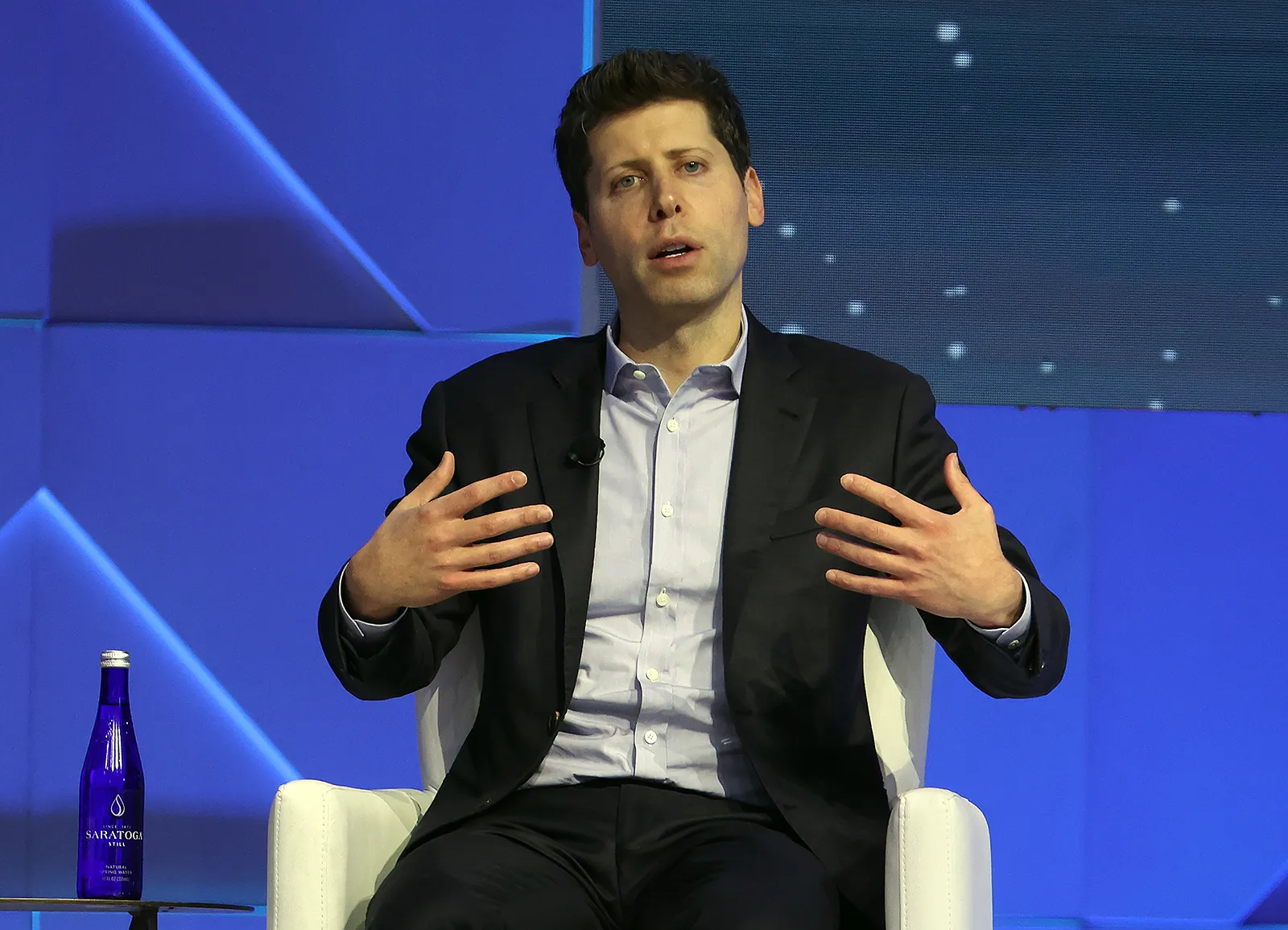
The debate around artificial intelligence and its impact on human life gained fresh momentum with remarks from OpenAI CEO Sam Altman. Accepting the Axel Springer Award this week, Altman said AI’s progress is advancing so rapidly that the technology may soon surpass human capabilities in ways previously confined to science fiction.

“In many respects, GPT-5 is already smarter than I am — and probably smarter than many others too,” he noted, while acknowledging that AI still struggles with basic tasks people handle instinctively. What matters, he stressed, is the steep pace of improvement, calling it “extremely rapid,” according to Business Insider.

Superintelligence on the Horizon
Altman suggested that artificial intelligence could soon push into territory beyond human reach. Within just a few years, he said, AI systems may be capable of producing scientific breakthroughs impossible for humans alone. “By the end of this decade, if we don’t have highly capable models doing things we ourselves cannot, I would be very surprised,” he remarked.
While he called this milestone a positive development, Altman admitted that it could also accelerate job losses worldwide.
The Jobs Debate
Few issues stir as much concern as AI’s impact on employment. Altman acknowledged that while technology has always transformed the nature of work, this shift could unfold at unprecedented speed. He envisions a future where 30–40% of current economic tasks are automated by AI.
However, he urged people not to view the change as jobs disappearing outright but as tasks being redistributed. Some professions will fade, new ones will emerge, and adaptability will be crucial. “The real skill,” he explained, “is learning how to learn.”
Balancing Risks and Hope
Despite fears that advanced AI could one day reduce humans to insignificance, Altman rejected the notion that people might become as irrelevant as ants. Recalling OpenAI co-founder Ilya Sutskever’s hope that AGI might care for humanity like a parent, Altman struck a more grounded tone: AI is immensely powerful but not intentional.
“Even without intent, asking it to do something could create outcomes we don’t anticipate,” he cautioned. “That’s why alignment with human values is essential.”
Beyond Chatbots: Hardware Plans
Altman also teased OpenAI’s hardware ambitions. After hiring a former Apple designer, the company is developing what he called a “small family of devices” aimed at reimagining how people interact with computers. Rather than juggling multiple apps, Altman envisions sleek devices that manage complex tasks seamlessly. In his view, AI marks the third major computing shift — following the keyboard-and-mouse era and the touchscreen revolution.
Parenting and Politics in an AI World
Now a new father, Altman reflected on what skills he hopes his son will master in an AI-driven future: adaptability, creativity, and resilience. He believes human curiosity and the search for meaning will ensure people remain central in an AI-saturated world.
Even politics, he said, will be reshaped. While he dismissed the idea of AI leaders any time soon, Altman expects world governments to rely increasingly on AI for decision support. But for now, he stressed, humans will continue to make the final calls.
On lighter notes, he admitted trying AI for relationship advice — before laughing it off as not one of his go-to uses.
Looking Ahead
If Altman’s predictions hold true, the next five years could bring changes more dramatic than any prior technological shift — disrupting industries, redefining jobs, and reshaping daily life. What is clear, however, is that OpenAI intends to be at the forefront of this transformation, balancing innovation with the responsibility of keeping human values at its core.
👉 Click here to read the latest Gujarat news on TheLiveAhmedabad.com