
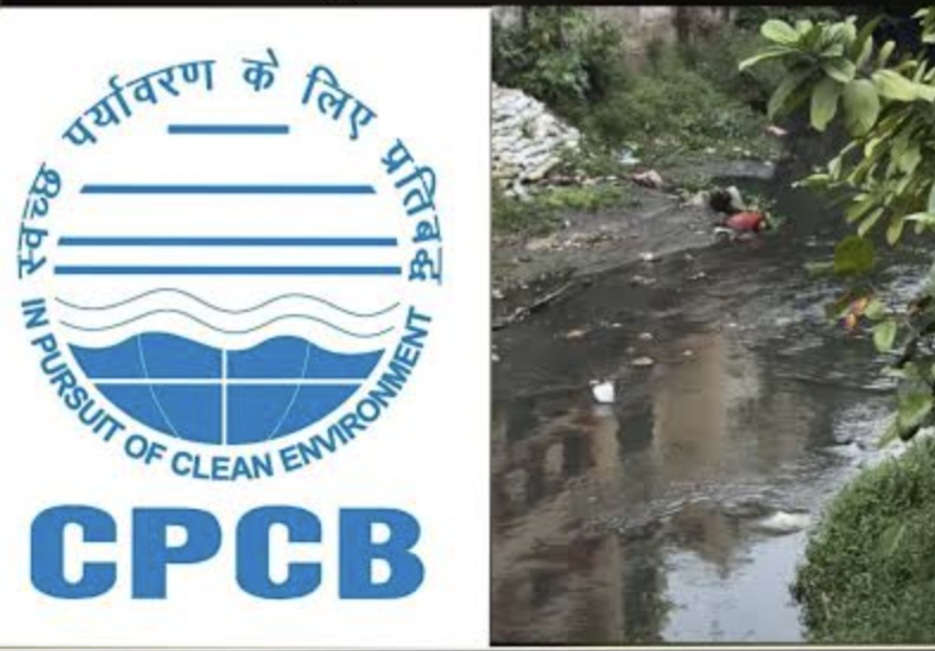
Misinterpretation sparks false claims of “clean” status — River missing from all CPCB pollution lists since 2008

The claim that the Central Pollution Control Board (CPCB) has declared Nag River “not polluted” in its October 2025 report is entirely false.

A review of CPCB’s official pollution assessments from 2008–09, 2018, 2022 and 2025 confirms that the Nag River has never been listed, tested, or classified in any national monitoring cycle. Its absence in CPCB reports doesn’t mean it’s clean — it simply means it has never been monitored.
The latest CPCB document, Assessment of Polluted River Stretches in India (2025), has been misread by several media outlets. It lists only those rivers monitored under the National Water Quality Monitoring Programme (NWMP) where Biochemical Oxygen Demand (BOD) exceeds 3 mg/L — the pollution threshold.
A recurring note in all CPCB reports clarifies: “Rivers not appearing in this list may either meet water-quality standards or have not been identified for monitoring.” This wording dates back to 2008 and explains Nag River’s repeated omission.
Historically, only Kanhan, Kolar, Wardha, and Weinganga have been marked polluted in the Nagpur basin. The 2025 report again lists Kanhan and Kolar, with BOD levels near 9.8 mg/L — Priority Class IV, indicating moderate-to-high organic pollution.
Officials from the Maharashtra Pollution Control Board (MPCB) confirmed that Nag River’s data are collected separately under the JICA-funded Nag River Rejuvenation Project, not CPCB’s national framework.
Experts say this omission exposes a serious monitoring gap. “When both downstream rivers are polluted, it’s scientifically inconsistent to call the upstream Nag clean. It simply hasn’t been tested,” an MPCB officer said.
In short, the Nag River has never been declared clean — only ignored. Its absence from CPCB records reflects a blind spot in monitoring, not an environmental recovery.
👉 Click here to read the latest Gujarat news on TheLiveAhmedabad.com