
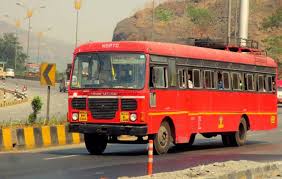
In a significant policy enforcement move, the Maharashtra State Transport Department has instructed all Regional and Deputy Regional Transport Offices to initiate strict action against schools that arrange excursions using private buses or their own school buses in violation of government norms. The directive, issued by Assistant Transport Commissioner Vijay Tiranankar, clearly states that school trips must now be conducted exclusively using Maharashtra State Road Transport Corporation (MSRTC) buses — popularly known as the iconic “Lalpari”.

This enforcement push comes amid growing concerns about student safety, lack of regulatory oversight, and the rising trend of schools relying on private tour operators for educational trips.

As per existing rules, schools are required to prioritize MSRTC buses for excursions. However, many private institutions continue to opt for their own buses or hire private tourist operators. With the latest instructions, any deviation from these guidelines will invite action, and transport authorities have been told to submit clear, factual reports detailing the measures taken.
The Education Department has also updated its guidelines regarding the nature and destinations of school excursions. For years, school trips in Maharashtra have predominantly focused on entertainment-based venues such as amusement parks, water parks, and resorts. The revised framework now makes it compulsory for schools to take students to historical locations, shifting the emphasis to cultural, geographical, and heritage-based learning. The aim is to make excursions more meaningful by exposing students to forts, monuments, museums, and heritage sites that offer deeper insights into history beyond textbooks.
However, this mandate also presents operational challenges for MSRTC. With a surge in demand expected from schools, the availability of buses for daily commuters may further decline, causing inconvenience for regular passengers. MSRTC is already struggling with shortages in several districts, and with private buses no longer permissible for school excursions, the corporation must now accommodate both student groups and the general public.
Officials note that MSRTC buses offer key advantages such as affordability, extensive statewide connectivity, and improved accountability regarding student safety. For schools and parents, the assurance of government-regulated and insured transport is seen as a major benefit.
Still, concerns persist. Schools and parents often point out that ST buses deployed for educational trips are outdated, less comfortable, and sometimes prone to mechanical issues during long-distance travel. The limited fleet also means buses are not always available on schedule, resulting in delays or cancellations. Many private schools argue that modern AC tourist buses provide safer and more reliable service — an option that will now be restricted except under special government-approved circumstances.
Sharad Gosavi, Director of the Primary Education Directorate, reiterated the mandatory norms for educational trips. “For every 50 students, five teachers must accompany the group. If girl students are part of the tour, female teachers are mandatory. Educational institutions are expected to strictly adhere to the guidelines,” he said.
The new directive marks a major shift in Maharashtra’s school excursion policy, aiming to prioritize safety, regulation, and educational value over convenience or luxury — even as both schools and the state transport system prepare to navigate significant implementation challenges.
👉 Click here to read the latest Gujarat news on TheLiveAhmedabad.com