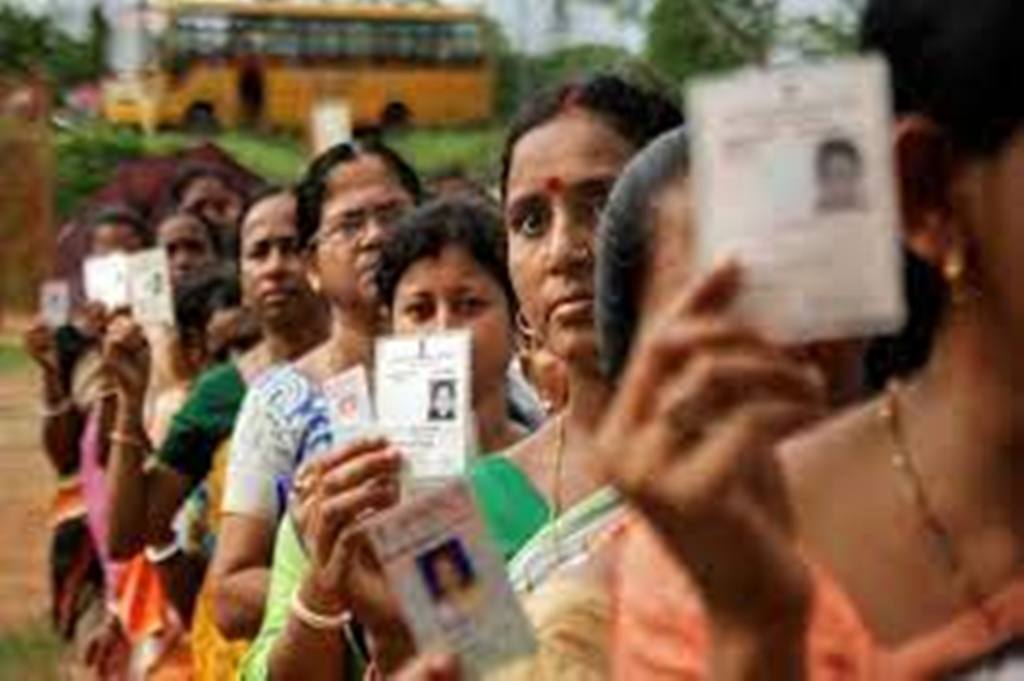
Voting for the Nagpur Municipal Corporation (NMC) General Election 2026 was held on Thursday, marking a decisive moment for the city’s political future as voters chose their ward representatives in a contest closely watched across Maharashtra.

Widely regarded as a stronghold of Chief Minister Devendra Fadnavis and Union Minister Nitin Gadkari, the civic election is being viewed as a critical test of the ruling Bharatiya Janata Party’s (BJP) development narrative, while also gauging the strength of the Congress’ revival efforts under city party chief Vikas Thakre.

Once a Congress bastion, Nagpur’s political landscape witnessed a major shift after 2014, coinciding with the BJP’s rise at the national and state levels. The BJP has since consolidated its position, retaining the Nagpur Lok Sabha seat in successive elections. In Assembly elections within the city limits, the BJP and Congress have shared seats in a 4–2 ratio. The 2017 NMC election marked a historic high for the BJP, which secured a record 109 seats. Eight years later, the 2026 civic polls are being keenly followed to assess whether voters endorse the BJP’s development claims or respond to the Congress’ renewed push.
While the BJP faces what is being seen as a direct “test of development”, the effectiveness of Thakre’s political strategy is also under scrutiny. Political observers note that despite repeated victories, the BJP’s dominance has shown signs of tightening contests. In the 2019 and 2024 Lok Sabha elections, Gadkari’s winning margins narrowed noticeably, defeating Nana Patole in 2019 and Vikas Thakre in 2024 in tougher-than-expected fights, even amid a nationwide BJP wave. These trends have added to the heightened political stakes of the current municipal polls.
Voting Details and Arrangements
As per the State Election Commission’s directives, polling is being conducted on January 15 from 7.30 am to 5.30 pm across 3,004 polling booths in the city. Municipal Commissioner and Election Officer Dr Abhijit Chaudhary appealed to citizens to participate in large numbers and exercise their democratic right.
Nagpur has a total of 24,83,112 voters, including 12,26,690 male and 12,56,116 female voters, who are electing 151 corporators from 38 multi-member wards. In wards numbered 1 to 37, voters were required to cast four votes, while Ward No. 38 required three votes. A total of 993 candidates are contesting the election.
The civic administration has made extensive arrangements to ensure smooth polling. Election materials and staff were transported using 504 buses, while polling was conducted in 964 buildings housing the 3,004 booths. As many as 3,579 presiding officers and 10,737 polling officials were deployed, with one police or home guard personnel stationed at each booth. Additionally, 244 zonal officers were appointed to oversee the process.
According to Nagpur Police, 321 polling stations were identified as sensitive, where additional security measures were implemented. To enhance voter convenience and inclusivity, each of the city’s ten zones had one pink polling booth and one model polling booth.
Counting and Digital Support
Vote counting will take place on January 16 from 10 am at ten zonal counting centres across the city. Each election decision officer will oversee around 20 EVM counting tables and four tables for postal ballots, with dedicated supervisors and assistants at each table.
To help voters locate their polling stations, the NMC Information and Technology Department launched a digital platform enabling searches via the NMC website, chatbot, AI Mitra and the My Nagpur App. Voters can access booth details using their name or EPIC number in both Marathi and English.
With polling concluded and results due on Friday, attention remains firmly on Nagpur to see whether the BJP retains its civic dominance or if the opposition manages to reshape the city’s political equation.
👉 Click here to read the latest Gujarat news on TheLiveAhmedabad.com