
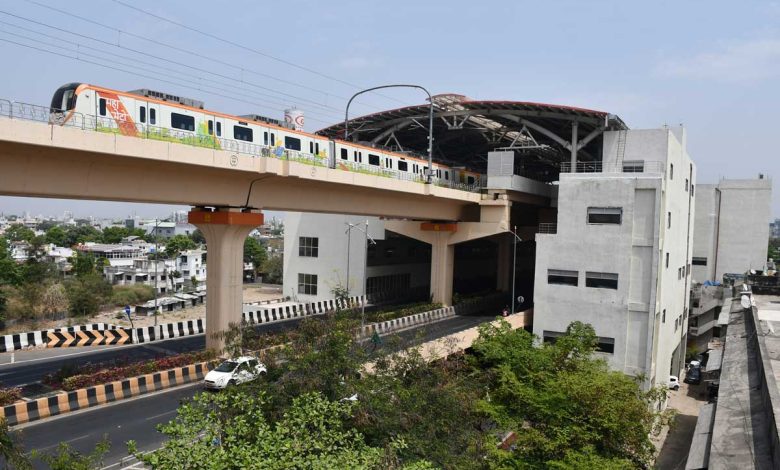
Nagpur is set for a major transformation in urban transport as Phase-3 of the Metro project proposes a 54.5-km expansion. Once completed, the city’s total Metro network will increase from the current and under-construction 82 km (Phases 1 and 2) to nearly 129 km—placing Nagpur among the most extensively connected Tier-2 cities in India.

The expansion forms part of the Comprehensive Mobility Plan (CMP) 2025 prepared by MahaMetro in line with guidelines of the Ministry of Housing and Urban Affairs. Finalised after public consultations and stakeholder inputs, the plan seeks to address traffic congestion and close key mobility gaps across the growing city.

Four Key Corridors Proposed
Phase-3 includes four strategic corridors:
- Mankapur Square–Rachna Junction (25 km) along the Inner Ring Road
- Sitabuldi–Koradi (11.5 km), including Nagpur’s first underground Metro stretch
- MIDC ESR–CEAT Ltd (3 km) in the Butibori industrial belt
- Khapri–New Nagpur (15 km) connecting upcoming township areas
The 25-km Mankapur–Rachna corridor is the most significant. Running along the Inner Ring Road, it will introduce orbital connectivity, allowing commuters to bypass central areas instead of converging at Sitabuldi. This shift from a radial network to a hub-and-spoke model with a bypass loop is expected to ease congestion in the city core. Initially, this corridor will operate with articulated buses to assess ridership before being upgraded to full Metro rail.
First Underground Stretch
The Sitabuldi–Koradi corridor marks a historic step, as it includes a 3-km underground section—the first in Nagpur. The underground stretch is necessary due to dense development, flyovers and narrow roads in the city centre. The project is estimated at around ₹3,500 crore, reflecting the higher cost of underground construction compared to elevated lines.
The MIDC ESR–CEAT corridor will enhance last-mile connectivity in the Butibori industrial zone, benefiting thousands of workers. Meanwhile, the Khapri–New Nagpur link aligns with transit-oriented development plans to ensure future townships grow around public transport.
Next Steps
A Detailed Project Report (DPR) will be prepared over the next nine months, covering cost estimates, funding patterns, ridership projections and implementation timelines. Phase-3 construction will begin only after Phase-2 is fully operational, ensuring financial discipline and smooth execution.
If implemented as planned, Phase-3 is expected to reshape urban mobility in Nagpur, creating a more interconnected and efficient transit system while strengthening the city’s position as a model Tier-2 urban centre in central India.
👉 Click here to read the latest Gujarat news on TheLiveAhmedabad.com