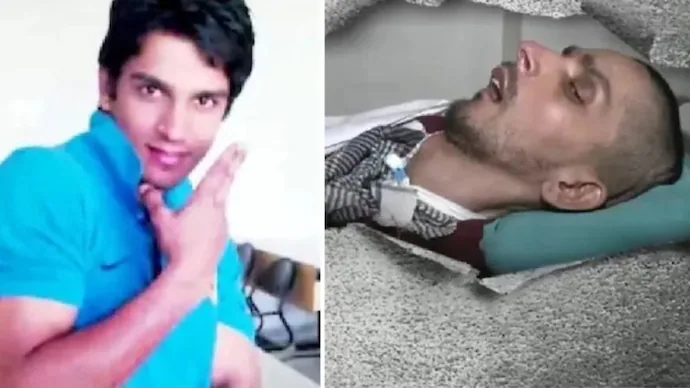
A 31-year-old man who has remained in a vegetative state for the past 13 years following a tragic accident can now be allowed to die, after the Supreme Court today permitted the withdrawal of life support at the request of his parents. The court has also asked the Centre to consider enacting a law on passive euthanasia, which in India is permitted only after the Supreme Court reviews the opinions of two medical boards regarding the patient’s condition.

Harish Rana, then a college student, fell from the fourth floor of a paying guest accommodation in 2013 and sustained severe injuries. He was subsequently placed on life support. Since then, he has been bedridden with a tracheostomy tube for breathing and a gastrojejunostomy tube for feeding.

A bench comprising Justice JB Pardiwala and Justice KV Viswanathan observed in its order, “‘Gods ask no man if he accepts life, you must take it’. These are the words of (US minister) Henry (Ward Beecher) which hold significance when courts are asked if individuals can choose to die.” Justice Pardiwala also referred to the famous line from William Shakespeare’s Hamlet, “To be or not to be”, noting that it is often invoked while discussing the “right to die”.
The court stated that the withdrawal of life support must satisfy two conditions: the intervention should qualify as medical treatment, and it must be in the best interests of the patient.
“Harish Rana was once a bright young 20-year-old boy pursuing education at Panjab University when he had a fall from the fourth floor of a building and sustained brain injuries. Harish was discharged, but a brain injury left him in a persistent vegetative state. He experiences a sleep-wake cycle and is dependent on others. The medical report shows no improvement in 13 years,” the court said.
The bench further noted that although a doctor’s duty is to treat a patient, “that duty no longer sustains when the patient has no hope of recovery”. The court directed that AIIMS admit the patient to its palliative care facility so that the process of withdrawing medical treatment can begin. “It must be ensured that it is withdrawn with a tailored plan so that dignity is maintained,” the order said.
The court also acknowledged the unwavering support of Rana’s family, particularly his elderly parents, who have cared for him throughout these years. “His family never left his side… to love someone is to care for them even in the darkest times. Our decision today does not neatly fit in logical (lines), but love, life and loss,” it said.
Passive euthanasia in exceptional circumstances was legalised in India through the Aruna Shanbaug vs Union of India judgment in 2011. Shanbaug, a nurse, remained in a vegetative state for more than four decades after a sexual assault left her paralysed and caused severe brain damage. The court had rejected a plea for passive euthanasia in her case after the hospital staff caring for her expressed their wish that she continue to live. She eventually died of pneumonia in 2015.
👉 Click here to read the latest Gujarat news on TheLiveAhmedabad.com