
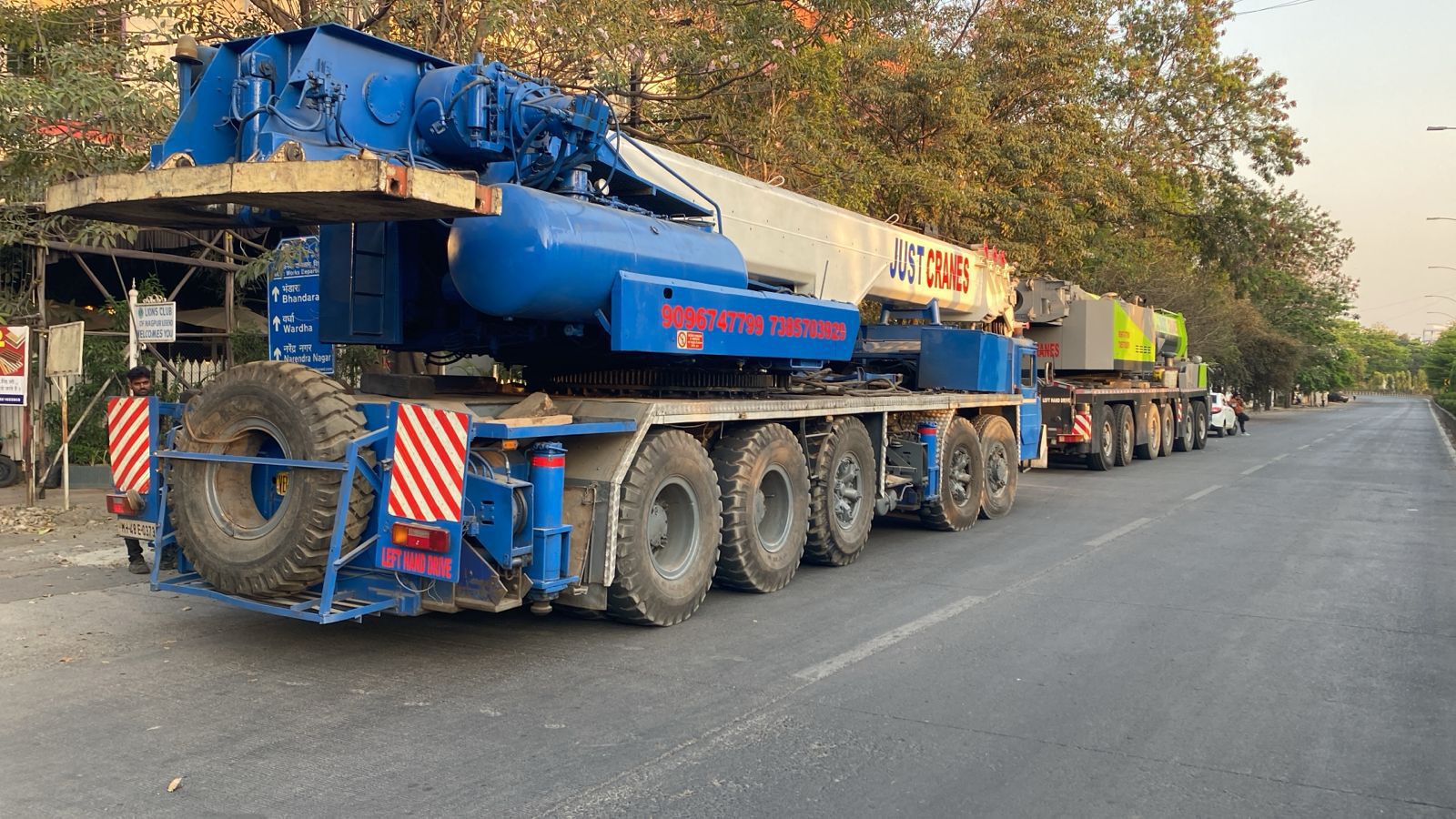
The growing presence of massive trucks and overloaded tippers on city roads — often referred to by commuters as “monster trucks” — has led to 281 deaths in Nagpur over the past three years, prompting traffic authorities to implement a stringent regulatory drive to control heavy vehicle movement within the city.

Figures compiled by the Nagpur Traffic Police reveal that heavy vehicles accounted for 92 fatalities in 2023, followed by 99 deaths in 2024 and 90 in 2025. The alarming rise in casualties triggered the launch of Operation U-Turn in July 2025, a targeted enforcement initiative aimed at reducing accidents involving commercial vehicles and improving road safety.

Traffic records further show that more than 422 accidents involving heavy trucks were reported in the city between 2020 and 2025. According to Deputy Commissioner of Police (Traffic) Lohit Matani, several factors have repeatedly contributed to these crashes, including reckless driving, movement of heavy vehicles in congested areas during peak hours, high-speed travel during late-night hours, and the operational challenges of manoeuvring large vehicles through dense urban traffic.
Restrictions on Heavy Vehicles
As part of Operation U-Turn, authorities imposed strict restrictions on trucks, trailers, tippers, large buses, and other heavy commercial vehicles. These vehicles are barred from entering areas within the Outer Ring Road (ORR) from 6 am to 10 pm, and those passing through the city have been directed to use the ORR bypass rather than internal roads.
To implement the restrictions effectively, traffic police established permanent and temporary checkpoints with barricades at key entry locations. These include New Katol Naka on Katol Road, Gondkhairi in the MIDC zone, Jamtha T-Point on Wardha Road, the Umred Road entry point, the Ramnath City–Indora corridor, Kapsi Bridge on Kamptee Road, and the Sai Mandir stretch along the same route.
Personnel have been deployed round-the-clock at these points to intercept vehicles attempting to violate entry restrictions. Offending vehicles are diverted, penalised, and in some cases detained or impounded.
Heavy vehicles involved in essential construction or business activities within city limits are allowed limited access between 12 pm and 4 pm, provided drivers present valid documents.
Large-Scale Enforcement
The crackdown has resulted in significant enforcement action. During 2025, authorities took action against 25,099 heavy vehicles across different traffic zones. In the first two months of 2026 alone, from January 1 to March 10, penalties were imposed on another 9,051 vehicles.
Police also conducted special night drives at city entry points and along major routes to prevent high-speed movement of trucks during late hours, which has been identified as a key factor in fatal accidents. Vehicles caught operating outside permitted hours were detained and released only after the restrictions were lifted and penalties were paid.
Use of Technology for Monitoring
In addition to ground enforcement, the traffic department has strengthened monitoring through CCTV cameras and traffic surveillance systems. Vehicles found moving during prohibited hours are penalised based on recorded footage, even if they are not physically stopped.
Officials also introduced fixed accountability for field staff wherever violations occur during no-entry hours, ensuring stricter supervision and internal monitoring.
Coordination with Transport Sector
Alongside enforcement, the police have engaged with transport companies, logistics operators, contractors, and development agencies. Meetings were organised to emphasise compliance with movement restrictions, safe driving practices, fatigue management, and adherence to prescribed timings.
Authorities stated that the initiative aims not only to penalise offenders but also to encourage long-term changes in the operational practices of commercial vehicle operators.
Decline in Accidents and Fatalities
Initial data suggests that the measures have begun to show results. By March 10, 2025, heavy vehicles had caused 23 deaths in the city. During the same period in 2026, the figure dropped to 10, marking a reduction of over 56 per cent.
Serious injuries during the period also decreased from 29 to 18, while minor injuries declined from 16 to 11. Overall road accident fatalities in Nagpur have fallen by 41 per cent up to March 11, 2026, compared to the corresponding period last year. The number of fatal accident cases dropped from 70 to 42.
Traffic officials believe sustained enforcement under Operation U-Turn, supported by surveillance technology and cooperation from transport stakeholders, will continue to improve road safety and reduce the risk posed by heavy vehicles on urban roads.
👉 Click here to read the latest Gujarat news on TheLiveAhmedabad.com