
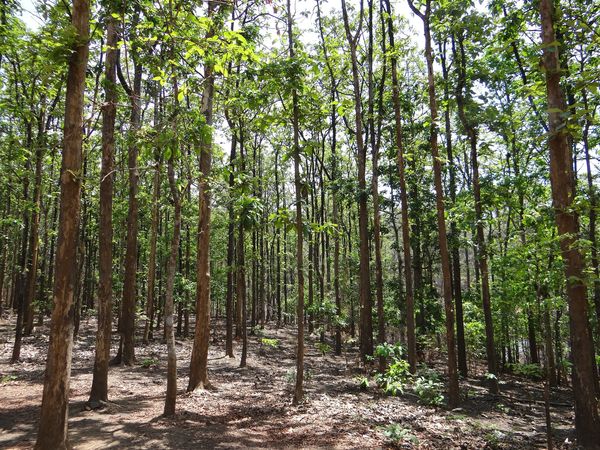
The Maharashtra government has removed teak from the list of protected tree species under the Maharashtra Felling of Trees (Regulation) Act, 1964, in a move that is expected to ease restrictions on felling the commercially valuable timber species on private land.

The notification was issued on June 9 by Additional Chief Secretary (Forests) Milind Mhaiskar and is being viewed as a major policy shift aimed at encouraging tree cultivation and reducing regulatory hurdles for farmers.

With teak no longer classified as a protected tree, landowners are expected to find it easier to harvest and sell teak grown on their farms. The decision is also likely to benefit the timber and furniture industries, which have long relied on teak wood due to its durability and high market value.
Explaining the rationale behind the move, Mhaiskar said stringent regulations had discouraged people from planting teak on private land.
“People were discouraged from planting teak on their lands because of such restrictive regulatory regimes. Therefore, this is a very important progressive step,” he said.
The decision has, however, triggered concern among environmentalists, particularly in Vidarbha, where teak forests form a significant part of the region’s ecosystem and wildlife habitat.
Environmentalist Suresh Chopane said teak plantations have historically played an important ecological role in central India.
“The British had encouraged plantation of teak trees in a big way. In the tiger belt of Chandrapur, we have many teak trees. They provide some kind of shelter to wildlife. This can benefit farmers who cultivate teak. Care must be taken to plant more trees, but any kind of tree cutting is bad for the environment.
“Many farmers have been demanding cutting and also demanded removal of forest department or local body permission for cutting of teak trees,” he said.
According to officials, the policy change is expected to provide a boost to timber production and ease the supply of teak wood for commercial use.
Environmentalist Bandu Dhotre welcomed the empowerment of farmers but stressed that the relaxation should be accompanied by responsible replantation efforts.
“This government decision empowers farmers and promotes commercial agriculture. However, relaxing regulations should not come at the cost of environmental degradation. As citizens and farmers, our responsibility has also increased. If we cut down a teak tree for business purposes or out of necessity, we should plant at least five new teak trees in its place and ensure their proper care and preservation. Only then can a proper balance be maintained between economic progress and environmental conservation,” Dhotre said.
He pointed out that teak trees contribute significantly to carbon absorption, air purification and soil conservation, making them valuable from an environmental perspective.
“With the relaxation of regulations, there is a risk that immature or smaller teak trees may also be cut down for financial gain. If new trees are not planted in proportion to the number of trees being felled, overall green cover may decline,” he added.
While permission for felling teak has been relaxed, transport permits from the Forest Department will continue to be mandatory for moving timber.
Dhotre also cautioned against potential misuse of the system, warning that illegally harvested timber from forest areas could be falsely shown as originating from private farmland to obtain transport permits. Such practices, he said, could create loopholes that allow illegally sourced timber to enter the legal market.
👉 Click here to read the latest Gujarat news on TheLiveAhmedabad.com