
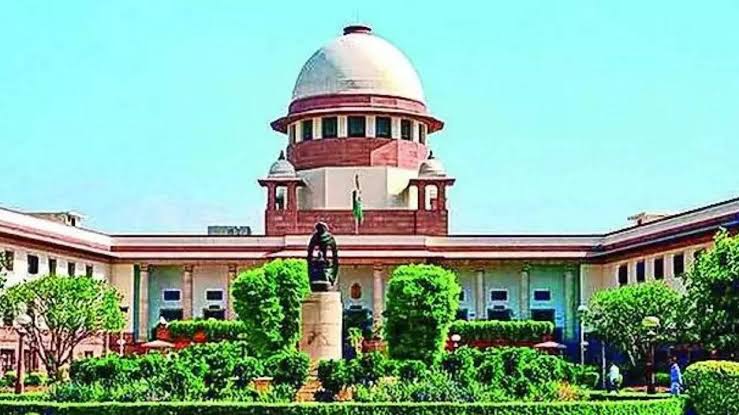
In a landmark judgment, the Supreme Court has ruled that the right to walk on safe and properly demarcated footpaths is a fundamental right guaranteed under Part III of the Constitution, and that pedestrian rights must take precedence over the movement of motorised vehicles.

A Bench comprising Justice P.S. Narasimha and Justice Atul S. Chandurkar observed that the right to walk is an essential component of the freedom of movement under Article 19(1)(d) and is closely linked to the rights guaranteed under Articles 19(1)(a), 19(1)(b), 19(1)(c) and 21 of the Constitution. “The right to walk is a fundamental right under Part III of the Constitution. The right to demarcated footpaths is an inseparable part of this guarantee and must be accorded priority over the movement of motor vehicles,” the Bench held.

The Court emphasised that government bodies and local authorities have a legal obligation to ensure adequate pedestrian infrastructure. It stated that wherever roads exist, authorities must provide safe, accessible and properly maintained footpaths for pedestrians. According to the judgment, urban development authorities, municipal corporations, municipalities and panchayats are responsible for constructing, maintaining and protecting footpaths and other facilities necessary for safe pedestrian movement.
Observing that India currently lacks a dedicated legal framework to protect pedestrians, the Court urged the creation of legislation specifically aimed at safeguarding the right to walk. It directed the Registry to forward a copy of the judgment to the Ministries of Housing and Urban Affairs, Rural Development, and Road Transport and Highways for consideration of a comprehensive statutory framework.
The Bench noted that while the right to walk is constitutionally protected, there is no specific legislation defining responsibilities and enforcement mechanisms. It stressed the need for laws that clearly identify duty bearers and establish accountability for violations of pedestrian rights.
The Court also asked that the judgment be sent to the Law Commission of India for examination of a legal framework that would protect pedestrian rights, prescribe remedies and identify responsible authorities. It further recommended the creation of a dedicated regulatory body to oversee the planning, implementation and enforcement of pedestrian infrastructure standards. Highlighting the challenges faced by walkers in Indian cities, the Bench remarked that urban planning has historically favoured motor vehicles, often at the expense of pedestrians.
“It is rather strange that we fail to focus on recognising and securing the right to walk. It may be because wheels eclipsed our imagination,” the Court observed, adding that pedestrians are frequently treated as obstacles rather than rightful users of public spaces.
The Court further ruled that citizens whose right to walk on footpaths is violated would be entitled to seek constitutional and legal remedies, including compensation and restitution, independent of claims available under the Motor Vehicles Act, 1988. The judgment was delivered while hearing an appeal related to the death of a five-year-old boy who was struck by a tanker while walking to school with his father. The Court noted that the accident site lacked both a footpath and a pedestrian crossing.
The child’s father had initially sought compensation of Rs 25 lakh before the Motor Accidents Claims Tribunal. While the tribunal awarded Rs 7.82 lakh with interest, the High Court later reduced the amount to Rs 4.70 lakh. The Supreme Court set aside the High Court’s order, enhanced the compensation to Rs 11.44 lakh and directed that the amount be paid within two months.
Recognising the broader public importance of the issue, the Court ordered that the matter be registered as a separate proceeding titled “Re: Fundamental Right to Walk and Footpath” to facilitate continued examination of pedestrian rights and infrastructure concerns. It also sought assistance from the Union government and relevant ministries in addressing the larger issues raised by the case.
👉 Click here to read the latest Gujarat news on TheLiveAhmedabad.com