
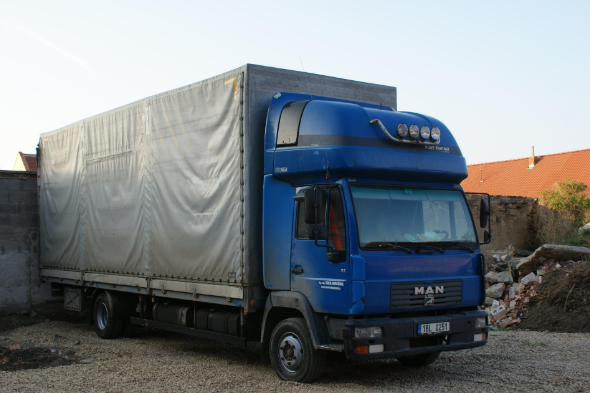
A fleet operator in Nagpur, someone running about fifteen goods vehicles on the NH 44 corridor, told me last month that he thought he was compliant with AIS 140 because he had GPS units bolted under his dashboards. He had bought them in bulk from an electronics market in Hyderabad, maybe 1800 rupees per unit, and they worked fine for internal tracking. His dispatcher could see every truck on a screen. The problem surfaced at the Maharashtra RTO during a fitness certificate renewal in February, when the inspector pulled up the Vahan registry and found no device handshake for any of his vehicles. The GPS boxes were live, transmitting coordinates, doing exactly what they were built to do, and none of it counted. He was looking at permit suspension on three trucks and fines on the rest, and the enforcement deadline that passed over the last year had apparently not registered as something that applied to him personally.

AIS 140, the MoRTH mandated vehicle location tracking standard for commercial and public transport vehicles, has been in some form of existence since 2018 when it first applied to public transport buses. The scope expanded to the entire public transport sector in April 2019, and then again in August 2022 when N2 and N3 goods vehicles and hazardous goods carriers came under the mandate. Every vehicle carrying dangerous goods manufactured on or after September 1, 2022 had to have location tracking fitted at the factory. The requirement covers everything with a yellow plate, including goods carriers, taxis, school buses, autorickshaws in certain states, ambulances, and employee transport vehicles. White plate private vehicles remain outside the scope. I’ve been following the rollout of mandatory telematics standards across different countries for years now, and AIS 140 is probably the most ambitious in terms of sheer fleet size. India has somewhere around 12 million commercial vehicles on the road, and the regulatory expectation is that every single one of them transmits its location to a government server in something close to real time.

The technical requirements are not trivial. A compliant device needs dual constellation GNSS, meaning GPS plus NavIC, which is ISRO’s own satellite navigation system and has been mandatory in AIS 140 devices since April 1 2021. The device has to have an emergency panic button that relays alerts to state control rooms, tamper detection circuitry, a minimum four hour battery backup so it keeps transmitting even if someone cuts the vehicle’s power, and the ability to send data simultaneously to two IP addresses, one government server and one emergency system. Ninety days of stored data, minimum. Every device needs ARAI or ICAT type approval before it can legally be installed. The same pattern shows up in fleet tracking data, where the dual IP transmission requirement alone disqualifies probably 80 percent of the aftermarket GPS trackers currently installed on Indian commercial vehicles, because most consumer grade units are designed to talk to one server and one server only. The Nagpur operator I mentioned earlier had units that were perfectly functional as fleet management tools but architecturally incapable of meeting the standard.

The enforcement mechanics have shifted considerably through 2025 and into 2026. Devices now sync with the national Vahan registry, and a non functional or non compliant device blocks fitness certificate renewal automatically. There is no workaround at the RTO counter. Roadside checkpoints have started penalizing vehicles without compliant tracking, and some states have begun linking compliance verification to ANPR cameras at toll booths. Kerala’s Suraksha Mitr system is probably the most developed example of automated enforcement, though Maharashtra RTOs have been among the more active enforcers in terms of actual roadside stops and permit actions. Remote immobilization of stolen vehicles is now technically possible through compliant devices, something that was discussed for years as a theoretical benefit and is now operational in at least a handful of documented theft recoveries.
Penalties run from fines through fitness test failure to permit suspension, and in extreme cases deregistration. Some state governments have tried to ease the financial burden by offering partial GST exemptions on AIS 140 devices, though the details vary by state and the exemptions are not always straightforward to claim. The more common operator experience, from what I hear talking to fleet managers across Maharashtra and Madhya Pradesh, is that the cost of the device is not really the issue. A compliant AIS 140 unit runs to maybe 8000 or 9000 rupees installed, which is not a catastrophic sum for a vehicle that earns revenue daily. The issue is that operators bought the wrong thing years ago and assumed it was right, and now they are looking at replacement costs on top of the fines they have already accumulated.
Nagpur sits at the intersection of NH 44 and NH 53, and the MIHAN cargo hub makes it one of central India’s critical logistics crossroads. A fleet coordinator working out of a transport yard near Butibori told me that enforcement has become noticeably stricter since late 2025, with RTO inspection teams showing up at loading docks rather than waiting for vehicles to come in for scheduled fitness tests. He said three operators he knew had trucks grounded for weeks because they could not get compliant devices installed fast enough once the enforcement wave hit. The backlog at ARAI approved installers in the Vidarbha region was running to ten or twelve days at one point, and some operators were sending vehicles to Pune for installation just to get them back on the road faster.
India’s fleet telematics market is valued at around USD 1.68 billion by industry estimates, with GNSS technology holding roughly 65 percent of the market share. An older forecast that 55 percent of all commercial trucks would be connected by 2025 looks conservative now given the regulatory pressure. The gap between having a GPS box somewhere on the vehicle and actually being connected in the regulatory sense is where most of the confusion lives. I hear this from fleet managers constantly, the assumption that any device that shows a dot on a map equals compliance. It does not, and the RTO systems are now sophisticated enough to verify that in seconds. The Vahan integration means there is no ambiguity anymore about whether a vehicle is compliant or not, and no amount of arguing at the counter changes what the database says.
The fleet coordinator in Butibori mentioned something that stuck with me. He said the operators who are struggling the most are not the large fleets, because those companies figured out AIS 140 early and had the procurement infrastructure to buy compliant devices at scale. The ones getting hit are the single truck owners and the five or ten vehicle operators who rely on word of mouth for their technology decisions and bought whatever the local electronics shop was selling as a “GPS tracker for trucks.” Maharashtra’s transport department had apparently run some awareness campaigns in Nagpur and Amravati, but the message clearly did not reach everyone, or it reached them, and they assumed it was not urgent. The October 2025 deadline came and went, and now these operators are dealing with the consequences at every RTO interaction and checkpoint stop along the NH 44 corridor.
👉 Click here to read the latest Gujarat news on TheLiveAhmedabad.com