

Finding the best investment plan today isn’t just about risk or returns; it’s about clarity. Fortunately, technological advancements have introduced impactful tools like an investment plan calculator. Whether you’re planning for your child’s education, your own retirement, or a future down payment on a house, choosing the right investment product becomes easier when you can actually see where your money might take you.

1. A Simple, Intuitive Interface
You shouldn’t need a finance degree to use a calculator. That’s the point of it, after all. The best tools are designed with regular people in mind. When you enter your personal details, like age, gender, income level, and savings goals, it should feel like you’re simply having a conversation with the tool.

For instance, many calculators used by premium insurance providers, such as Axis Max Life Insurance, ask for details like your educational qualifications and expected income pattern. This may seem like a small step, but it helps in personalising your projected returns more closely to your profile. If you’re choosing between a growth-oriented plan and a steady income stream, these inputs allow the calculator to suggest the best investment plan for your life stage.
2. Customisable Inputs Based on Real-Life Scenarios
The flexibility of the tool makes it more than just a number tool. A good calculator should let you:
● Select your preferred payment frequency, such as monthly, quarterly, or annually.
● Adjust the premium term as you want to invest for 10 years but start withdrawing only after
15, and so on.
● Adjust your income duration to plan for short-term goals, such as a vacation, or long-term
goals, like retirement.
3. Clear Breakup of Results
Most people aren’t just looking for the final maturity number; they want to understand how the returns are built. That’s why a useful investment plan calculator will show you a full breakdown. For example, here’s a sample projection for a person starting investments at age 34:
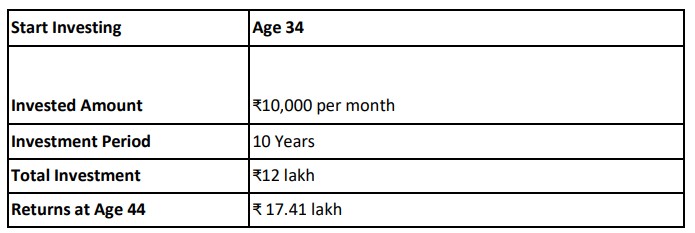
A calculator that gives this level of visibility helps you understand not just the “how much,” but also the “why.”
4. Option to Compare Multiple Scenarios
The feature that sets a smart calculator apart is the ability to create and compare scenarios side-byside. Maybe you’re wondering whether to invest ₹5,000 monthly or ₹10,000 quarterly. Or maybe you’re weighing a plan with an 8% return against one with a 12% return over the same period.
Rather than toggling back and forth, a good calculator allows you to view both scenarios on a single screen. This will enable you to assess the trade-offs between return expectations, tax benefits, and liquidity.
And here’s where many users also start exploring advanced calculators. Those designed by reliable insurers, such as the ones featured on premium platforms from Axis Max Life Insurance, also include
features like projected tax savings under Section 80C (only under the old tax regime) and Section
10(10D), providing a more comprehensive picture.
5. Past Performance Insights and Life Cover Integration
A huge plus for any Indian investor is the peace of mind that comes with protection. Some calculators don’t stop at showing you growth, but they also let you see how the same product performed in previous market cycles. Better still, when you’re checking a plan that includes insurance, it shows you both the returns and the life cover benefit.
6. Easy to Use for Both Lumpsum and SIP Investments
Some investors prefer to put down a large amount at once. Others like the discipline of monthly payments. A good calculator will accommodate both without changing the interface. Let’s look at another example, this time with a Systematic Investment Plan:

7. Fast Calculation with Transparent Assumptions
Every number a calculator shows you is based on assumptions: return rate, compounding frequency, and fund type. These should be stated clearly. The time it takes to calculate should be no more than a few seconds. You shouldn’t be left waiting or guessing if the results are accurate.
At this stage, the more advanced calculators also help investors manually tweak assumptions, such as
reducing the return rate or increasing the premium duration, and instantly see how those changes affect the outcome.
8. Helpful Even If You’re Just Exploring
Perhaps you’re not ready to make a purchase yet, or maybe you just want to explore possibilities. The best calculators allow for this freedom without requiring additional steps, such as OTPs or email registrations. Just clean interaction that helps you think about your future.
Some platforms do collect basic information (age, income, etc.) to personalise the experience. But it
shouldn’t feel like a trade-off. It should feel like a tool built for your journey.
9. Ideal for Risk-Averse and Goal-Based Planners
Finally, a feature that many overlook is emotional clarity. The reason calculators are so valuable isn’t just the numbers; it’s the feeling of having more control.
Conclusion
At the end of the day, an investment plan calculator is not just a tool; it’s a guideline. It won’t make decisions for you, but it helps you make better ones. Especially when life is full of uncertainties and financial choices feel overwhelming, a calculator offers something solid to hold onto.
Premium insurers like Axis Max Life Insurance are already offering such tools that blend real-world scenarios, insurance benefits, and growth projections, all while maintaining a human-friendly interface. But no matter which platform you choose, just make sure the calculator lets you be in charge of the numbers, not the other way around.
Standard T&C apply
Insurance is the subject matter of solicitation. For more details on benefits, exclusions, limitations, terms and conditions, please read the sales brochure/policy wording carefully before concluding a sale.
Disclaimer: The content on this page is generic and shared only for informational and explanatory
purposes. It is based on several secondary sources on the internet and is subject to change. Please consult an expert before making any decisions related to this matter.
The tax benefit is subject to change as per the prevailing tax laws.
👉 Click here to read the latest Gujarat news on TheLiveAhmedabad.com