
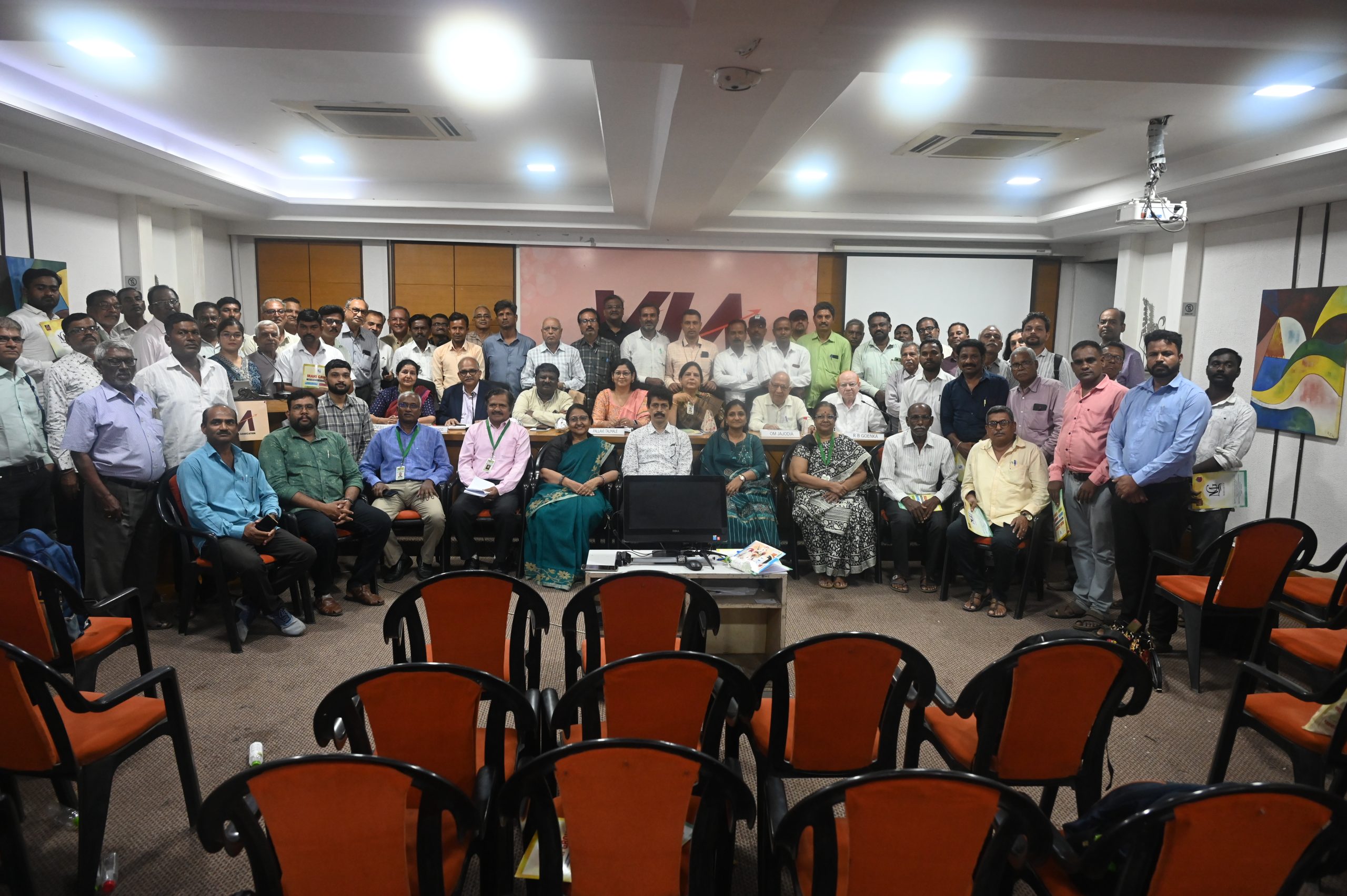
Looking at climate changes, crop patterns and continuing long term Farm income, coconut farming will be a sustainable business for Vidarbha farmers said Dr B Hanumanthe Gowda, Chief Coconut Development Officer, Coconut Development Board, Government of India, while delivering the keynote address as Chief Guest at a workshop on “Prospects of Coconut farming and Processing” was organised by Agro Rural Development & Food Processing Forum of Vidarbha Industries Association at VIA Auditorium, Nagpur. The program was attended by hundreds of Progressive farmers and Industry Professionals from across various districts of Vidarbha.

Vidarbha region a non-traditional area for coconut is in our focus list now and we will do hand holding of Vidarbha Farmers for assisting, encouraging, promoting and extending adequate incentives including saplings as suitable for the area, cultivation / modern farm management practices and Value additions in coconut processing and product diversifications, he further added.

B Chinnaraj, Dy Director of Coconut Development Board, Maharashtra State Centre while sharing success stories of other similar non-traditional areas like Tripura etc, highlighted planting both Native Tall varieties like WCT (West Coast Tall) and BT (Banawali Tall) and Dwarf varieties like MGD (Malayan Green Dwarf) and GB (Ganga Bodam) for Vidarbha region. While Tall varieties are cross pollinated, the Dwarf varieties are self-pollinated crops.
Dy Director explained in detail existing schemes and incentives as applicable for Non Traditional areas like Vidarbha to the audience.
He further added that recommended spacing for tall varieties will be 25 ft x 25 ft square holding approx. 66 plants per acre and 25 ft x 25 ft Triangular for Dwarf Varieties holding approx 80 plants per acre. Regular fertigation is an essential requirement for coconut with 1:2:2 Kg NPK per year. Recommended pit size for Vidarbha area is 3 ft x 3ft x 3 ft depth refilled with 1:1:1 ratio of native soil, Sand and FYM. The saplings should be at the bottom to avoid uprooting during windy climate. The Tall Varieties will bear fruits in 6 years while the Dwarf variety in 3-4 years. Enough vegetation is required to maintain relative humidity for optimum growth.
Coconut Board suggests intercropping the Coconut farms with local Vegetables and fruits like Guava, Citrus (Orange / Mosambi), Custard Apple, Chikoo etc for better economy.
The Dy Director invited Vidarbha farmers for Chhattisgarh Farm visit on CDB cost to demonstrate modern practices in force at Coconut Farms.
Value added / diversified coconut products feasible in Vidarbha area include Cold pressed / Virgin Coconut Oil for cosmetics application, Coconut Vinegar, Coconut Cream, spray dried coconut Milk Powder, Coconut chips, desiccated coconut, coconut shell powder, Activated Carbon, husk products and Wood Products said P Vipin, the Technical Officer of Coconut Development Board.
We, from the Government of Maharashtra will extend all possible support for the coconut Farming in Vidarbha, assured Pallavi Talmale, Dy Director – ATMA while speaking as the Guest of Honour of the program.
Successful Coconut farmers of the region including R B Goenka (600 plants), Pravin Thakre, Sanjay Dhunde shared their stories and sought Coconut Development Board assistance to proceed further.
The event was supported by Mahi Group. After lighting traditional lamps by the VIA Team and invited guests, the program was formally opened by CA Naresh Jakhotia, Vice President of VIA and Om Jajodia, Chairman of VIA Agro Rural Development & Food Processing Forum. The program was conducted by Shachi Mallick, Convener of the VIA Agro Forum, Rina Saha also introduced the guest speakers and Kapil Charan Sahoo, Project Director, while Aniruddha Ansingkar proposed the vote of thanks. Prominently present were Laxmikant Padole, Sanjay Sinha, Dr Kirti Sirothia and farmers from Vidarbha region viz. Nagpur, Bhandara, Wardha, Chandrapur, Gadchiroli, Amravati, Yavatmal.
👉 Click here to read the latest Gujarat news on TheLiveAhmedabad.com