
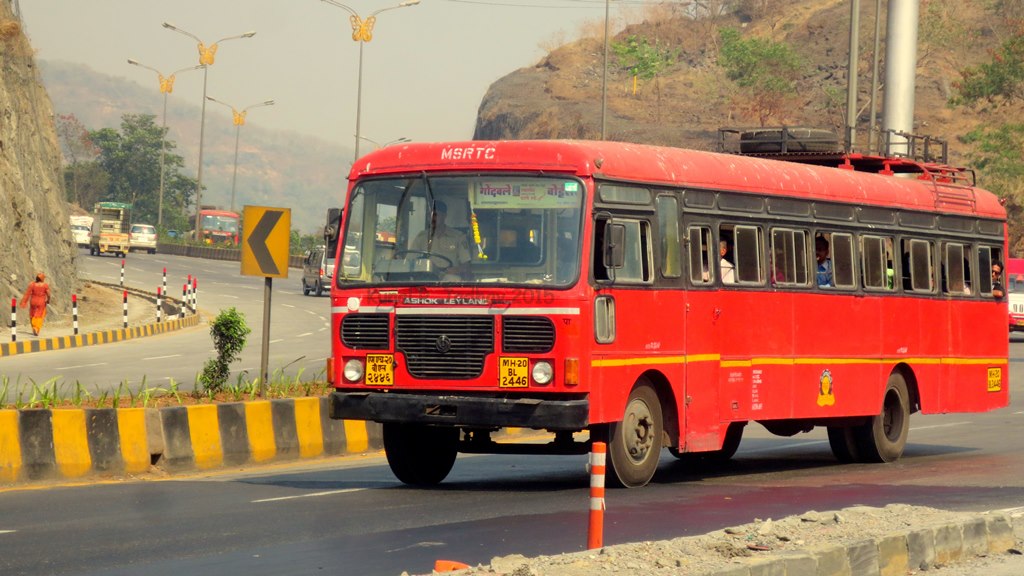
From this week until September 12, 2025, private travel buses are barred from parking, picking up, or dropping passengers anywhere inside the Inner Ring Road between 8 a.m. and 10 p.m. The traffic police’s goal — unclog bottlenecks like Central Avenue, Variety Square, Dighori, Indora, and Automotive Square — is laudable. These spots have long doubled as chaotic, makeshift bus terminals.

Operators must now shift boarding to the city’s fringes. For commuters, that means dragging luggage to semi-urban pickup points and depending on the Metro, taxis, or autos to get downtown. For transporters, it’s an overnight operational shake-up.

Yet the irony is glaring — Nagpur already had a plan to solve this problem. In December 2023, the NMRDA acquired 116.08 hectares in the Hingna–Ring Road belt — villages like Khadka, Kirmiti, Shivmadkha, Panjari, and Sumthana — to build modern bus and truck terminals linked to the Outer Ring Road.
Launched in 2019 by the BJP–Shiv Sena government, the ₹767.31 crore project promised secure bays, rest areas, utilities, and scheduled entry controls. All civic departments — NMC, PWD, Water Works — were aligned.
Then politics intervened. The government changed, funds dried up, landowners went unpaid, and construction never began. Encroachers have since claimed parts of the site; other stretches remain fenced but idle.
If Hingna’s terminals existed today, buses could be redirected straight there, making enforcement smoother and boarding safer. Instead, the city is improvising with ill-equipped outskirts.
Nagpur doesn’t lack plans — it lacks the will to finish them. Hingna stands as a silent ₹767-crore reminder.
👉 Click here to read the latest Gujarat news on TheLiveAhmedabad.com