
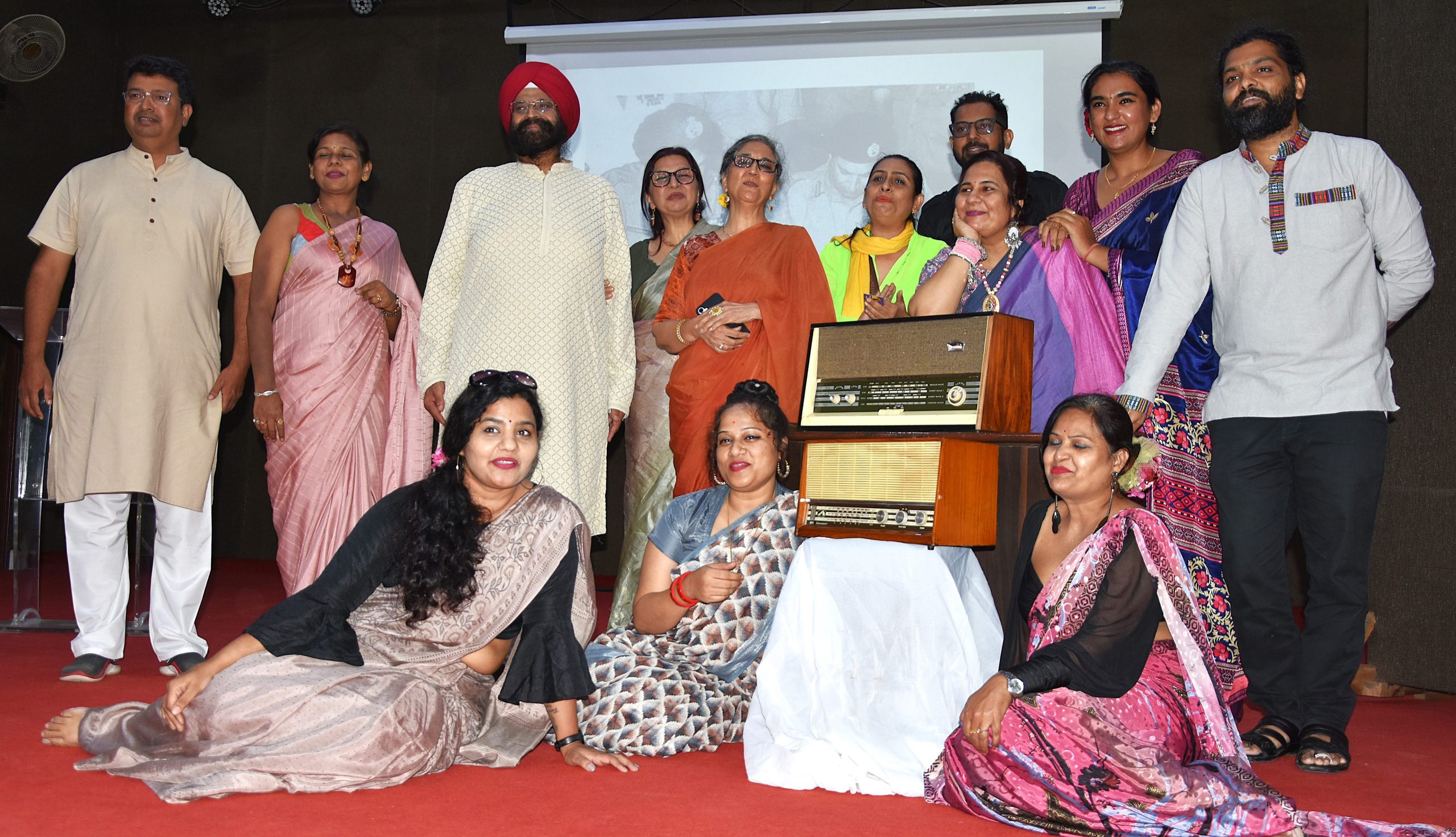
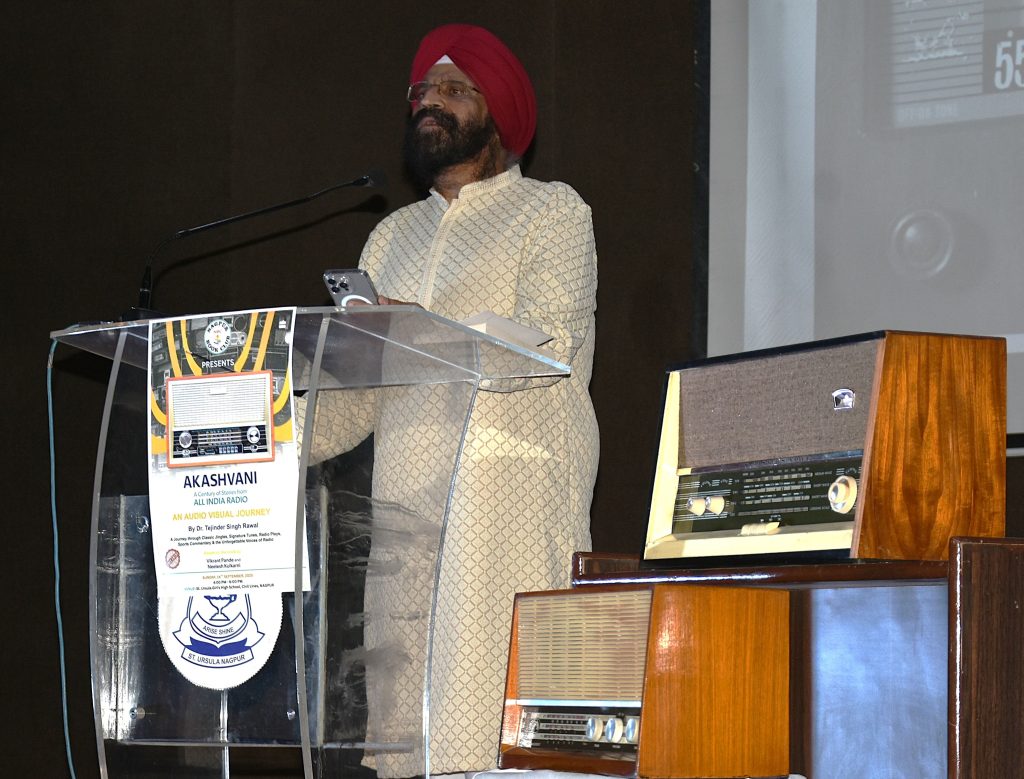
The Nagpur Book Club (NBC) presented a distinctive, performance-led review of Akashvani: A Century of Stories from All India Radio, transforming the book into a live, radio-style experience. The entire narrative content was delivered by Dr. Tejinder Singh Rawal, who conducted the evening in a warm Hindustani–English register—threading history, anecdotes, audio cues and mini-performances into a seamless ninety-minute programme. RJ Tejal compered with verve, keeping the pace crisp and the audience engaged throughout.

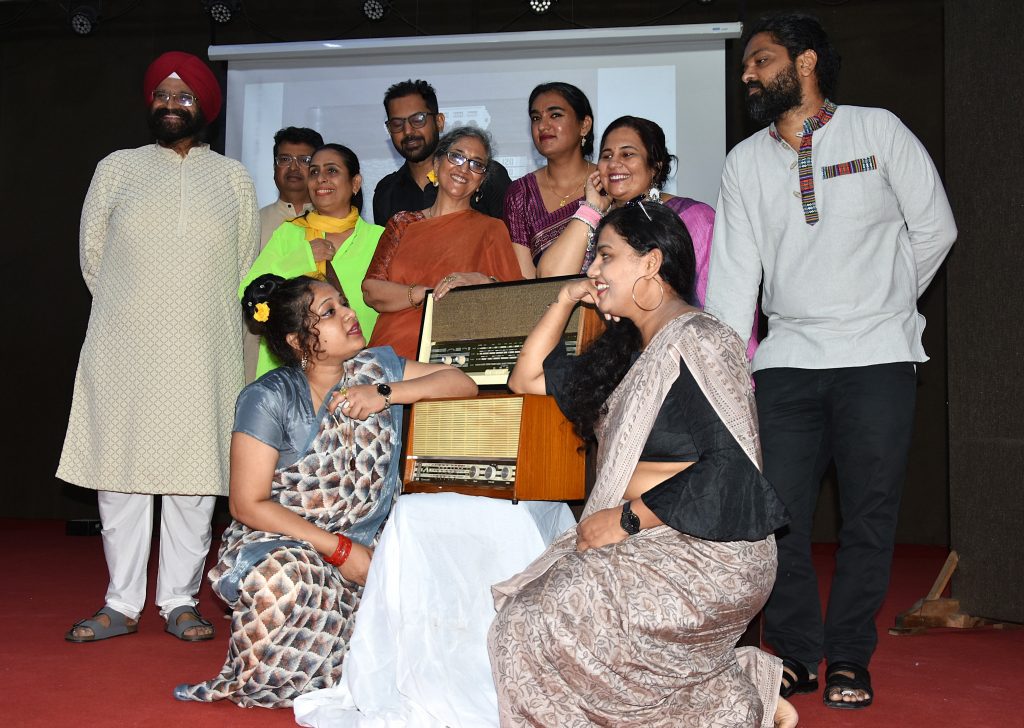
The evening opened with the classic Akashvani station-ID and a short timeline of Indian radio—from the P&T/TOI transmissions of 1922 and the Indian State Broadcasting Service in 1931 to Tagore’s 1938 poem “Akashvani.” Dr. Rawal traced the “big arc” of listening culture: how the scarcity of film music on AIR in the early years sent audiences to Radio Ceylon, how Ameen Sayani’s conversational style turned Binaca Geet Mala into a weekly ritual, and how Vividh Bharati’s launch in 1957 brought drama, interviews, dedications and film music into Indian homes. He also highlighted the power of the spoken word—mushairas, kavi sammelans and the compact realism of Manto’s radio plays—before moving to the theatre-of-the-mind that made radio drama a household favourite.

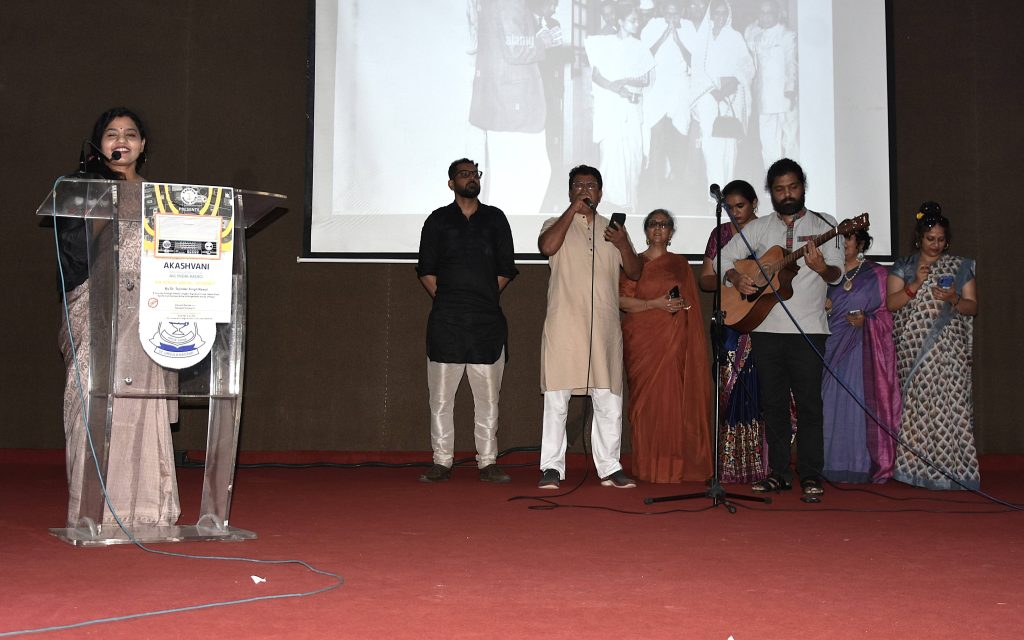
A team of singers and musicians—Mohhnish Zade, Harmeet Lamba, Kovid Sontakke, Renu Singh, Sonal Hikare and Dilip Mandvia—brought the sound of the airwaves alive. They recreated five beloved formats with short, well-curated capsules: Hawa Mahal , Binaca Geet Mala , Aap Ki Farmaish , Aaj ke Fankār, and Jai Māla (morale-lifting dedications in the spirit of the forces’ favourite programme). Between segments, Dr. Rawal wove in radio lore—signature jingles, the Jhumri Telaiya legend, and how AIR’s pronunciation cell and news network set national standards.
A special “sport on radio” section saluted Hindi and English commentary traditions—from Vizzy and B. C. Talyarkhan to Ravi Chaturvedi’s inventive lexicon and the incomparable Jasdev Singh, whose clarity made parades and hockey finals feel present in the room. The programme also carried a proud Nagpur spotlight: affectionate references to broadcaster Kishan Sharma (long-time Vividh Bharati voice behind Chhaya Geet and Madhumalti), theatre stalwart Purushottam Darvekar, and the “Ghazal Samrat” of Marathi, Suresh Bhat, underlining the city’s deep connection with Akashvani.
The event began with remarks by Mr. Manoj Jain, Production Officer, Doordarshan (and former Akashvani employee), who placed the evening in the continuum of public broadcasting culture. Mrs. Pratima Rathi (Amravati) graced the occasion as the Guest of Honour. Rohit Tokhi introduced the Nagpur Book Club’s mission and community work. Behind the scenes, Amarjit Singh, Kavita Jogi, Dr. Suhas Deotale, Varun, and a dedicated NBC volunteer team ensured a smooth production—encompassing stage, audio, visuals, and audience logistics. Mr Mandvia, owner of Ramesh Gramophone House, was felicitated for running the radio shop in Nagpur since 1927. Akashwani staff and RJs from various radio channels were also felicitated.
A Sayani-style quick quiz, postcard call-outs and a gently looping backdrop of archival images kept the audience involved without breaking the radio mood. Dr. Rawal closed by noting that Akashvani is “the friend that never needed a screen—only our ears and imagination,” and that it continues to evolve alongside private FM, YouTube and Spotify through digitisation and refreshed formats. The hall rose for a collective “Vande Mataram,” bringing a nostalgic, high-energy evening to a dignified close.
👉 Click here to read the latest Gujarat news on TheLiveAhmedabad.com