
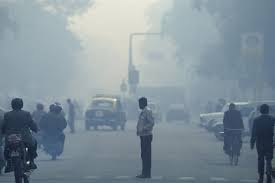
Air pollution in Nagpur has reached alarmingly high levels, with official data indicating that residents were exposed to polluted air for almost the entire month of January, raising serious concerns about public health and administrative inaction. Data from the GPO observation station, operated jointly by the Maharashtra and Central Pollution Control Boards, shows that air quality was polluted on 30 of the 31 days in January, painting a grim picture of the city’s environmental health.

Of these polluted days, 25 were categorised as ‘moderate’, while nine fell under the ‘poor’ category, reflecting sustained exposure to unhealthy air. Particularly concerning is the prevalence of PM2.5—fine particulate matter considered the most hazardous—which remained above safe limits on 28 days, posing significant risks to respiratory and cardiovascular health.

Environmental expert Prof Suresh Chopane said the data clearly shows that Nagpur has overtaken Chandrapur to become Vidarbha’s most polluted city over the past five years—a troubling shift for a city once regarded as relatively cleaner.
Pollution is no longer limited to isolated pockets. While Mahal was earlier identified as the city’s primary pollution hotspot, recent data suggests that deteriorating air quality has now spread across Nagpur. In December, Mahal recorded polluted air on 30 of 31 days. Conditions worsened further in January, with five highly polluted days, 25 moderate days and only one satisfactory day. PM2.5 levels at Mahal exceeded safe limits on 30 days.
At Ram Nagar, air pollution was recorded on all 31 days of January, including 26 moderate and five poor days, with PM2.5 remaining elevated for 28 days. Ambazari showed a similar pattern, registering polluted air on 30 days, including four poor days, while PM2.5 levels breached safety thresholds on 28 days. Notably, none of the city’s monitoring stations recorded a ‘good’ AQI day (0–50) throughout the month.
According to Prof Chopane, the sharp rise in pollution can be attributed to a combination of winter inversion, low wind movement, election-related activities, firecrackers, increasing vehicular emissions, garbage and biomass burning, and industrial operations. He highlighted a significant spike in PM2.5 pollution, identifying vehicular emissions as a major contributor.
Although the city did not record any ‘very poor’ or ‘severe’ AQI days, experts cautioned that prolonged exposure to moderate and poor air quality is already leading to a rise in health complications. Respiratory ailments such as asthma, bronchitis and tuberculosis, along with cardiac and mental health disorders, are reportedly increasing—especially during winter, when pollutants remain trapped closer to the ground.
Calling for immediate and sustained intervention, Prof Chopane warned against superficial measures and stressed the need for enforceable action. He urged authorities to expand green cover, promote public transport and cycling, accelerate the transition to electric vehicles, curb garbage burning, and strictly regulate industrial emissions and construction dust.
“Temporary measures like smog towers and fog machines may create an illusion of action, but they cannot solve a systemic problem,” he said, cautioning that without strong administrative resolve and long-term policy implementation, Nagpur’s air quality will continue to decline—at the expense of public health and lives.
👉 Click here to read the latest Gujarat news on TheLiveAhmedabad.com