
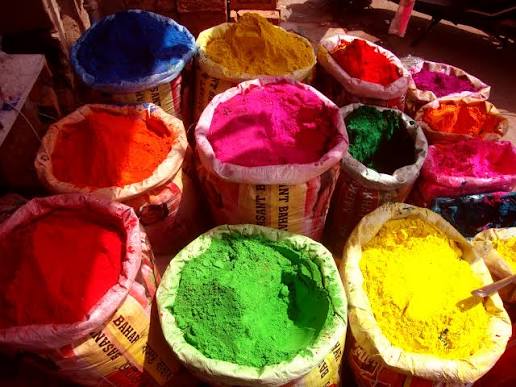
The “natural” tag on most gulal packets often exists only in name. Labels such as herbal, skin-safe and natural dominate store shelves and are among the fastest-selling products during Holi. However, industry insiders say the reality behind many of these claims is far less pure.According to traders, nearly all gulal — whether marketed as herbal or not — begins with refined starch powder. The difference, they claim, lies mainly in presentation. Chemical dyes are added to create colour, and fragrances such as strawberry, rose or beetroot are mixed in at the final stage.The key lies in dilution. Deep, saturated hues tend to look synthetic, while pastel shades appear softer and more “natural.” It is this visual and aromatic appeal that drives consumer perception. A gentle pink with a faint fruity fragrance often feels safe, regardless of how it is produced.Authentic flower- or fruit-based gulal does exist, but it behaves very differently. Dried marigold produces a muted yellow; beetroot yields an earthy pink rather than a bright, electric shade; spinach gives a faded green; and palash creates a simple saffron tone. These colours are softer, less uniform and available in limited quantities. The production process is slower, the yield lower and the shelf life shorter.In contrast, chemical dyes can colour large batches of starch quickly and uniformly.With a wide spectrum of colours flooding the market this year, the city is set to be awash in vibrant shades and fragrances this Holi — though not all may be as natural as they appear.


👉 Click here to read the latest Gujarat news on TheLiveAhmedabad.com