
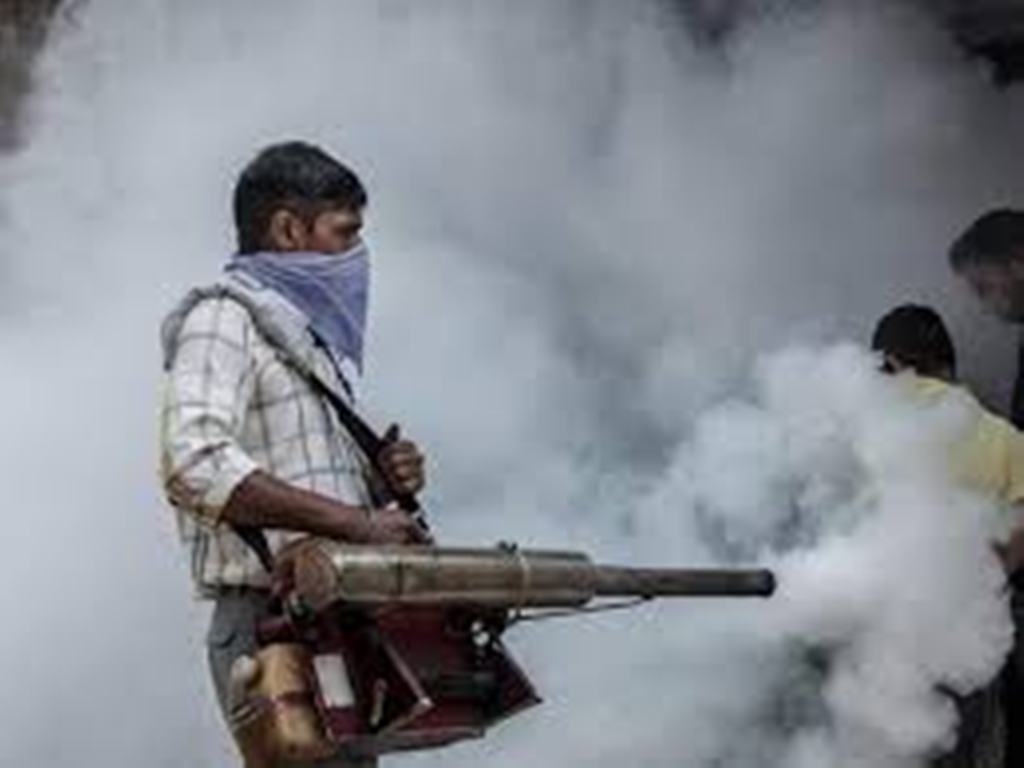
Even as the mosquito menace and vector-borne diseases loom large, the city’s frontline defence appears severely weakened — with more than half of its hand fogging machines either defunct or awaiting repairs.

A consolidated report from the Nagpur Municipal Corporation’s malaria and filaria department reveals that 28 out of 51 hand fogging machines are currently non-functional, exposing major gaps in preparedness and raising serious public health concerns.

Of the total, 19 machines are under repair while 9 have been condemned, leaving several zones struggling to carry out even basic fogging operations. The situation is particularly alarming in the Mangalwari zone, where only one out of seven machines is operational, and in Hanuman Nagar and Lakadganj zones, where barely half of the available machines are functioning.
The crisis is further compounded by a shortage of 17 additional machines, indicating that even restoring all existing units may not be enough to tackle the growing mosquito problem. Despite repeated outbreaks of vector-borne diseases in recent years, the department’s machinery shortfall points to long-standing neglect.
While spraying units are relatively better in number — with 126 units across zones — official data shows that fogging remains a crucial intervention in high-risk and densely populated areas. However, the lack of functional equipment has severely curtailed the frequency and reach of anti-larval and anti-adult mosquito drives.
All 11 vehicle-mounted fogging machines are reported to be operational, but their use is largely limited to main roads and select routes, leaving interior localities and congested neighbourhoods vulnerable.
The impact is already visible on the ground. Several localities have reported a spike in mosquito density, with residents complaining of inadequate fogging and delayed civic response. Health experts warn that inconsistent fogging cycles can lead to a rapid rise in mosquito breeding, especially ahead of the monsoon.
A resident of Canal Road in Ramdaspeth alleged that fogging is carried out two to three times a week near a senior civic official’s bungalow. Questioning the disparity, the resident asked why such attention is limited to influential areas and not extended to common citizens.
Taking note of the situation, health committee chairperson Manisha Atkare has directed the malaria and filaria department to ensure at least one round of fogging every week in each prabhag. She has also instructed officials to coordinate with local corporators to identify and prioritise mosquito-prone areas. However, with more than half the fogging machinery non-functional, implementing these directives could prove challenging.
The data highlights a system struggling to keep pace with a predictable seasonal threat, raising questions over maintenance, planning and accountability within the department. Unless urgent steps are taken to repair or replace the defunct machines, the city risks greater exposure to malaria, dengue and other vector-borne diseases, leaving residents to bear the consequences of a strained public health response.
MOSQUITO CONTROL IN CRISIS
Fogging machinery breakdown cripples civic response
HAND FOGGING MACHINES
Total: 51
Working: 27
Out of action: 28
Shortfall: 17 machines
ZONE ALERT
Mangalwari: 1 of 7 working
Hanuman Nagar: 2 of 5 working
Lakadganj: 2 of 4 working
SPRAYING UNITS
Total units: 126
Demand gap: 45
VEHICLE-MOUNTED MACHINES
Total: 11 (including HQ)
Working: 10
Limited to main roads
GROUND REALITY
Over 50% fogging machines defunct
Interior areas worst hit
Weekly fogging target under strain
CIVIC RESPONSE
Health panel chief Manisha Atkare orders:
Weekly fogging in every prabhag & coordination with corporators
👉 Click here to read the latest Gujarat news on TheLiveAhmedabad.com