
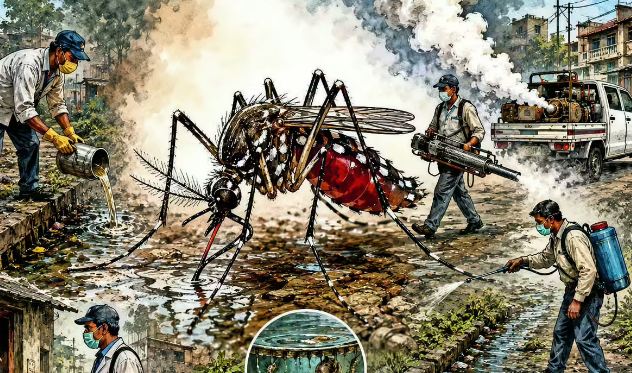
A pause in monsoon activity coupled with rising temperatures has led to a sharp increase in mosquito breeding across several parts of Nagpur, prompting the Nagpur Municipal Corporation (NMC) to intensify measures against vector-borne diseases ahead of the peak transmission season.

According to the civic body’s latest mosquito density survey conducted in June, Mangalwari has emerged as the city’s most vulnerable zone, recording the highest concentration of both Culex and Aedes mosquitoes, the primary carriers of filariasis, dengue and chikungunya.

The survey also identified Satranjipura, Gandhibagh, Laxmi Nagar and Ashi Nagar among the areas with elevated mosquito density, increasing concerns over a possible rise in dengue, malaria and chikungunya cases during the coming weeks. Particularly worrying for health authorities was the detection of Anopheles mosquitoes, which transmit malaria, in the Gandhibagh area, making it the only zone in the city where the malaria vector was found during the survey.
Civic health officials said densely populated neighbourhoods with stagnant water, open drains, scrap yards and poor drainage conditions are proving to be ideal breeding grounds for mosquitoes. As a result, Mangalwari and Ashi Nagar have been placed under enhanced monitoring and control measures.
Several other localities, including Patankar Chowk, Republican Nagar, Uppalwadi, Yashodharanagar, Mankapur, Zingabai Takli, Khamla, Sonegaon, Ramnagar, Gittikhadan, Mominpura and Kalamna, have also been identified for intensive surveillance and preventive action.
To tackle the growing mosquito menace, NMC has expanded fogging and anti-larval operations across the city. The civic body has deployed vehicle-mounted fogging machines, portable fogging units, cold fogging equipment and spray pumps to cover vulnerable areas and reduce mosquito populations. Anti-larval treatment using emulsified oil is also being carried out in stagnant water bodies, open drains and waterlogged locations to destroy breeding sites before mosquitoes mature.
The survey findings have coincided with the launch of NMC’s monsoon disease prevention campaign aimed at containing outbreaks of dengue, malaria and chikungunya. As part of the initiative, the civic body has deployed temporary health workers for door-to-door inspections to identify breeding sources and spread awareness among residents. Additional breeding inspectors are also being recruited to strengthen surveillance activities across all zones during the monsoon season.
Malaria officials have urged citizens to cooperate with field teams and ensure that water does not accumulate in coolers, flower pots, construction sites, discarded containers or around residential premises. Health experts warned that sustained civic action and public participation would be crucial in preventing a seasonal surge in mosquito-borne illnesses in the city.
Key Findings of the June Survey
- Mangalwari recorded the highest Culex mosquito density in the city.
- The highest concentration of Aedes mosquitoes was also reported from Mangalwari.
- Satranjipura, Gandhibagh, Laxmi Nagar and Ashi Nagar emerged as other high-density zones.
- Gandhibagh was the only locality where Anopheles mosquitoes were detected.
NMC’s Prevention Measures
- Vehicle-mounted and hand-operated fogging operations intensified across the city.
- Anti-larval spraying being conducted in stagnant water and drains.
- Door-to-door inspections and awareness campaigns underway.
- Additional breeding inspectors to be deployed during the monsoon season.
👉 Click here to read the latest Gujarat news on TheLiveAhmedabad.com