
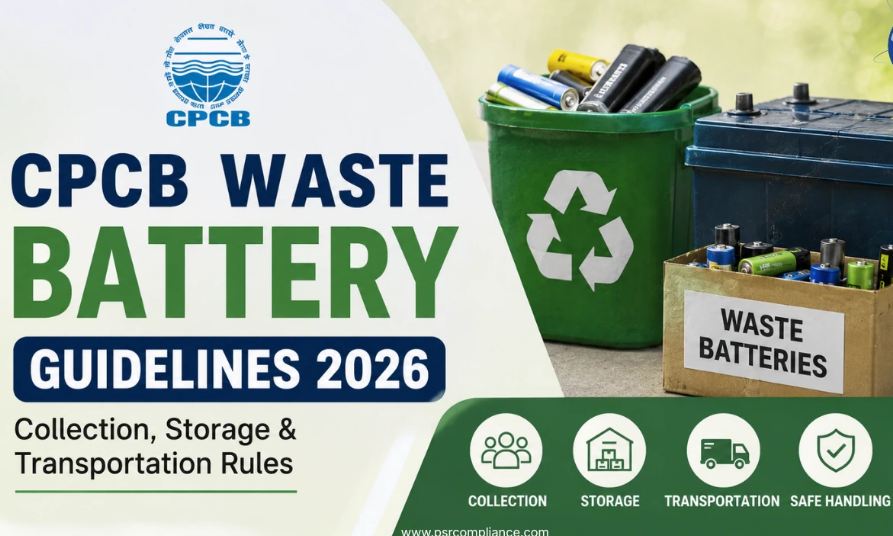
In view of the rapid growth in the use of electric vehicles (EVs) and battery-powered devices across the country, the Central Pollution Control Board (CPCB) has issued a fresh set of guidelines for the collection, handling, storage and transportation of waste batteries.

The guidelines have been framed under the Battery Waste Management (BWM) Rules, 2022 to ensure the environmentally safe management of discarded batteries, which are classified as hazardous waste.

Under the revised norms, producers, collection centres, recyclers and refurbishers will be permitted to store waste batteries for a maximum of 90 days. The rules apply to all entities involved in the collection, storage, transportation, recycling and refurbishment of waste batteries.
The CPCB has directed all State Pollution Control Boards (SPCBs) and Pollution Control Committees (PCCs) to implement the guidelines at the earliest and initiate action against violators. The guidelines also cover companies engaged in battery refurbishment, allowing them to restore used batteries for reuse or resale, provided they comply with prescribed safety and environmental standards.
To strengthen regulatory oversight, the CPCB has made it mandatory for collection centres to obtain Consent to Establish (CTE) and Consent to Operate (CTO) from the respective SPCBs or PCCs before commencing operations.
Collection centres will also be required to submit a detailed site plan to the concerned pollution control authority for approval of the facility’s storage capacity. Only authorised producers, recyclers and refurbishers will be allowed to establish collection centres, a move aimed at preventing illegal handling, unsafe storage and unauthorised battery disposal.
The new guidelines come at a time when the use of electric vehicles, energy storage systems and portable electronic devices is expanding rapidly, leading to a significant rise in battery waste. The CPCB said scientific management of end-of-life batteries has become essential to minimise environmental risks and promote responsible recycling.
The regulations apply to all facilities involved in battery recycling, as well as collection centres that receive and aggregate used batteries from consumers, businesses and producers before sending them to authorised recyclers for processing.
👉 Click here to read the latest Gujarat news on TheLiveAhmedabad.com