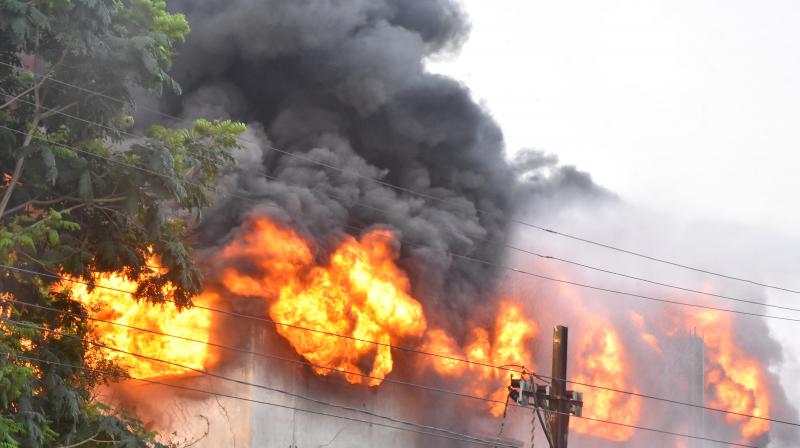
The devastating explosion at Solar India Industries Limited (SIIL), a company crucial to India’s defence self-reliance, has ripped the veil off the rotten state of safety enforcement in the explosives sector. While government agencies may conveniently try to pin blame on Solar, the real question is this: where was PESO?

The Petroleum and Explosives Safety Organization (PESO), which is responsible for enforcing safety regulations, is notorious for being flawless only on paper. Safety drills? Perfect on file. Inspections? Regular in reports. Reality? Workers reveal how regulations exist only in PESO’s documents, not on factory floors. In Solar’s case, safety systems were in place — yet PESO failed to ensure whether those systems were operational, functional, and foolproof.

The hypocrisy becomes clearer when comparing Solar to smaller firms like Chamundi Explosives in Bazargaon, Nagpur, where even basic ambulances weren’t available during a blast. Workers’ lives are cheap currency in these places, sacrificed to negligence.
Solar at least had CCTV monitoring, safety training, and ambulances ready, which limited casualties. But when the crystallization unit’s temperature spiraled, the explosion showed how even the best-prepared firms remain vulnerable without constant, tech-driven monitoring. If AI-driven predictive systems aren’t adopted, “luck” will decide survival in the next blast.
This isn’t just an accident — it’s a wake-up call. PESO’s corruption-tainted, paperwork-obsessed functioning is endangering workers and India’s strategic assets alike. Unless safety moves from files to the factory floor, blasts like Solar’s will remain inevitable.
👉 Click here to read the latest Gujarat news on TheLiveAhmedabad.com