
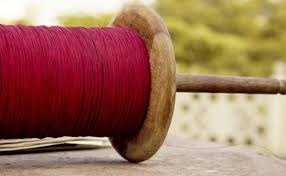
The Bombay High Court has taken strong exception to the failure of authorities in curbing the use of nylon manjha, a kite-flying thread known to cause severe injuries to humans, birds, and animals due to its sharp edges. Through separate orders, the Aurangabad and Nagpur benches expressed serious dissatisfaction with the steps taken to prevent the manufacture, sale, and use of the banned thread.

In an order passed on January 9, the Aurangabad bench observed that administrative inaction has grave constitutional implications. “This continued failure of governance directly impacts the right to life under Article 21 of the Constitution. The danger posed by nylon manja is not confined to human beings alone; it results in horrific injuries and deaths of birds and other living creatures, whose protection flows from the constitutional mandate under Articles 48A and 51A(g),” the bench noted.

Meanwhile, the Nagpur bench on Monday directed that any individual caught flying a kite using nylon manjha would be liable to pay a fine of ?25,000. In the case of a minor, the fine would be recoverable from the parents, the Court clarified. The bench further ordered that any vendor found in possession of nylon manjha stock would be required to pay a fine of ?2.5 lakh.
The Nagpur bench passed the order on January 12 in a suo motu public interest litigation initiated in 2021 based on newspaper reports. A division bench of Justices Anil S. Kilor and Raj D. Wakode observed that despite repeated directions and enforcement efforts, the rampant use of nylon manjha continues unabated. “In absence of any statute or regulation framed by the State Government in this regard the authorities are also facing difficulties to some extent to deal with this serious issue,” the bench observed.
The judges noted that every year people either lose their lives or suffer injuries due to nylon manjha, with such incidents frequently reported in the media. “Despite this, there is no change in the situation which prompted this court to adopt a different mode and thereby impose deterrent punishment by way of fine,” the Court said. It further warned that police officers would be held accountable for future incidents. “If any untoward incident because of nylon manja is reported, the concern Police Officer of that zone or area, within whose jurisdiction such incident is reported, shall be served with the notice by the Commissioner of Police/ Superintendent of Police as to why the action shall not be taken against such Officer for not performing the duties diligently in compliance with the orders of this Court. Such matter shall be reported to this Court alongwith action taken against such officer,” the bench stated.
Similarly, the Aurangabad bench on January 9 recorded its displeasure over the manner in which authorities have handled the nylon manjha menace despite a clear ban. In a suo motu PIL, a division bench of Justices Vibha Kankanwadi and Hiten S. Venegavkar remarked that enforcement efforts tend to be short-lived and superficial. “Whenever a serious incident is reported in the media or the matter is listed before this Court, assurances are tendered, raids are conducted and so-called special drives are undertaken. Once the immediate spotlight fades, enforcement recedes into inertia,” the bench said.
Describing the approach as “episodic, reactive, and ritualistic,” the Court criticised the tendency to target only small vendors and users, stating, “Merely prosecuting petty vendors or users does not discharge this obligation.” It flagged the absence of any meaningful attempt to dismantle the larger illegal supply chain. “There is little or no evidence of action against manufacturers, bulk suppliers, wholesalers, financiers or organized networks engaged in this clandestine trade,” the bench observed.
The Aurangabad bench also noted the continued availability of nylon manjha on online marketplaces and social media platforms, warning that enforcement which ignores the digital dimension is ineffective in the present era. “The State cannot plead helplessness on the ground of technological complexity; rather, it must proactively deploy technical expertise and exercise its statutory powers against intermediaries operating within its jurisdiction,” it said.
The Court further criticised the affidavits filed by the State and local authorities as repetitive and generic, lacking evidence of sustained, intelligence-led or technology-driven enforcement. Consequently, it directed the Director General of Police to immediately constitute a State-level Special Task Force to address offences related to the manufacture, storage, sale, online marketing, and use of nylon manjha. It also ordered the State to establish a victim compensation fund and frame a policy for future manjha-related injury claims within four weeks. The bench warned that continued non-compliance or mere “cosmetic compliance” would invite stringent orders, including personal accountability of senior officials.
In the Nagpur matter, Advocate N. Jadhav appeared as amicus curiae, while Additional Government Pleader S.M. Ukey represented the State. Advocates J.B. Kasat, M.I. Dhatrak, S.A. Sahu, S.S. Sanyal, and C.B. Dharmadhikari appeared for various municipal bodies, police authorities, and the district administration. In the Aurangabad proceedings, Advocate Satyajeet S. Bora appeared as amicus curiae, Additional Government Pleader S.K. Tambe represented the State, and Deputy Solicitor General A.G. Talhar appeared for the Union government.
👉 Click here to read the latest Gujarat news on TheLiveAhmedabad.com