
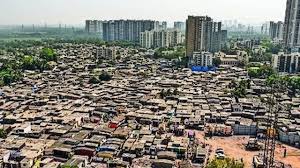
The Maharashtra government has cleared a policy to regularise residential encroachments on government land up to 500 sq ft free of cost, a move aimed at providing housing security to lakhs of low-income families across the state.

Announced by revenue minister Chandrashekhar Bawankule on the direction of Chief Minister Devendra Fadnavis, the policy covers encroachments existing till January 1, 2011, and used purely for residential purposes. Mumbai and Mumbai suburban districts are excluded from its ambit.

“It is the government’s firm stand that no needy family should remain without shelter,” Bawankule said, adding that the scheme’s progress will be reviewed every three months.
According to the government resolution, encroachments exceeding 500 sq ft will attract an occupancy charge of 10% of the prevailing market value, with the maximum permissible area capped at 1,500 sq ft. Any construction beyond this limit will be removed. In cases where part of the structure is used commercially, 25% of the market value will be charged for that portion.
The land will be allotted jointly in the names of husband and wife under the ‘occupancy class-2’ category. A registration fee of ₹1,000 will be levied for plots up to 1,000 sq ft.
Authorities have mandated strict verification to ensure non-citizens are excluded, with directions to lodge police complaints in case of violations.
Encroachments on ecologically or socially sensitive land — such as riverbeds, grazing land, forests, public roads, cremation grounds, playgrounds, and plots reserved for schools and hospitals — will not be eligible for regularisation. Families residing in such areas will instead be considered for alternative housing under the Pradhan Mantri Awas Yojana.
Applicants must submit proof of residence prior to January 1, 2011, including documents like voter lists, electricity bills or property tax receipts, along with evidence of continuous residence over the past year.
Implementation will be handled by multi-level committees led by district collectors, sub-divisional officers and tehsildars. A 17-member panel under the guardian minister at the district level, along with constituency-level committees, will oversee the process to ensure faster decisions and reduce delays.
Revenue officials said the policy aligns with wider efforts to formalise informal housing and expand property rights for economically weaker sections. While it offers tenure security, experts stress that its success will depend on transparent execution and strict protection of environmentally sensitive areas.
👉 Click here to read the latest Gujarat news on TheLiveAhmedabad.com