
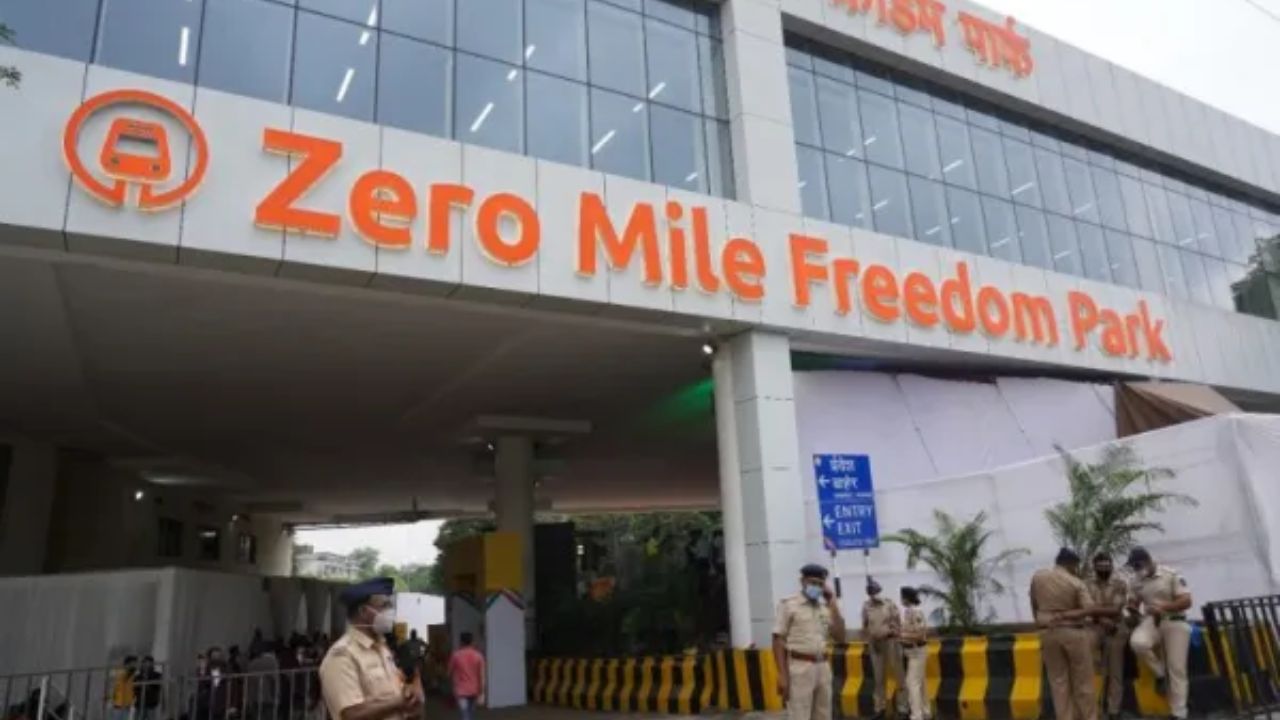
Serious questions have been raised over the proposed Zero Mile–Manas Square underpass project, with concerned citizens approaching the Nagpur Bench of the Bombay High Court alleging that the Public Works Department (PWD) and MahaMetro are pushing the project in blatant violation of mandatory technical norms and safety guidelines.

The intervenors have accused the authorities of gross administrative apathy, flawed planning, and a potentially wasteful misuse of public funds.

In a strongly worded objection, the intervenors claimed that PWD and MahaMetro have failed to place on record several crucial documents required under the Indian Roads Congress (IRC) guidelines of 2000, 2010, 2014 and 2019.
These include traffic and accident surveys, a feasibility report, Detailed Project Report (DPR), fire safety clearance, drainage management plan, and even a preliminary survey.
The absence of these basic documents, they argued, renders the project technically unsound and poses serious risks to public safety.
The intervenors also questioned the very necessity of the underpass, pointing out that no official traffic survey has been produced to justify such a large and costly infrastructure project. Referring to a private traffic study conducted between University Square and Zero Mile, they stated that barely 8,000 cars use the stretch on a working day—figures that, according to them, do not warrant an underpass of this scale.
They further alleged that no accident survey has been submitted, raising doubts over whether the site even qualifies as an accident-prone zone requiring such intervention.
Adding to the criticism, the intervenors stated that no feasibility report has been filed to establish the project’s technical or financial viability. They alleged that even a Detailed Project Report (DPR)—a fundamental prerequisite for any major infrastructure work—is missing from the record.
The absence of a mandatory Fire Safety No Objection Certificate (NOC) was termed a grave lapse, particularly for an enclosed structure like an underpass where fire hazards can prove fatal.
Drainage management emerged as another major concern. The intervenors warned that no drainage plan has been submitted despite Nagpur’s recurring monsoon flooding. They cited existing underpasses at Manish Nagar, Narendra Nagar and Wardhaman Nagar, which routinely become waterlogged during heavy rains, turning into potential death traps.
Proceeding with new underpasses without addressing these failures, they cautioned, would amount to repeating dangerous mistakes at the cost of human lives.
The objections further alleged that the project was advanced without conducting a proper preliminary survey, in direct violation of IRC norms.
They also pointed out that the underpass passes close to Defence Department land and that permission from defence authorities was obtained only on November 28, 2025—and that too after objections were raised—indicating procedural lapses.
Concerns were also raised over the project’s potential impact on Nagpur’s historical heritage, particularly Freedom Park, which could suffer irreversible damage due to construction activity.
Taking serious note of the allegations, a division bench comprising Justices Anil Kilor and Raj Wakode directed the PWD to file its affidavit in reply within three days, by Friday, January 30.
Simultaneously, the court asked the intervenors to submit an affidavit under Rule 7 of the Bombay High Court Rules, 2010, stating their willingness to bear costs if the court finds their objections frivolous or unwarranted.
Advocate Tushar Mandlekar appeared for the intervenors, while Advocate Deepak Thakre represented the Government. The matter will be taken up for further hearing after the PWD submits its response.
👉 Click here to read the latest Gujarat news on TheLiveAhmedabad.com